Texture, Pattern, and Repetition in Food Photography
Food photography is more than just capturing a meal; it’s about evoking senses through visual elements. Texture, pattern, and repetition are fundamental tools that add depth, interest, and storytelling to images.
By skillfully incorporating these aspects, photographers can transform ordinary food shots into compelling artworks that draw viewers in, making them almost taste the dish through the screen. This comprehensive guide explores how to leverage these elements effectively, with practical techniques, examples, and equipment recommendations to elevate your food photography game.
Understanding the Role of Texture in Food Photography
Texture refers to the surface quality of food items, such as the roughness of a crusty bread loaf or the smoothness of a glossy chocolate sauce. It plays a crucial role in making photos feel tangible and appetizing. Without texture, images can appear flat and uninviting. In food photography, texture conveys freshness, crispness, or creaminess, helping to narrate the story of the dish.
To highlight texture, lighting is paramount. Side lighting is particularly effective as it casts shadows that accentuate surface details. Position a light source, like a softbox or window, at a 45-degree angle to the subject. This creates highlights on raised areas and shadows in crevices, making elements like crumbs on a pastry or bubbles in a sauce pop. Avoid front lighting, which flattens textures, or harsh overhead light that can create unflattering glare.
Macro photography takes texture to another level by capturing minute details often overlooked. Using a macro lens allows photographers to zoom in on elements like the porous surface of bread, the granular texture of sugar crystals, or the fibrous strands in a pulled pork dish. This close-up approach adds intimacy and intrigue, turning simple ingredients into abstract art.
Consider the interplay of contrasting textures within a single frame. Pairing crunchy elements with soft ones, such as crispy bacon atop creamy mashed potatoes, creates visual tension that enhances appeal. Props can amplify this: a wooden board under rustic bread emphasizes its rough exterior, while a smooth marble surface complements silky sauces.
In practice, experiment with different foods to see how textures interact. For instance, the flaky layers of a croissant benefit from raking light that reveals each buttery fold. Similarly, the velvety sheen of melted cheese on pizza can be emphasized with subtle backlighting to show stretch and melt.
This image showcases textured meatballs on a smooth sauce, illustrating how side lighting highlights the crumbly exterior against the creamy base.
Here, the rough edges of a cake slice contrast with the dripping sauce, demonstrating texture variety.
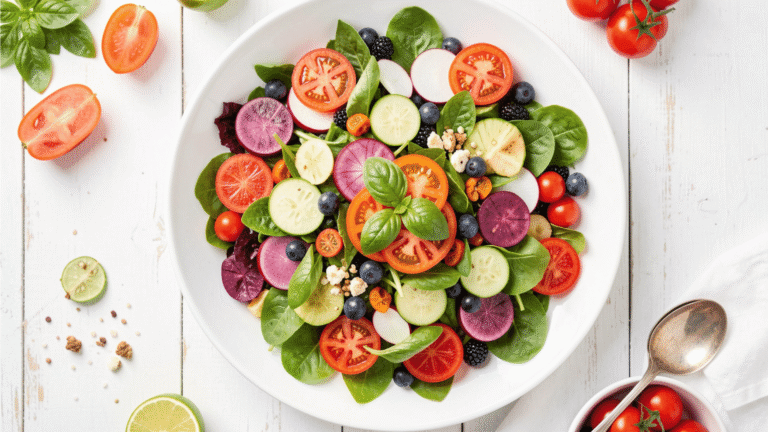
The crisp vegetables in this salad highlight natural textures through macro-like focus.
To quantify texture enhancement techniques, consider this table:
| Technique | Description | Best For | Example Foods |
|---|---|---|---|
| Side Lighting | Light from the side to create shadows | Highlighting roughness | Bread crust, fried batter |
| Macro Lens | Close-up shots for details | Minute textures | Spice grains, fruit peels |
| Contrasting Props | Use backgrounds that oppose food texture | Depth addition | Smooth plate for crunchy nuts |
| Raking Light | Low-angle light grazing the surface | Emphasizing layers | Pastry flakes, cheese melts |
Mastering texture requires observation and practice. Start by photographing everyday items like an apple’s skin or a bowl of oatmeal, focusing on how light interacts with surfaces. Over time, this awareness will make your food photos more immersive and professional.
Exploring Patterns in Food Photography
Patterns bring order and visual rhythm to food images, creating harmony and graphic appeal. They can emerge naturally from food structures, like the spiral in a cabbage cross-section or the hexagonal cells in honeycomb, or be arranged deliberately, such as aligning cookies in rows.
Creating patterns involves arranging similar items to form repeating motifs. For graphic compositions, use repeated shapes: a grid of square brownies or circular orange slices. This setup draws the eye across the frame, providing a sense of unity. Overhead flat lays are ideal for patterns, as they emphasize shapes and colors without perspective distortion. Shoot from directly above using a tripod to maintain symmetry.
Natural patterns in food offer endless opportunities. The pitted surface of citrus peel or the veined leaves of herbs can be focal points. To capture these, use macro lenses for detail. Arranged patterns, like scattering pomegranate seeds or lining up berries, add creativity. Complementary colors enhance impact: red strawberries against green mint leaves create vibrant patterns.
Types of patterns vary, adding versatility:
- Macro Patterns: Close-ups of inherent food structures, like coffee bean crevices or broccoli fractals. These require macro capabilities for intimacy.
- Regimental Patterns: Geometric arrangements of similar items, such as chocolates in a grid, evoking discipline and uniformity.
- Random Repetition: Scattered yet cohesive elements, like mixed nuts, where individual differences blend into a pattern when viewed en masse.
- Color-Based Patterns: Grouping items by hue, even if shapes differ, like green vegetables forming a monochromatic mosaic.
Graduated patterns introduce subtlety: transitioning colors from light to dark berries across the frame maintains interest without monotony.
A row of varied cupcakes demonstrates random repetition in pattern.
Three uniform pink cupcakes show regimental alignment.
A colorful cupcake grid exemplifies graphic pattern appeal.
Here’s a Mermaid chart illustrating the process of creating a pattern in food photography:
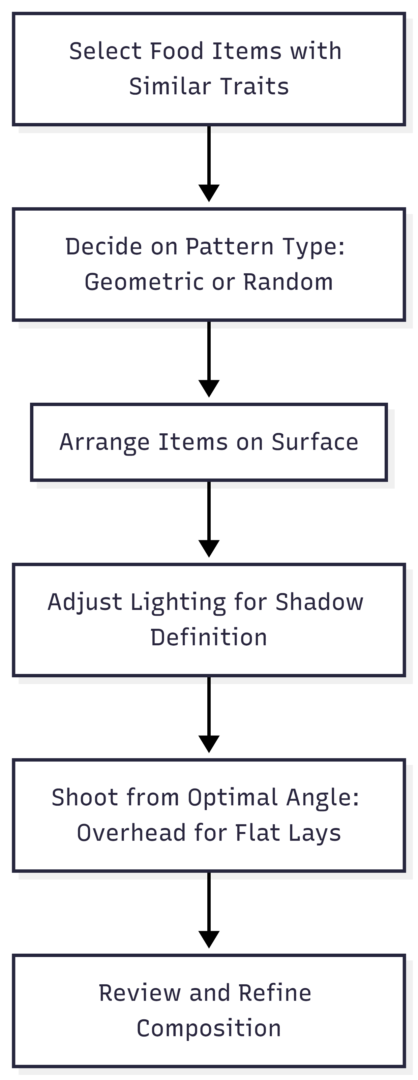
This flowchart guides the step-by-step creation, ensuring balanced patterns.
Patterns elevate food photos by adding structure. Practice spotting them in ingredients—rice grains, pasta shapes—and build from there to crafted arrangements.
The Power of Repetition in Food Photography
Repetition amplifies patterns, instilling rhythm and emphasis. It can be symmetrical, like a precise muffin grid, or random, such as scattered berries, both fostering unity.
Filling the frame with repeated items abstracts the scene, removing context for an artistic, magical effect. One apple is mundane; a sea of apples becomes mesmerizing. This technique works well with uniform foods like candies or beans.
Symmetrical repetition creates balance, ideal for formal compositions. Random repetition adds organic flow, mimicking nature. To avoid boredom, integrate other rules like the rule of odds—using odd numbers of items for natural appeal.
Evolving repetitions maintain engagement: patterns that change shape or color gradually, like biscuits morphing from rounds to stars. Perspective can create receding repetitions, with rows appearing smaller in the distance.
This chocolate arrangement shows symmetrical repetition with tools and ingredients.
A simple grid diagram illustrates basic repetition structure.
Berries and macarons with overlay grids highlight repetitive compositions.
Repetition emphasizes key elements. With multiple similar subjects like cupcakes, it heightens their importance. Combine with composition guides for placement.
Breaking Patterns and Repetition for Focal Interest
While patterns and repetition provide harmony, breaking them creates focal points and intrigue. Monotony can dull interest; an unexpected element disrupts predictability, drawing the eye.
Strategic disruption: Place one contrasting item, like a red berry in a blue grid, using the rule of thirds for positioning. This “odd one out” sparks curiosity.
Examples abound:
- In a row of popsicles, stack two vertically to break linearity, adding visual weight.
- For brownies, tilt one on its side to reveal interiors, transforming a flat pattern.
- Cut one spring roll in a line to introduce a circular shape amid rectangles.
- In tiramisu, pipe cream to overlay cookie patterns, blending two motifs.
- With oranges, vary cuts—one irregular slice adds playfulness.
- For radicchio, focus on one perfect floret amid less ideal ones for subtle breaks.
Close-up coffee beans show natural pattern breaks through variations.
A lemon slice on beans breaks the uniform pattern.
Though unusual, this moldy orange illustrates texture disruption in citrus peel.
Breaking patterns directs attention to the main subject, enhancing narrative.
Key Tips for Implementing Texture, Pattern, and Repetition
- Layer elements: Combine textures with props like fabrics or cutlery for depth.
- Maintain consistency: Matching plates for harmony or mixing for rusticity.
- Use color: Complementary hues boost pattern impact.
- Raw materials: Beans, fruits, spices as pattern bases.
- Emphasize: Flatten perspective with longer lenses (80mm+); hard lighting for graphic shadows.
- Non-food patterns: Patterned props to contrast or camouflage food.
Equipment is key. For macro work, consider these lenses (prices approximate as of 2026, based on market trends):
| Lens Model | Mount Options | Key Specs | Approx. Price (USD) |
|---|---|---|---|
| Nikon Z MC 105mm f/2.8 VR S | Nikon Z | 1:1 macro, VR stabilization, f/2.8 aperture | $950 |
| Canon RF 100mm f/2.8L Macro IS USM | Canon RF | 1.4:1 macro, IS, f/2.8 | $1,200 |
| Sony FE 90mm f/2.8 Macro G OSS | Sony E | 1:1 macro, OSS, f/2.8 | $1,000 |
| Fujifilm XF 80mm f/2.8 R LM OIS WR Macro | Fujifilm X | 1:1 macro, OIS, weather-resistant | $1,100 |
| Sigma 105mm f/2.8 DG DN Macro Art | Sony E, L-Mount | 1:1 macro, f/2.8, high-resolution | $750 |
| Tamron SP 90mm f/2.8 Di Macro 1:1 | Canon EF, Nikon F | 1:1 macro, f/2.8, affordable | $500 (used) |
| Laowa 100mm f/2.8 2x Ultra Macro APO | Various (Canon RF, Nikon Z, etc.) | 2:1 macro, apochromatic, f/2.8 | $499 |
These lenses offer excellent close-up capabilities, with f/2.8 apertures for low-light performance and shallow depth of field. For beginners, start with the Sigma or Tamron for value.
Final Thoughts
Texture, pattern, and repetition are essential for dynamic food photography. By noticing and manipulating these elements, photographers can craft images with depth and allure. Breaking patterns adds that crucial spark, making photos memorable. Experiment relentlessly, and your work will stand out.
Please share this Texture, Pattern, and Repetition in Food Photography with your friends and do a comment below about your feedback.
We will meet you on next article.
Until you can read, 10 Tips To Capture A Perfect Pour Shot In Food Photography