How to Set Achievable Food Photography Goals
Setting achievable food photography goals is key to steady progress. This guide explains how to use SMART goals, practical steps, beginner milestones, and long-term strategies to build skills in lighting, composition, styling, and more—without overwhelm.
Food photography combines technical skill, creative vision, and consistent practice. Many enthusiasts dream of professional portfolios, paid commissions, or simply capturing mouthwatering images for personal projects or social media. Without clear direction, progress stalls—leading to frustration or burnout. The solution lies in structured, achievable goals that build momentum through small, focused wins.
The foundation of effective goal setting is the SMART framework: Specific, Measurable, Attainable (or Achievable), Relevant (or Realistic), and Time-bound. This method turns vague aspirations like “get better at food photography” into actionable plans.
- Specific: Define exactly what you want. Instead of “improve lighting,” aim to “master side lighting with natural window light and a reflector for three plated dishes.”
- Measurable: Track progress with clear criteria, such as “shoot and edit 12 recipes using manual mode” or “produce 20 portfolio-worthy images.”
- Attainable/Achievable: Base goals on your current resources, time, and skill level. A beginner shouldn’t target “shoot a full cookbook” immediately but could aim for “complete 10 styled shoots in natural light.”
- Relevant/Realistic: Align with your passions and long-term vision. If natural light excites you, prioritize it over artificial setups you dislike.
- Time-bound: Set deadlines to create urgency, like “by the end of three months” or “one technique per month.”
Powerful goals use present-tense language for motivation: “I create emotive beverage images with artificial lighting” feels more inspiring than “try to learn lighting.”
Why Goal Setting Transforms Your Food Photography Journey
Without goals, shooting feels random—like playing soccer without posts. You expend energy but rarely score meaningful progress. Goals provide direction, turning dreams (e.g., weekly commissions or a professional portfolio) into reality through incremental steps.
Many photographers achieve major milestones—like shooting multiple cookbooks—by breaking them into yearly, quarterly, and monthly targets. Goals combat overwhelm by emphasizing consistency over perfection. Regular practice builds confidence, refines technique, and opens doors to opportunities.
Steps to Set and Achieve Food Photography Goals
- Define Your Vision of Success
Success varies: for some, it’s creative freedom; for others, paid work or a strong Instagram presence. Clarify yours. Ask: What would a “magic wand” grant? A pro portfolio? Cookbook credits? Supplemental income? This long-term vision guides shorter goals. - Plan Backward from Your Dream
Work from the end goal to create milestones. Example: To shoot global campaigns in five years, intermediate steps might include building a portfolio with editorial clients, growing a social following, and securing national brand work. Break into quarterly checkpoints, like “secure three paid shoots per quarter.” - Start Small: Focus on One Element
Avoid juggling everything. Master one aspect before adding another. Beginners often start with lighting or composition, as these impact every shot. - Schedule Regular, Sustainable Practice
Fit goals to your life. Shoot one recipe weekly or dedicate Saturdays to practice. Consistency beats intensity—small habits compound into expertise. - Track Progress Effectively
Use tools like calendars, spreadsheets, or free goal worksheets. Log shoots, review images critically, and adjust. Track metrics: number of shots, techniques tried, client inquiries. - Make Goals Authentic and Motivating
Write in present tense with descriptive language. Read them daily for inspiration. If a goal doesn’t excite you, revise it.
Common Achievable Goals for Beginners
Beginners benefit from focused, skill-building targets. Prioritize fundamentals: lighting, composition, styling, and workflow.
Lighting Goals
Lighting defines mood and appeal in food photography. Start simple.
- Master one light source (natural window) with a reflector to control shadows. Goal: “Shoot five dishes using side lighting, achieving soft shadows and highlights by month three.”
- Experiment with angles: side, back, or overhead. Goal: “Produce three variations of the same dish under natural light, comparing results.”
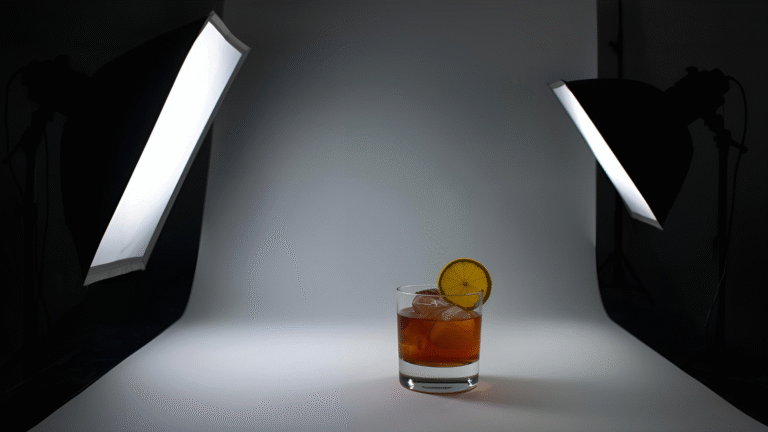
- Transition to artificial: “Create dark-and-moody setups with one softbox for four savory dishes.”
Composition Goals
Composition guides the viewer’s eye and tells a story.
- Practice rule of thirds and leading lines. Goal: “Apply rule of thirds to 10 shots, placing key elements at intersections.”
- Explore angles: eye-level, 45-degree, top-down. Goal: “Shoot one dish from three angles, selecting the most appetizing.”
- Use negative space and layers. Goal: “Style scenes with foreground interest and blurred backgrounds for depth.”
Styling and Storytelling Goals
Styling makes food look irresistible and narrative.
- Build cozy scenes with props. Goal: “Style a breakfast scene telling a ‘morning ritual’ story using three props.”
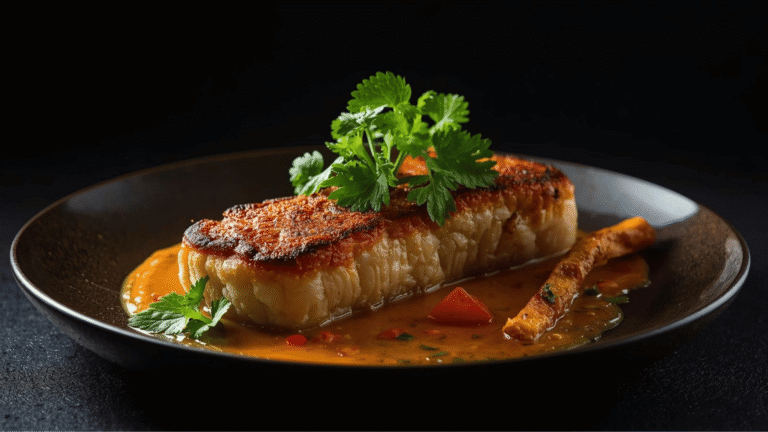
- Focus on textures and details. Goal: “Capture drool-worthy savory details like steam or drips in five images.”
- Theme projects. Goal: “Create a 10-image series on beverages, emphasizing emotion and context.”
Workflow Goals
Efficient processes free creativity.
- Shoot in manual mode. Goal: “Complete 15 shoots controlling aperture, shutter, and ISO.”
- Try tethering. Goal: “Tether to a computer for real-time review in eight sessions.”
These build foundational skills quickly.
Intermediate to Advanced Goals: Scaling Up
As skills grow, goals shift toward professionalism.
- Portfolio building: “Curate 30 high-quality images across categories (savory, sweet, beverages) by year-end.”
- Technical mastery: “Expert in artificial lighting for emotive images” or “Produce drool-worthy savory styling consistently.”
- Business-oriented: “Secure weekly commissions for challenging projects” or “Shoot one cookbook.”
Example progression:
- Year 1: Master basics, build portfolio.
- Year 3: Paid work, client variety.
- Year 5+: High-profile campaigns.
Recommended Equipment to Support Your Goals
Gear supports goals without needing top-tier investment initially.
Cameras (Beginner to Pro Recommendations)
- Beginner: Canon EOS Rebel series or Nikon Z50 (~$600–$900) – great image quality, intuitive controls.
- Intermediate: Sony A6000 or Fujifilm X-T series (~$800–$1,500) – compact, excellent autofocus.
- Pro: Canon EOS R or Fujifilm mirrorless (~$1,500+) – full-frame for detail and low light.
Lenses
- 50mm f/1.8 (“nifty fifty”) (~$100–$200) – affordable, beautiful bokeh.
- 100mm macro (~$400–$600) – sharp close-ups.
Lighting
- Natural: Window + reflector (~$20–$50).
- Artificial: Softbox kit (~$100–$300) for controlled moody shots.
Other Essentials
- Tripod (~$50–$200) for stability.
- Props/backdrops (~$50–$300) for styling.
Start minimal—upgrade as goals demand.
Visualizing Progress: Goal Breakdown Chart
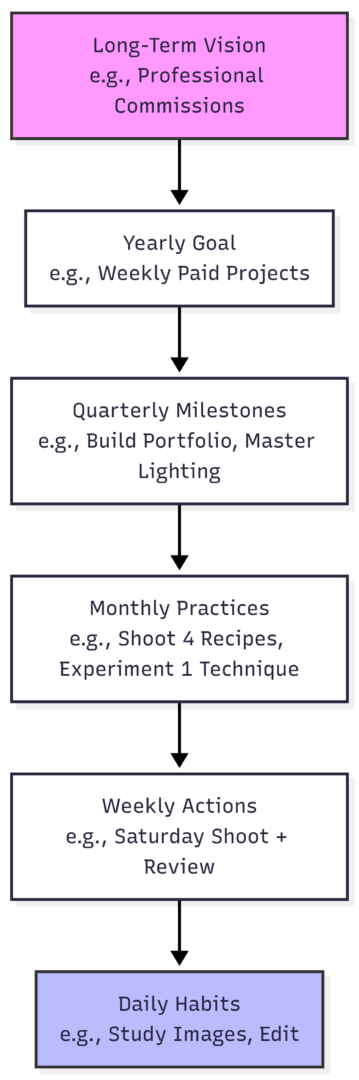
This flowchart shows backward planning: start from the big picture and break into daily steps.
Sample SMART Goals Table
| Category | SMART Goal Example | Timeline | Measurement |
|---|---|---|---|
| Lighting | I master natural side lighting with reflector for soft shadows on soups. | 3 months | 12 successful dishes |
| Composition | I apply 45-degree and top-down angles to every shoot, selecting best composition. | Ongoing | Review 20 shoots |
| Styling | My savory styling produces textured, appetizing images with storytelling props. | 1 year | 30 drool-worthy images |
| Workflow | I shoot in manual mode and tether for real-time feedback on all sessions. | 6 months | 25 tethered shoots |
| Business | I secure three paid food photography projects. | 1 year | Contracts or payments |
Final Thoughts on Sustained Progress
Achieving food photography goals requires patience and iteration. Celebrate small wins—each styled shot or mastered technique advances you. Review quarterly, adjust as needed, and stay inspired by others’ work without comparison.
Start today: Define one SMART goal, schedule your first practice, and track it. Consistent effort turns aspirations into expertise. Your journey begins with that single, achievable step.
Please share this How to Set Achievable Food Photography Goals with your friends and do a comment below about your feedback.
We will meet you on next article.
Until you can read, Lightroom Mistakes You Are Probably Making