Korean Gochujang Mushroom Noodles Recipe
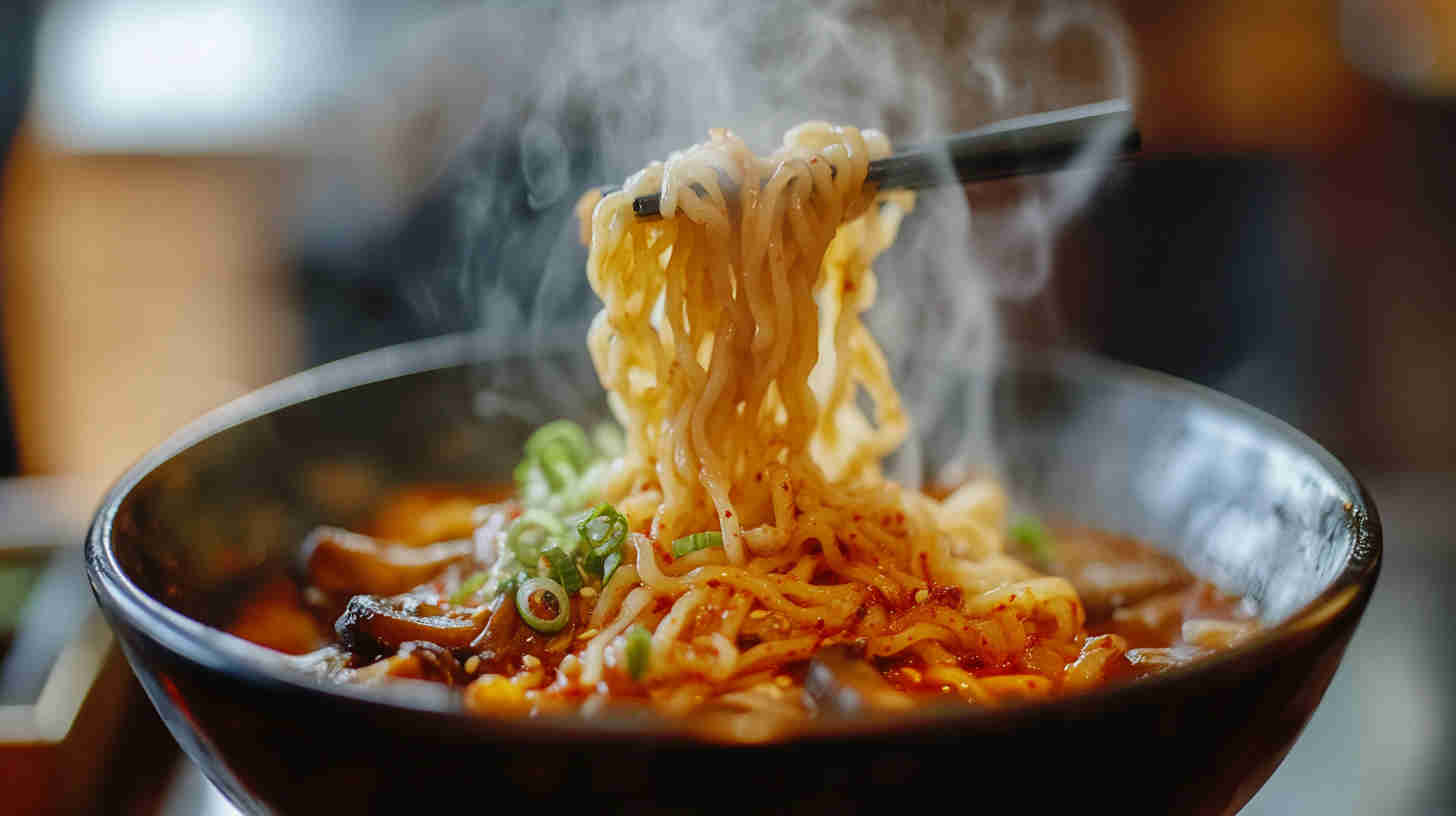
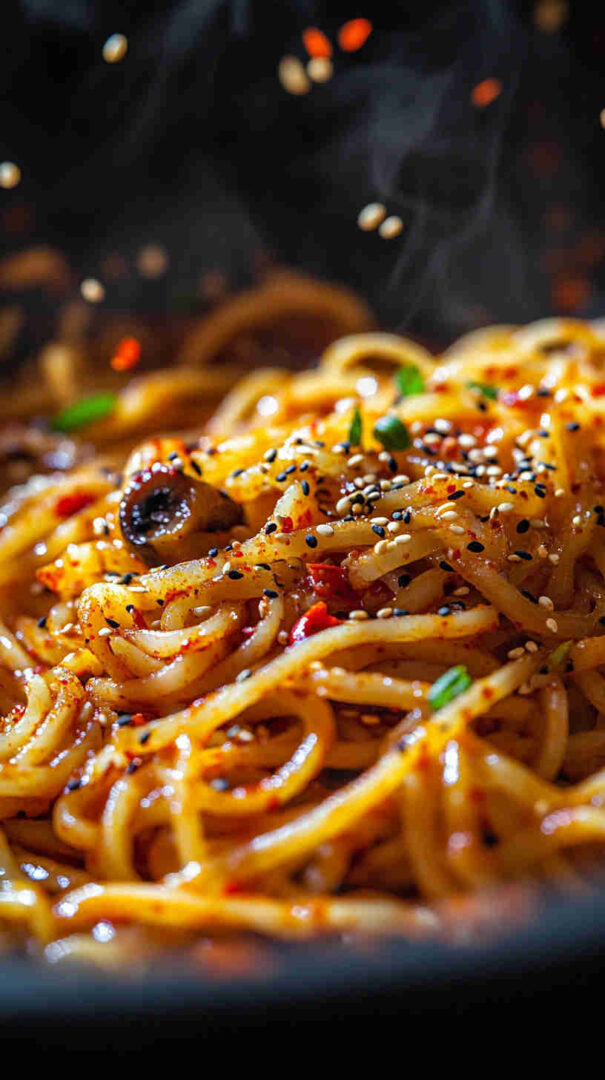
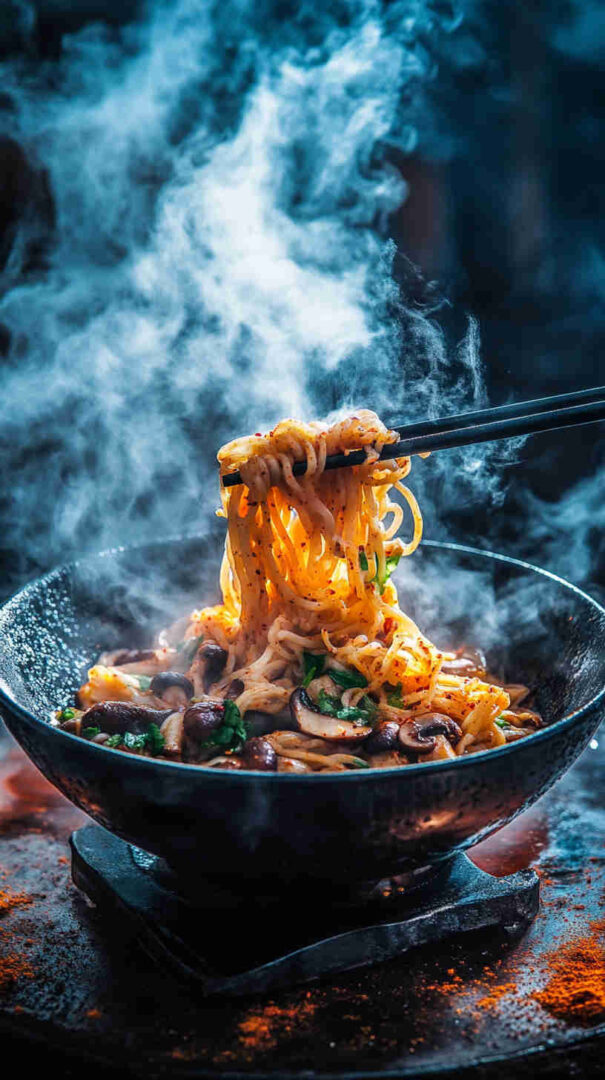
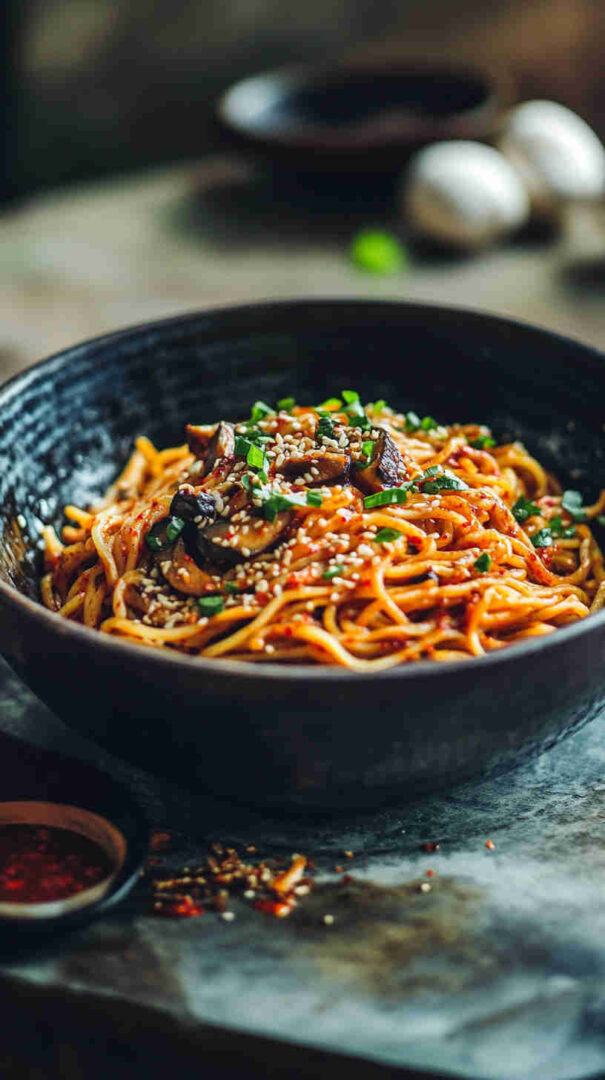
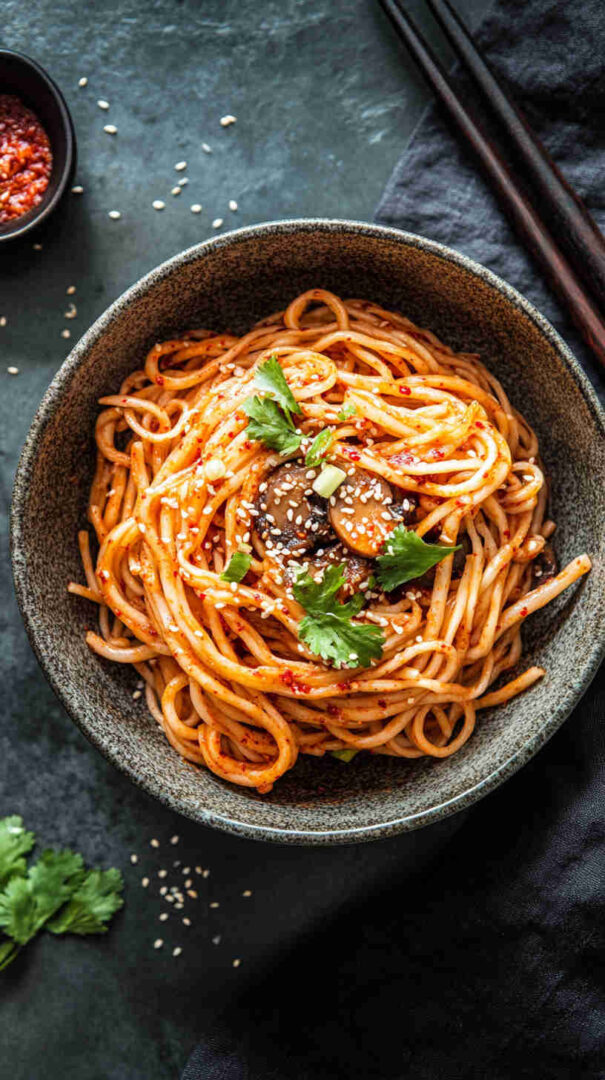
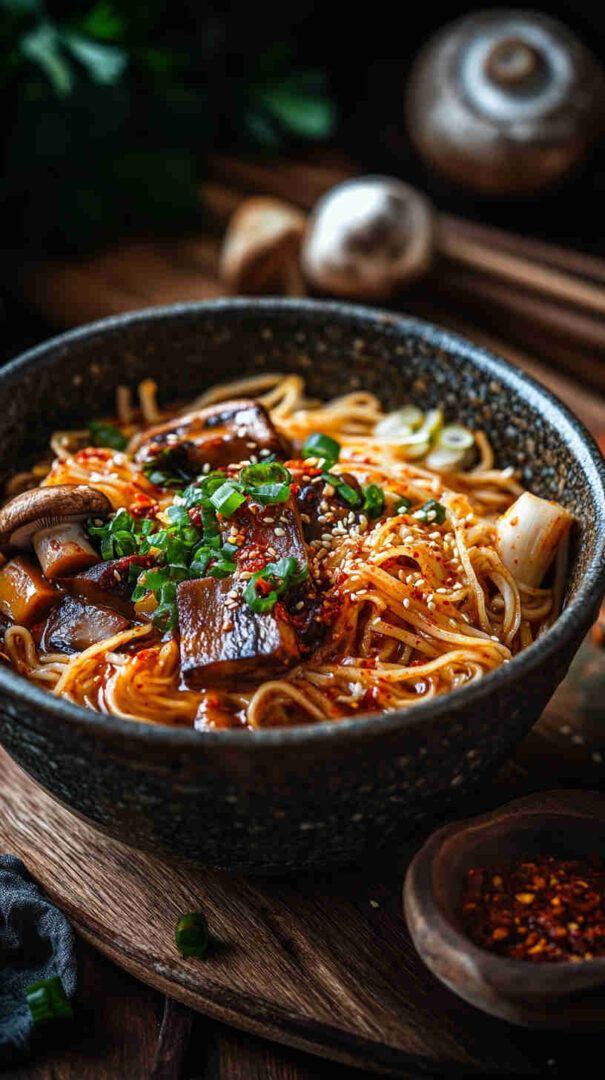
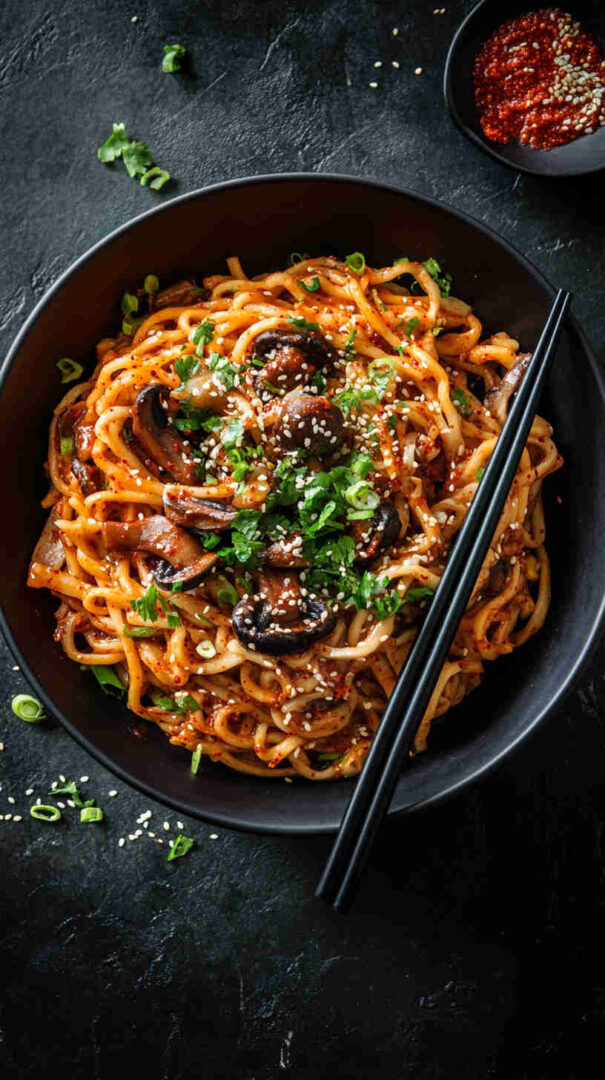
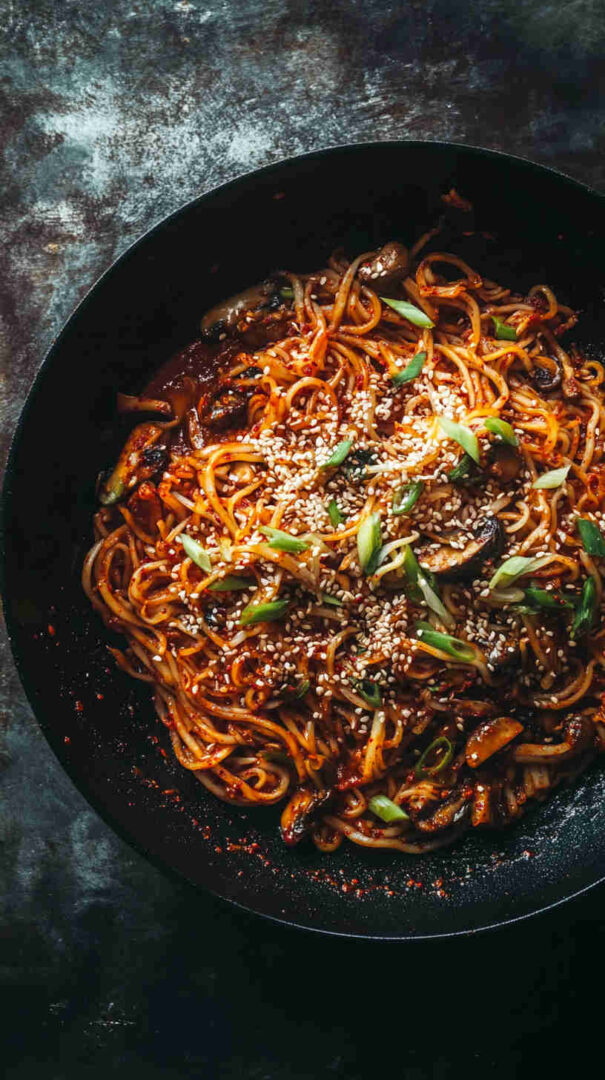
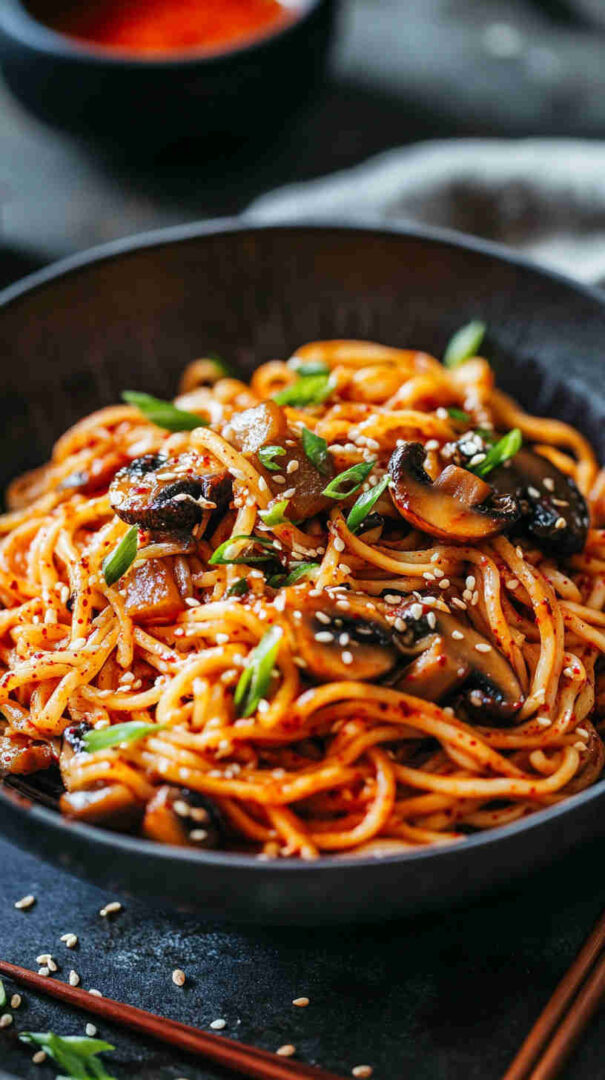
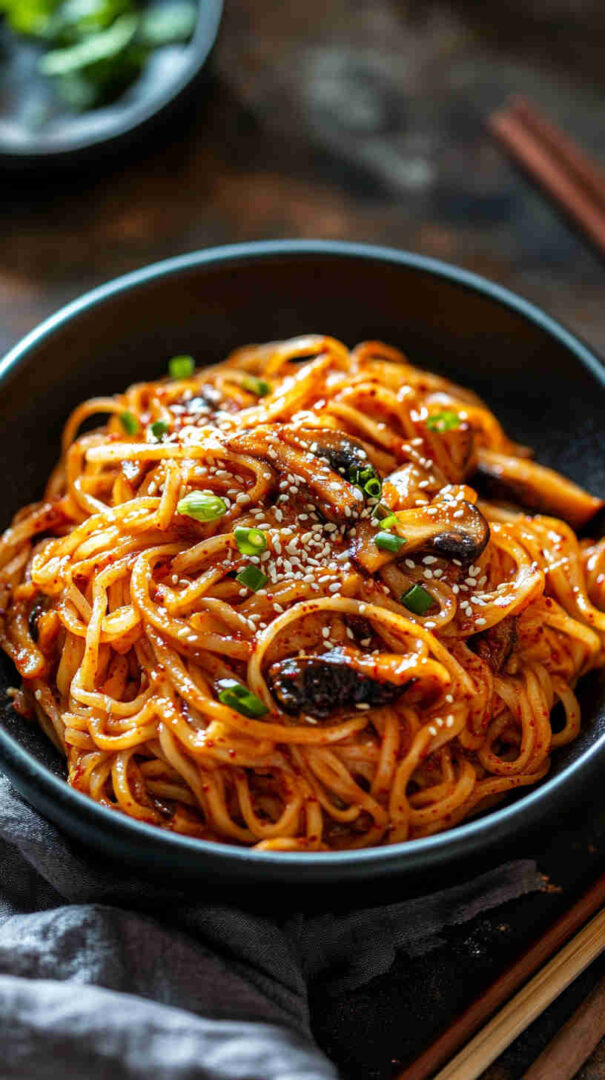
Sizzling mushrooms stir-fried with fiery gochujang paste, garlic, and ginger, then tossed with chewy udon noodles in a glossy, savory-sweet-spicy sauce. Finished with crunchy sesame seeds and fresh scallions, this quick vegetarian noodle dish delivers authentic Korean heat with hearty mushroom texture in every comforting bite.
Why You’ll Love This Recipe:
This recipe is a total flavor bomb that brings the best of Korean cuisine into a simple weeknight meal. The gochujang delivers that signature deep, fermented chili heat balanced by subtle sweetness and umami, while meaty mushrooms soak up every drop of the glossy sauce, giving a satisfying chew that makes this dish feel hearty and indulgent without any meat.
It’s incredibly fast — ready in under 30 minutes — yet tastes like you spent hours building layers of flavor. The chewy udon noodles cling perfectly to the rich sauce, and you can customize the spice level or add greens for extra nutrition.
Whether you’re craving something cozy on a chilly evening or want to impress with minimal effort, this dish hits all the right notes: spicy, savory, slightly sweet, and deeply satisfying. It’s naturally vegetarian (easily vegan too), budget-friendly, and uses pantry staples that deliver restaurant-quality results at home.
Korean Gochujang Mushroom Noodles Recipe
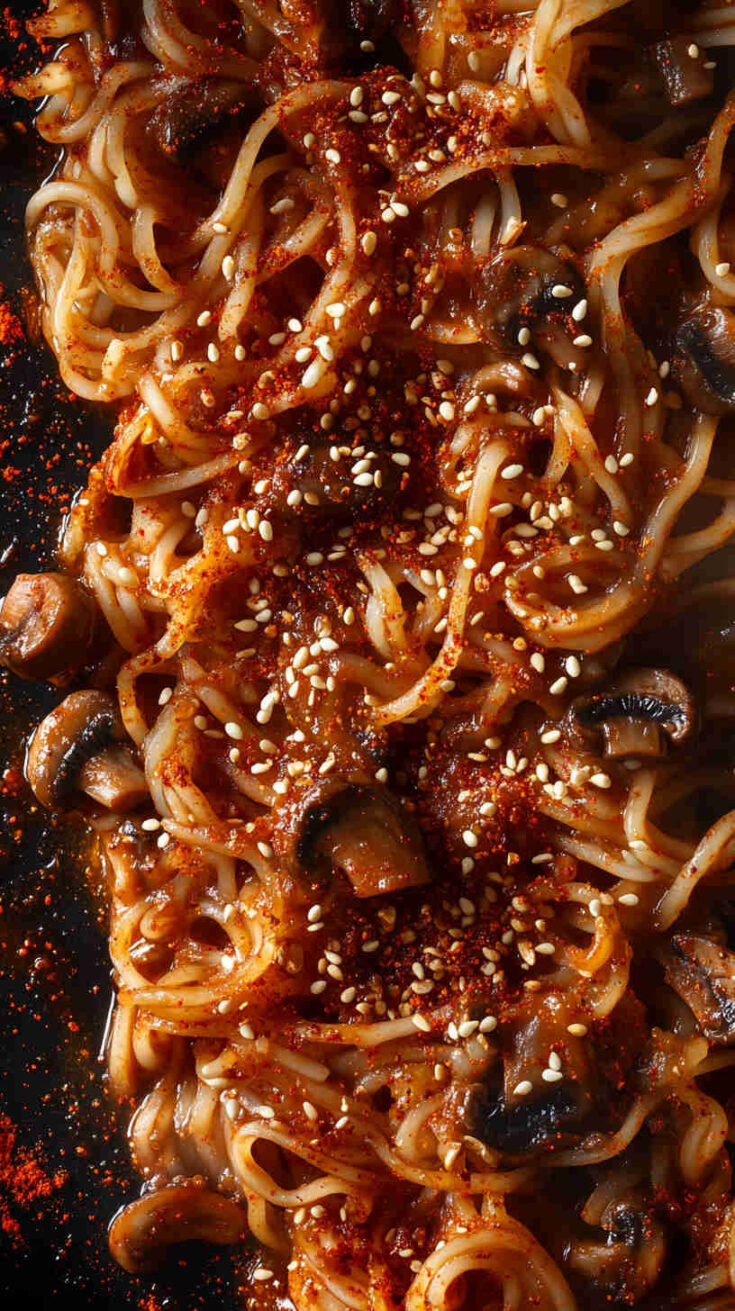
Spicy gochujang-glazed mushrooms tossed with chewy udon noodles in a savory, umami-packed Korean-inspired sauce.
Ingredients
- 400g (14 oz) fresh or frozen udon noodles (or equivalent dried)
- 250g (about 9 oz) mixed mushrooms (shiitake, cremini, oyster, or chestnut), sliced
- 3 tablespoons neutral oil (vegetable or peanut)
- 4 cloves garlic, minced
- 1 tablespoon fresh ginger, minced
- 3–4 tablespoons gochujang (adjust to spice preference)
- 2 tablespoons soy sauce (or tamari for gluten-free)
- 1 tablespoon mirin (or 1 tsp rice vinegar + 1 tsp sugar)
- 1–2 teaspoons toasted sesame oil
- 1–2 teaspoons honey or brown sugar (optional, to balance heat)
- ½ cup reserved noodle cooking water (as needed)
- 4 scallions, sliced (whites and greens separated)
- 1 tablespoon toasted sesame seeds, for garnish
- Optional: chili oil, extra sesame oil, or fresh cilantro for serving
Instructions
- Bring a large pot of water to a boil and cook your udon noodles according to package instructions, but shave off 1 minute so they stay perfectly chewy. Before draining, scoop out about ½ cup of the starchy cooking water and set it aside — trust me, you’ll need it! Drain the noodles and give them a quick rinse under cold water to stop cooking and remove excess starch.
- While the water heats and noodles cook, prep everything: slice your mushrooms, mince the garlic and ginger, and separate the white and green parts of the scallions. Having everything ready makes this dish so much fun and stress-free.
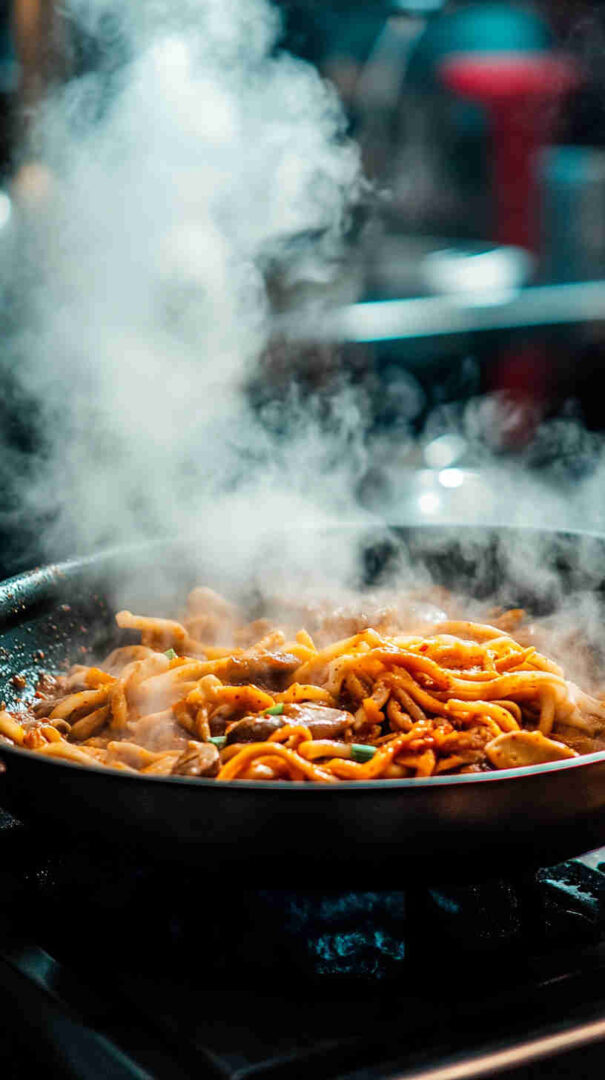
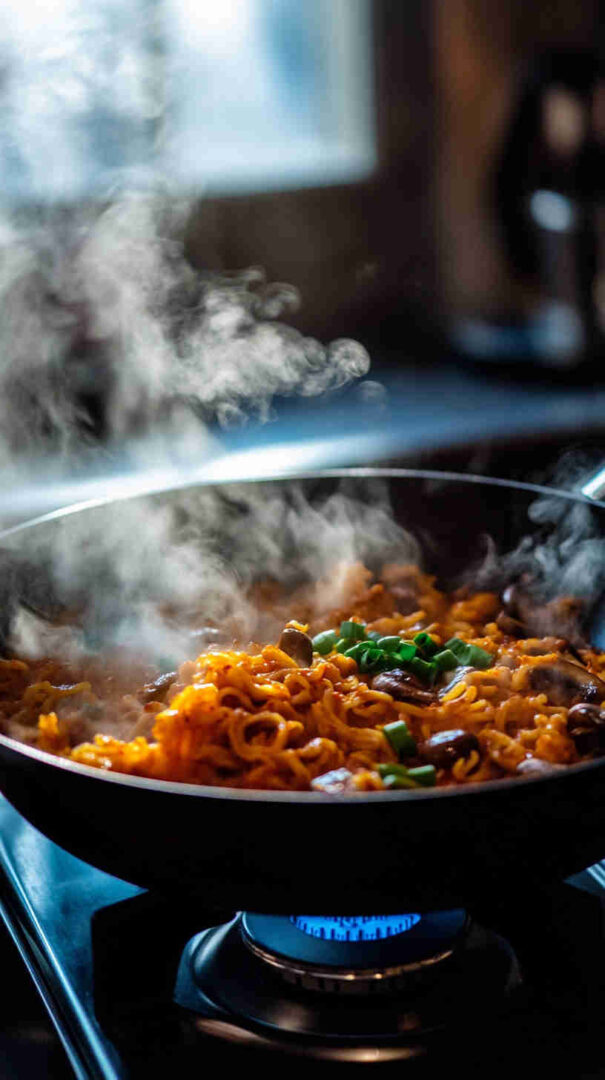
- Heat 2 tablespoons of neutral oil in a large wok or skillet over medium-high heat until it shimmers. Add the sliced mushrooms in a single layer (work in batches if needed) and let them sit undisturbed for 2–3 minutes to get gorgeous golden edges and release their earthy aroma.
- Stir the mushrooms, then toss in the minced garlic, ginger, and scallion whites. Stir-fry for 1–2 minutes until fragrant and the garlic turns golden — your kitchen will smell absolutely incredible right now!
- Push everything to one side and add the gochujang straight into the pan. Let it sizzle for 30 seconds to wake up all those deep, spicy flavors, then stir it through the mushrooms so every piece gets coated.
- Pour in the soy sauce, mirin, toasted sesame oil, and honey/sugar (if using). Stir everything together — watch the sauce become glossy and thick as it clings to the mushrooms. If it looks too thick, add a splash of reserved noodle water to loosen it up.
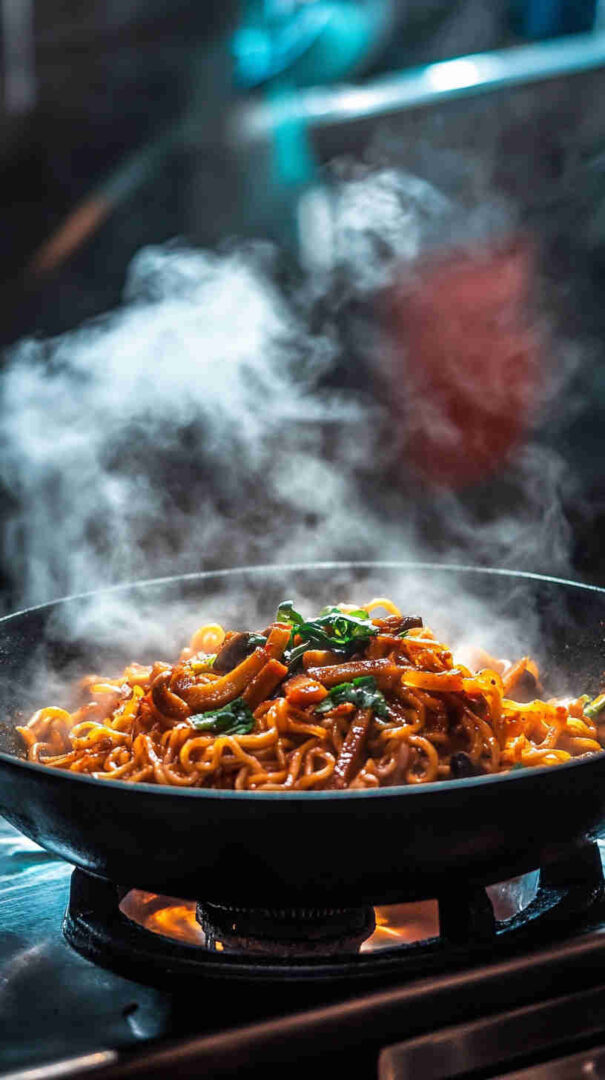
- Add the cooked udon noodles directly into the pan. Gently toss everything using tongs or chopsticks so the noodles get fully coated in that beautiful spicy sauce. Keep tossing for 1–2 minutes over medium heat — this is where the magic happens!
- If the sauce feels too thick, drizzle in more reserved noodle water, a tablespoon at a time, until it’s silky and coats the noodles perfectly. Taste and adjust — more soy for saltiness, more gochujang for heat, or a tiny pinch of sugar if needed.
- Turn off the heat and finish with a final flourish: drizzle extra toasted sesame oil, scatter the green parts of the scallions, and sprinkle generously with toasted sesame seeds for crunch and nutty aroma.
- Divide into bowls, add any extra chili oil or fresh herbs if you like, and dig in while it’s hot and steamy — every bite is pure comfort with a spicy kick!
Notes
- Spice level varies by gochujang brand — taste as you go.
- For gluten-free, use tamari and gluten-free noodles.
- Fresh udon makes a big difference in texture — highly recommended!
Nutrition Information
Yield
2Serving Size
1Amount Per Serving Calories 558Total Fat 27gSaturated Fat 2gUnsaturated Fat 25gSodium 784mgCarbohydrates 66gFiber 7gSugar 8gProtein 15g
The recipes and nutritional information on Yum Tonight are for informational purposes only. Always consult a healthcare provider for personalized dietary advice.
Recipe Tips and Tricks:
- Use fresh or vacuum-packed udon for the best chewy texture; if using dried, cook slightly under al dente since they’ll finish in the pan.
- Reserve ½ cup of noodle cooking water — it’s liquid gold for loosening and emulsifying the sauce.
- Slice mushrooms evenly and don’t overcrowd the pan so they caramelize beautifully instead of steaming.
- Adjust gochujang to taste; start with less if you’re spice-sensitive, then add more at the end.
- For extra richness, add a knob of butter at the finish (vegan butter works great).
- Prep all ingredients before heating the pan — this dish moves fast once you start cooking.
- Taste and season as you go; a tiny splash of rice vinegar can brighten if it feels too rich.
Ingredients Notes:
Gochujang is the star — this thick, fermented Korean chili paste brings heat, sweetness, and deep umami from fermented soybeans and glutinous rice; choose a good-quality brand for balanced flavor. Fresh udon noodles offer the ideal bouncy chew, but ramen or rice noodles work well too.
Mixed mushrooms (shiitake, cremini, oyster, or king oyster) provide meaty texture and earthy richness that pairs perfectly with the sauce; don’t skip them! Aromatics like garlic and ginger add essential fragrance, while soy sauce and mirin (or rice vinegar + sugar) bring salty-sweet depth. Toasted sesame oil gives nutty aroma, and optional honey or sugar helps mellow the spice. Garnishes like sesame seeds and scallions add crunch and freshness that lift the whole dish.
Variations and Substitutions:
Make it vegan by using plant-based butter and ensuring your gochujang and soy sauce are vegan (most are). Swap udon for ramen, soba, rice noodles, or even spaghetti for different textures.
Add protein with crispy tofu cubes, pan-fried tempeh, or a soft-boiled egg on top. Toss in vegetables like baby bok choy, spinach, kale, shredded cabbage, bell peppers, or carrots for extra nutrition and color. For creamier results, stir in a splash of coconut milk or heavy cream at the end.
Reduce heat by using mild gochujang or less paste, or amp it up with gochugaru (Korean chili flakes) or chili oil. Try king oyster mushrooms sliced into thick “scallops” for a luxurious feel, or use enoki for delicate texture. Add kimchi for tangy funk or peanuts for crunch.
Storage Options:
Store leftovers in an airtight container in the refrigerator for up to 3 days. Reheat gently in a pan with a splash of water or noodle water to revive the sauce texture — microwave works too but may soften noodles slightly. Freezing is not recommended as the noodle texture becomes mushy after thawing.
Dish Gallery
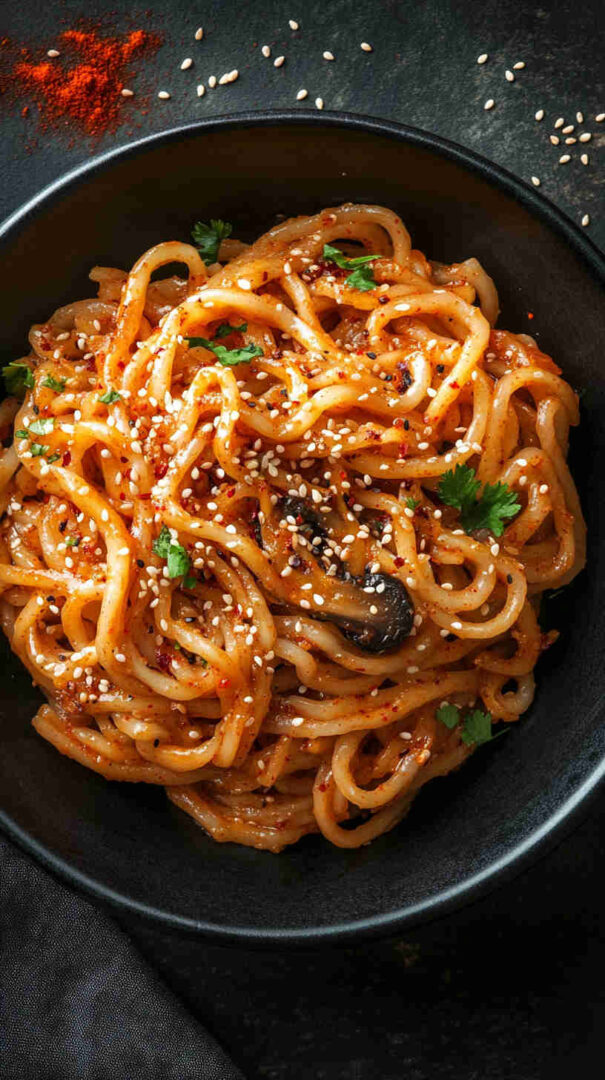
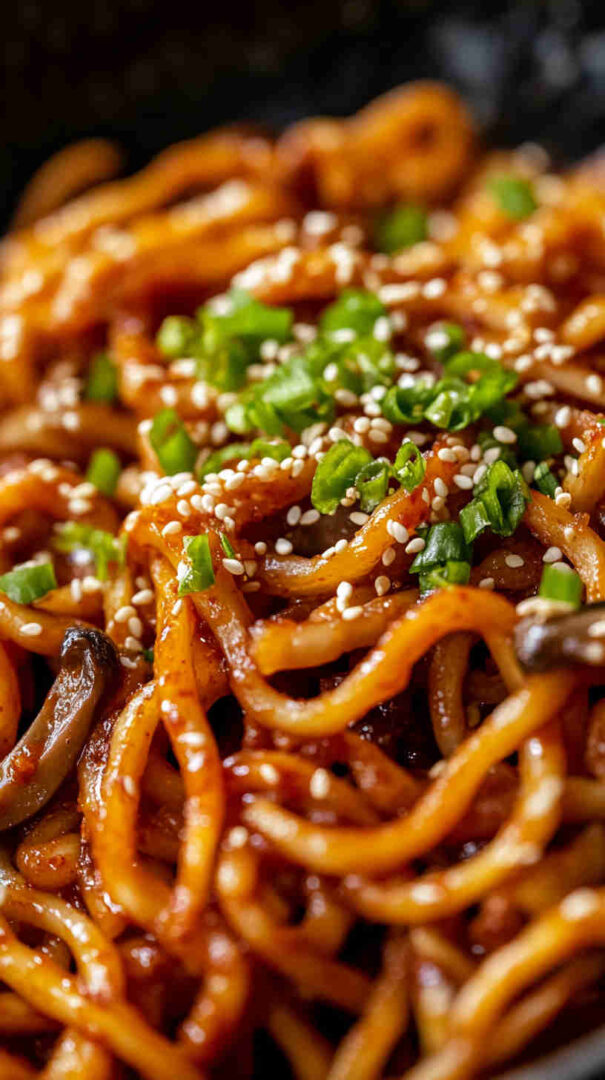
Please share this Korean Gochujang Mushroom Noodles Recipe with your friends and do a comment below about your feedback.
We will meet you on next article.
Until you can read, Japanese Mushroom Udon Noodles Recipe