Liguria Pesto alla Genovese Recipe
Experience the bright, aromatic soul of Liguria with this authentic Pesto alla Genovese. Fresh Genovese basil leaves are gently pounded with garlic, pine nuts, and a blend of Parmigiano-Reggiano and Pecorino cheeses, then emulsified with delicate Ligurian extra virgin olive oil.
This vibrant, no-cook sauce delivers herbal freshness, nutty richness, and savory depth—perfect tossed with pasta, on trofie, or as a versatile Italian condiment.
Why You’ll Love This recipe
You’ll adore this Liguria Pesto alla Genovese because it captures the pure essence of Italian simplicity and quality ingredients at their finest. Made in minutes with just a handful of fresh items, it transforms everyday meals into something bright, fragrant, and restaurant-worthy without any cooking required.
The balance of sweet basil, toasted pine nuts, sharp garlic, and two aged cheeses creates layers of flavor that are fresh yet deeply savory—never heavy or overly oily when made right.
It’s incredibly versatile: classic on trofie or trenette with potatoes and green beans, but also wonderful as a spread on bruschetta, a swirl in soups, a marinade for chicken or fish, or a vibrant dressing for vegetables. Families love its kid-friendly herbal brightness, while food lovers appreciate how it honors centuries of Ligurian tradition.
Best of all, once you taste homemade pesto, store-bought versions pale in comparison—the vibrant green color, silky texture, and explosive aroma make every bite feel like a sunny day on the Italian Riviera. It’s naturally gluten-free, quick to prepare, and brings genuine joy and pride when shared with loved ones.
Liguria Pesto alla Genovese Recipe
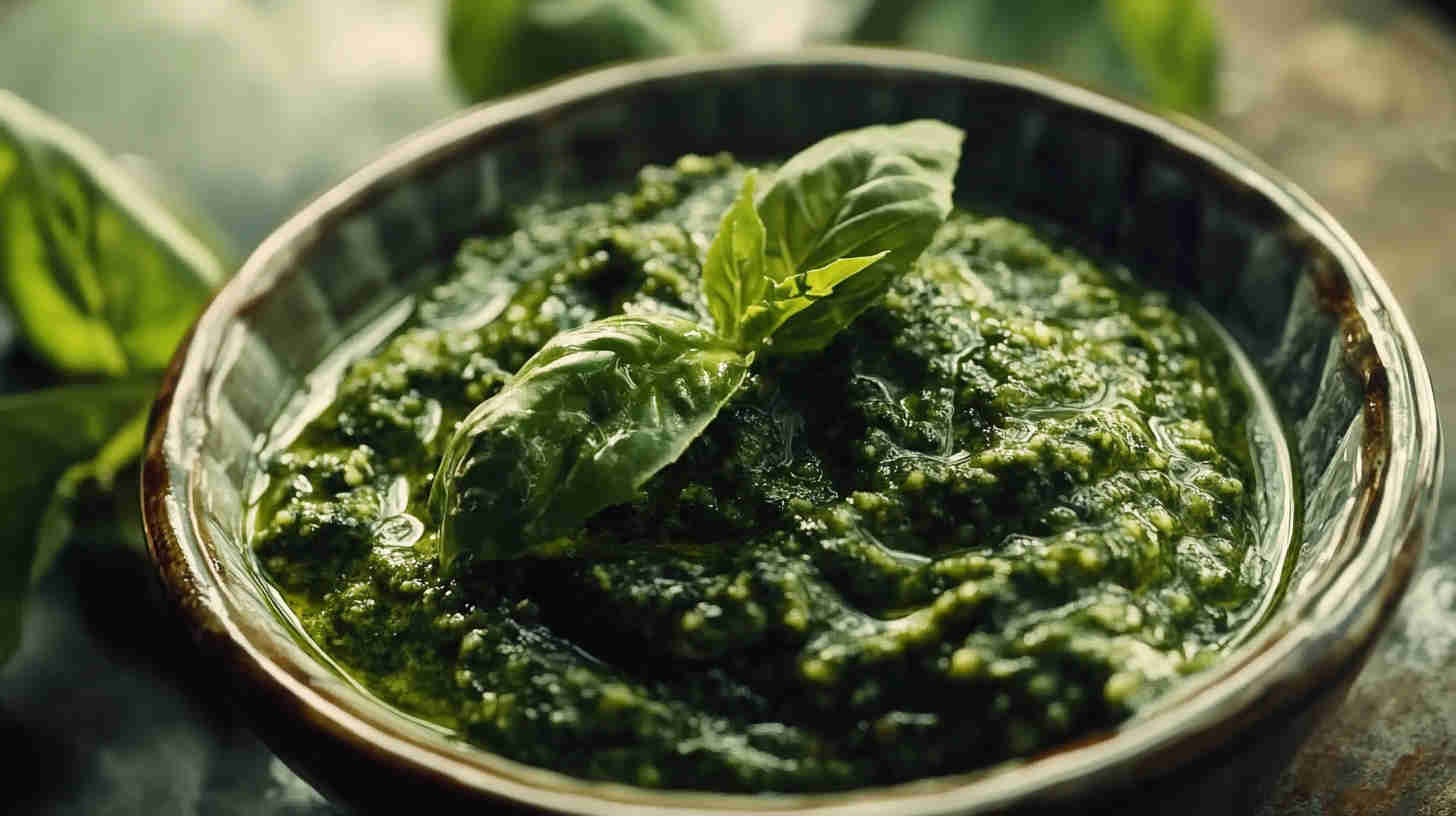
Authentic bright Ligurian Pesto alla Genovese—fresh basil, pine nuts, cheeses, and olive oil for vibrant Italian flavor!
Ingredients
- 2-3 cups (about 50-70g) fresh Genovese basil leaves (small and young preferred), gently washed and patted very dry
- 1-2 small garlic cloves, peeled
- 2-3 tablespoons pine nuts (lightly toasted optional)
- ½ teaspoon coarse sea salt (or to taste)
- ½ cup (about 50g) freshly grated Parmigiano-Reggiano cheese
- 2-3 tablespoons freshly grated Pecorino Sardo or Pecorino Romano cheese
- ½ cup (120 ml) extra virgin olive oil (preferably Ligurian or mild fruity variety), plus more if needed
Instructions
- Gather your vibrant ingredients and set up a cool workspace—this quick no-cook sauce comes together beautifully when everything is fresh and ready.
- Prepare the basil with care: Gently pick the tender basil leaves from the stems. Wash them lightly in cold water if needed, then pat completely dry with a clean towel to avoid extra moisture.
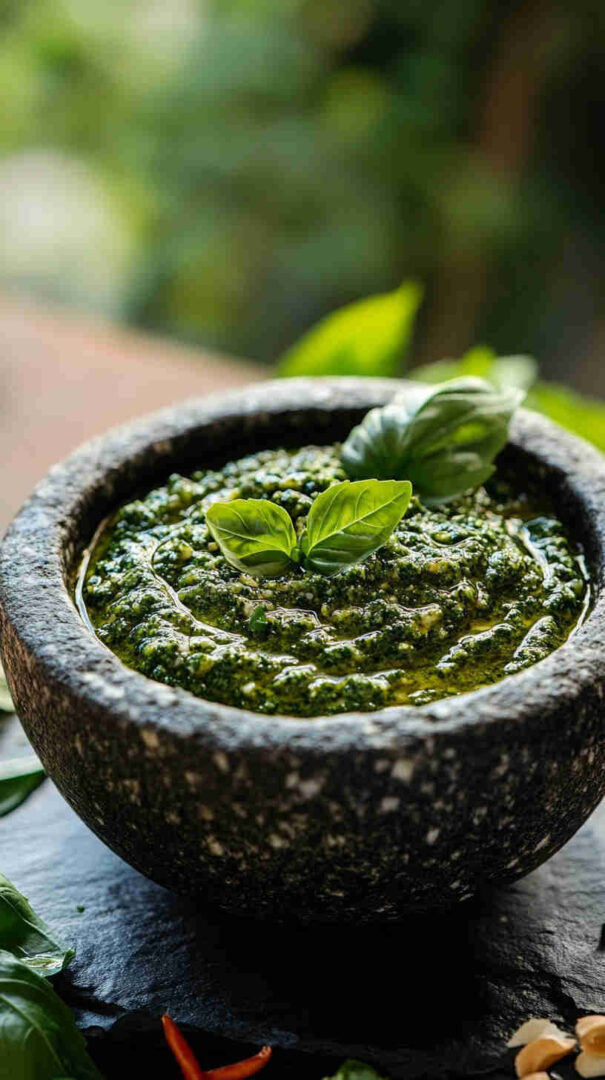
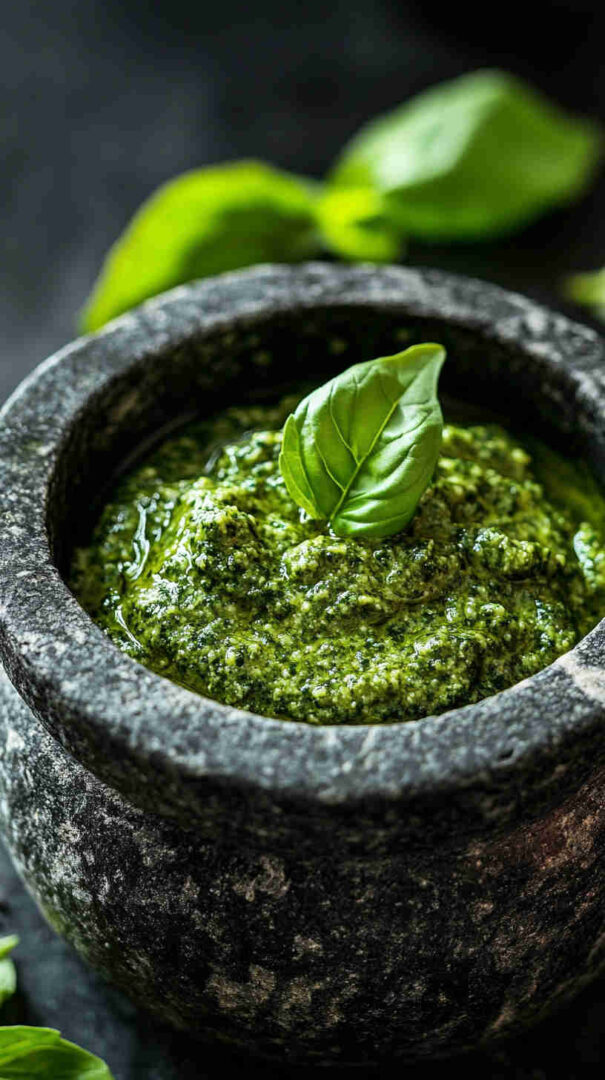
- Start in the mortar (or processor): Place the garlic cloves and a pinch of coarse sea salt in a large marble mortar (or chilled food processor bowl). Pound or pulse until you have a smooth paste—this releases the garlic's gentle aroma.
- Add the pine nuts: Toss in the pine nuts and continue pounding or processing until they break down into a creamy, coarse paste. This adds luxurious texture and subtle sweetness.
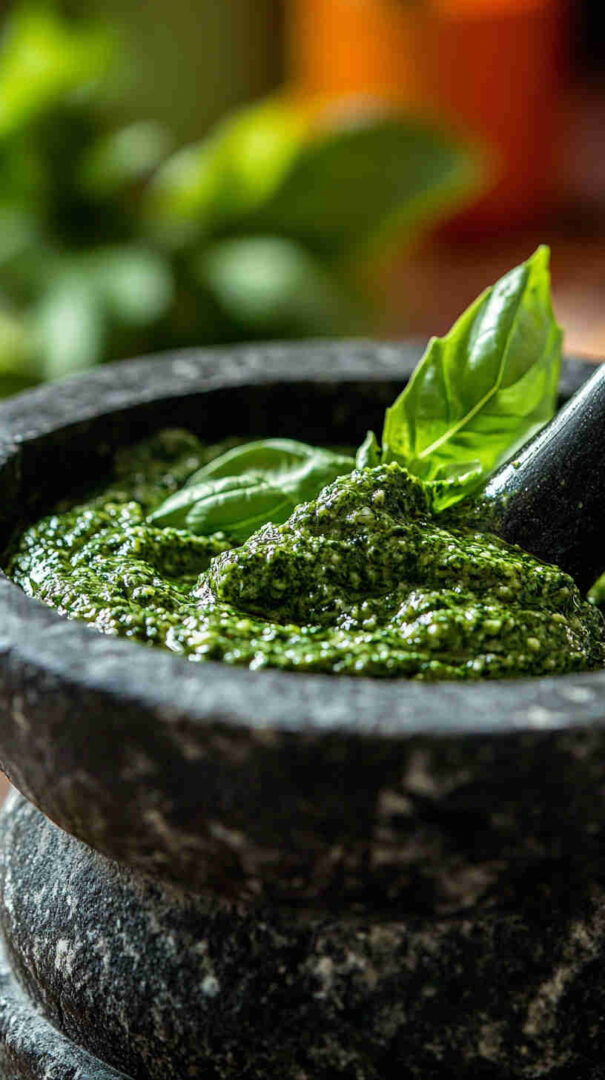
- Introduce the fragrant basil: Add the dry basil leaves a handful at a time. Pound gently with a circular motion (or pulse briefly) to bruise the leaves lightly and release their essential oils without turning them to mush.
- Build the cheesy foundation: Sprinkle in the grated Parmigiano-Reggiano and Pecorino cheeses. Continue working everything together until the mixture looks vibrant green and well combined—the cheeses bring savory depth and help bind.
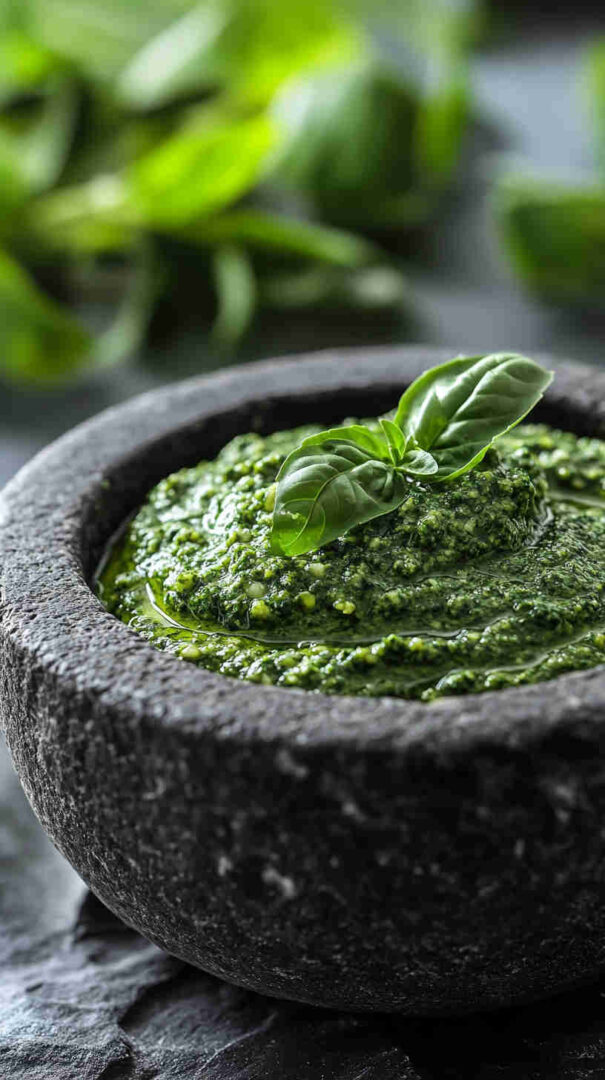
- Emulsify with golden olive oil: Begin drizzling in the extra virgin olive oil very slowly while pounding or processing continuously. Add it gradually until you reach a silky, spoonable consistency that holds together beautifully.
- Taste and perfect the balance: Give your pesto a quick taste. Adjust with a touch more salt, cheese, or oil if needed. The final sauce should be bright, aromatic, creamy, and perfectly balanced—not too garlicky or oily.
- Rest briefly for harmony: Let the finished pesto sit for 5-10 minutes at room temperature. This allows the flavors to meld into that signature Ligurian magic.
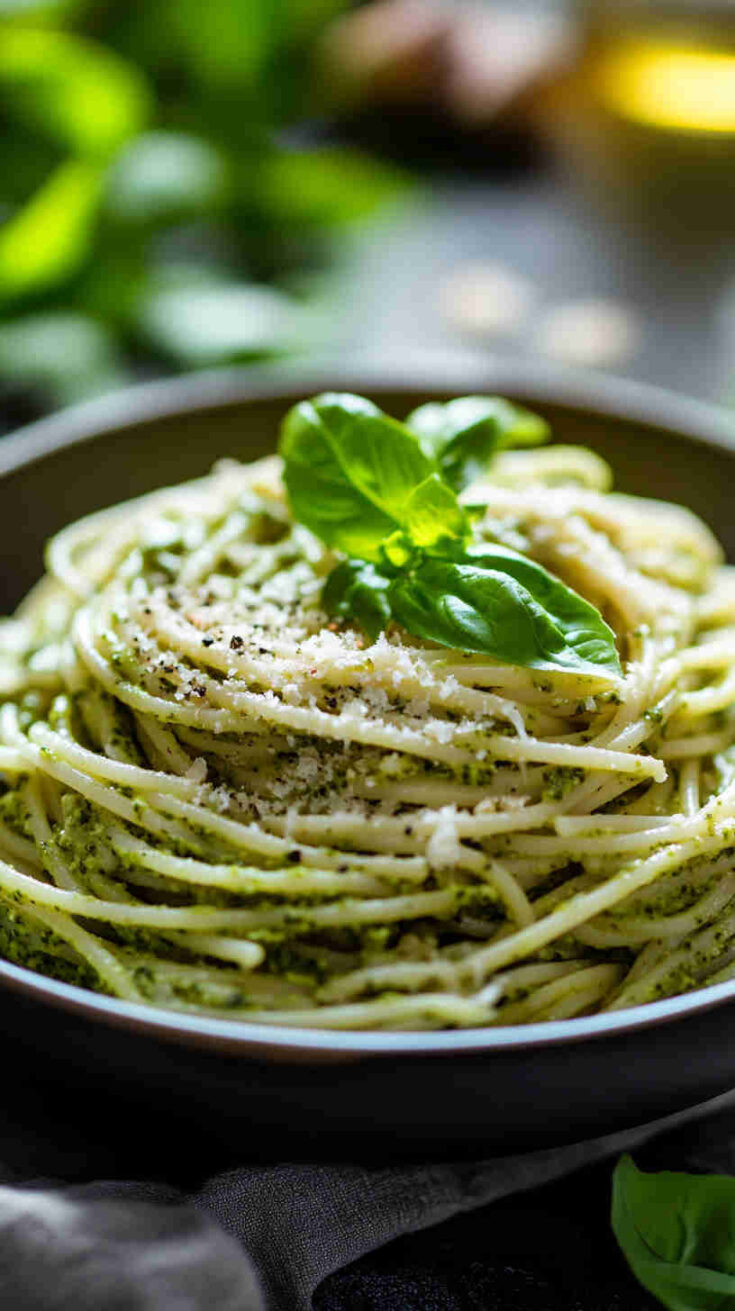
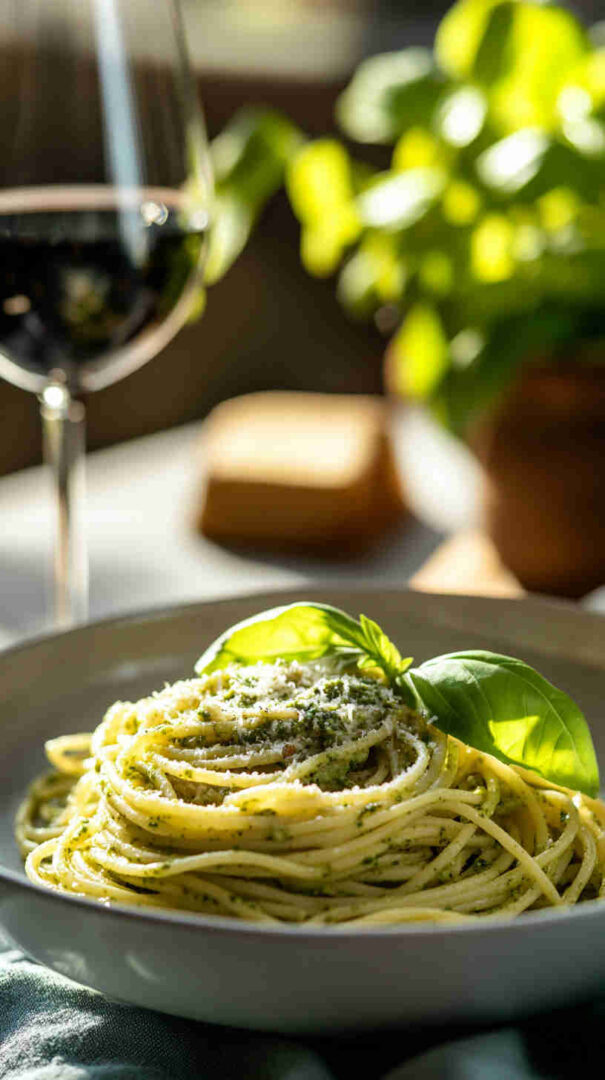
- Serve with sunshine and joy: Toss immediately with hot drained pasta (like trofie or linguine) along with a splash of pasta cooking water for silky coating. Or use as a spread, drizzle, or condiment. Finish with extra grated cheese and enjoy this taste of the Italian Riviera!
Notes
Traditional method uses a mortar and pestle for superior texture and flavor—food processor is a convenient modern alternative if you pulse gently and keep everything cold. Never heat pesto directly; add it off the heat to preserve color and freshness. This recipe is naturally gluten-free. For the classic Genovese experience, serve with trofie pasta, boiled potatoes, and green beans. Use the best quality ingredients possible—freshness makes all the difference!
Nutrition Information
Yield
6Serving Size
1Amount Per Serving Calories 275Total Fat 27gSaturated Fat 6gUnsaturated Fat 21gCholesterol 18mgSodium 554mgCarbohydrates 3gProtein 6g
The recipes and nutritional information on Yum Tonight are for informational purposes only. Always consult a healthcare provider for personalized dietary advice.
Recipe Tips and Tricks
Use the youngest, smallest Genovese basil leaves for the sweetest, most delicate flavor—avoid large or flowering leaves which can taste bitter. Work quickly and gently to minimize bruising the basil, which can cause oxidation and darkening.
Chill your mortar, pestle (or food processor bowl and blade) and olive oil beforehand to keep the mixture cool and preserve the bright green color. Toast pine nuts lightly for deeper flavor, but watch carefully to avoid burning.
Add oil gradually while pounding or processing for the creamiest emulsion. Taste and adjust salt at the end—cheeses vary in saltiness.
For the most authentic texture and flavor, use a marble mortar and wooden pestle rather than a food processor, though the processor works well with care. Always add pesto to hot pasta off the heat with a splash of pasta water for silky coating.
Ingredients Notes
Fresh Genovese basil is the star—its tender, sweet leaves with a hint of anise and mint provide the signature aromatic backbone; choose bright green, unwilted bunches and wash gently just before use. Garlic adds pungent warmth—use 1-2 small cloves for balance, as too much can overpower.
Pine nuts contribute creamy richness and subtle sweetness; European or Italian pine nuts are preferred for their mild flavor. Extra virgin olive oil, ideally light and fruity from Liguria, binds everything into a silky sauce without bitterness—choose one with delicate notes rather than robust peppery varieties.
Parmigiano-Reggiano brings nutty, aged depth and umami, while Pecorino (preferably Sardo or Fiore Sardo) adds sharp, salty tang from sheep’s milk that cuts through the richness.
A pinch of coarse sea salt helps release flavors during pounding and seasons the sauce perfectly. These simple, high-quality ingredients create magic when treated with care.
Variations and Substitutions
While tradition calls for specific ingredients, you can adapt with care. If pine nuts are unavailable or too expensive, substitute with blanched almonds or walnuts for a different but pleasant nuttiness (toast them lightly).
For a milder garlic flavor, blanch the cloves briefly or reduce the amount. Some Ligurian cooks add a small handful of fresh parsley for extra herbal notes when basil is less abundant. Use only Parmigiano-Reggiano for a milder version or increase Pecorino for more sharpness.
In a pinch, a good-quality store-bought extra virgin olive oil works, though Ligurian oil is ideal for authenticity. For a vegan version, replace cheeses with nutritional yeast and a touch of miso, though the result will differ from the classic.
Add a squeeze of lemon juice to brighten and help preserve color. These changes let you enjoy the spirit of Genovese pesto while working with what you have on hand.
Storage Options
Fresh Pesto alla Genovese is best enjoyed the day it’s made for maximum vibrancy and color. Store in an airtight jar or container in the refrigerator, topped with a thin layer of extra virgin olive oil to prevent oxidation, for up to 3-4 days. Stir before using.
For longer storage, freeze in ice cube trays until solid, then transfer to a freezer bag for up to 3 months—thaw in the refrigerator or add frozen cubes directly to hot pasta. Avoid reheating pesto; toss it with warm food off the heat to preserve its fresh character.
Dish Gallery
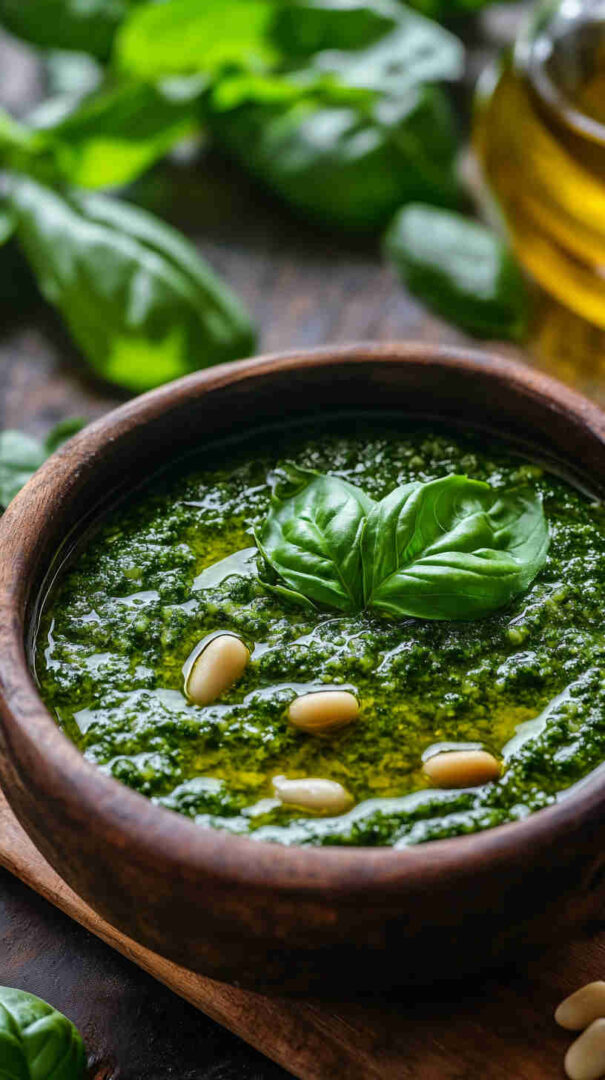
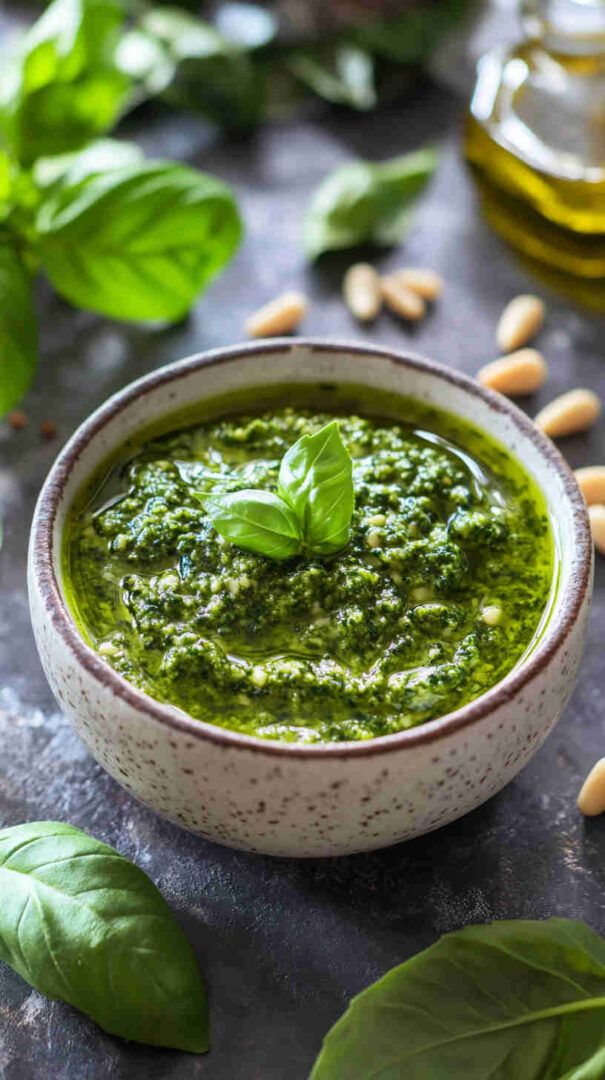
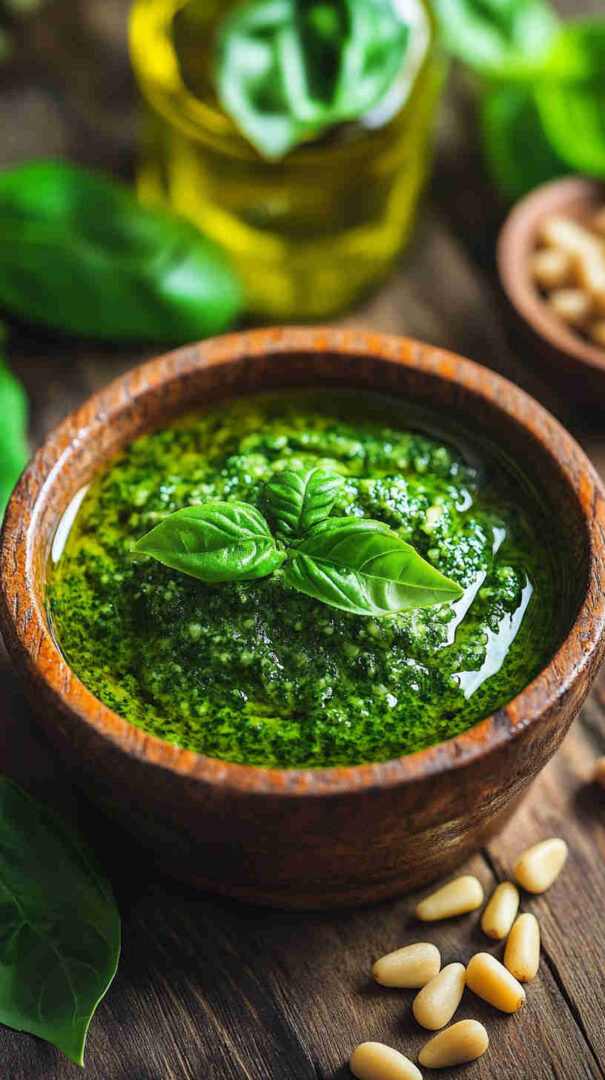
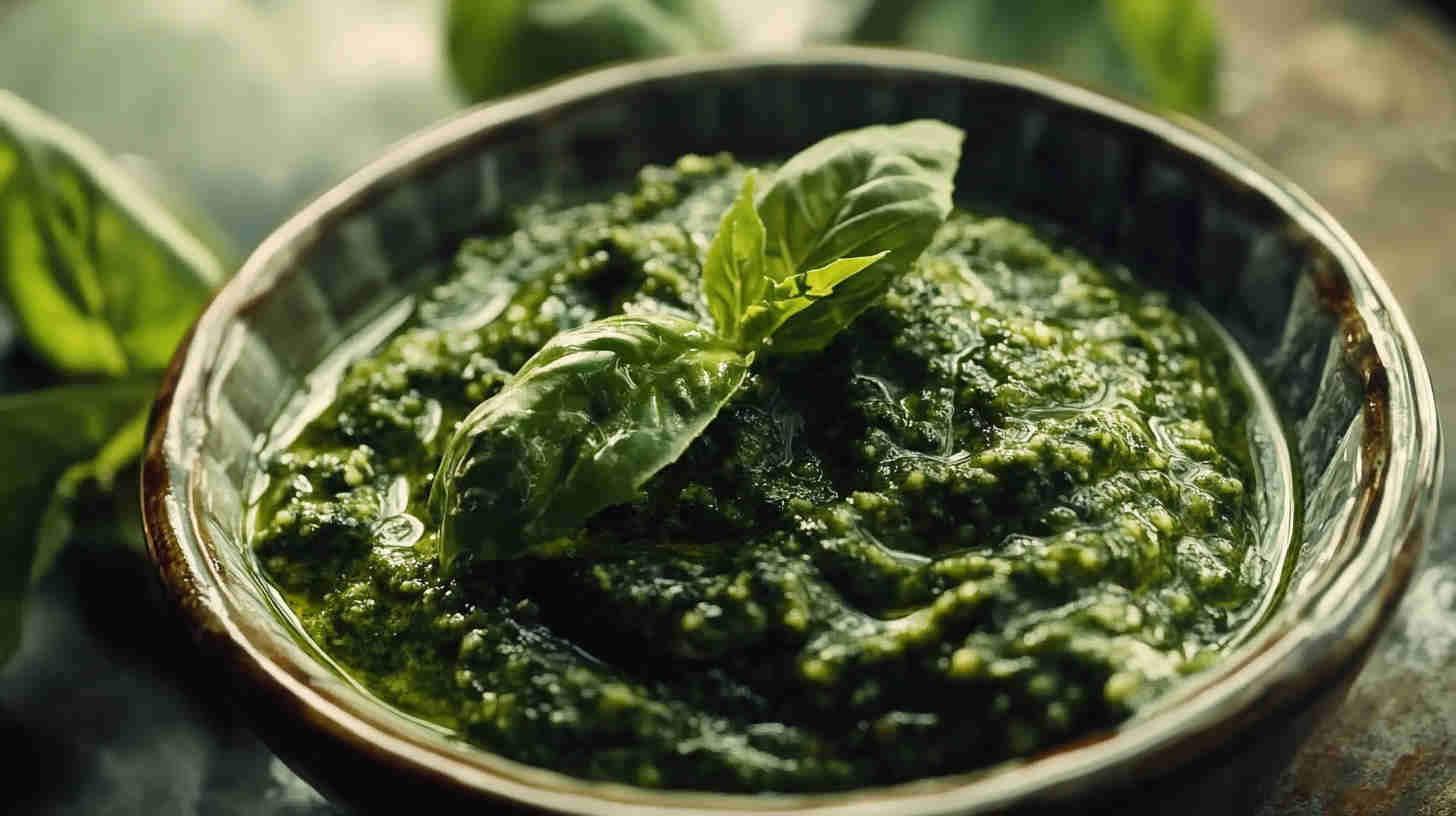
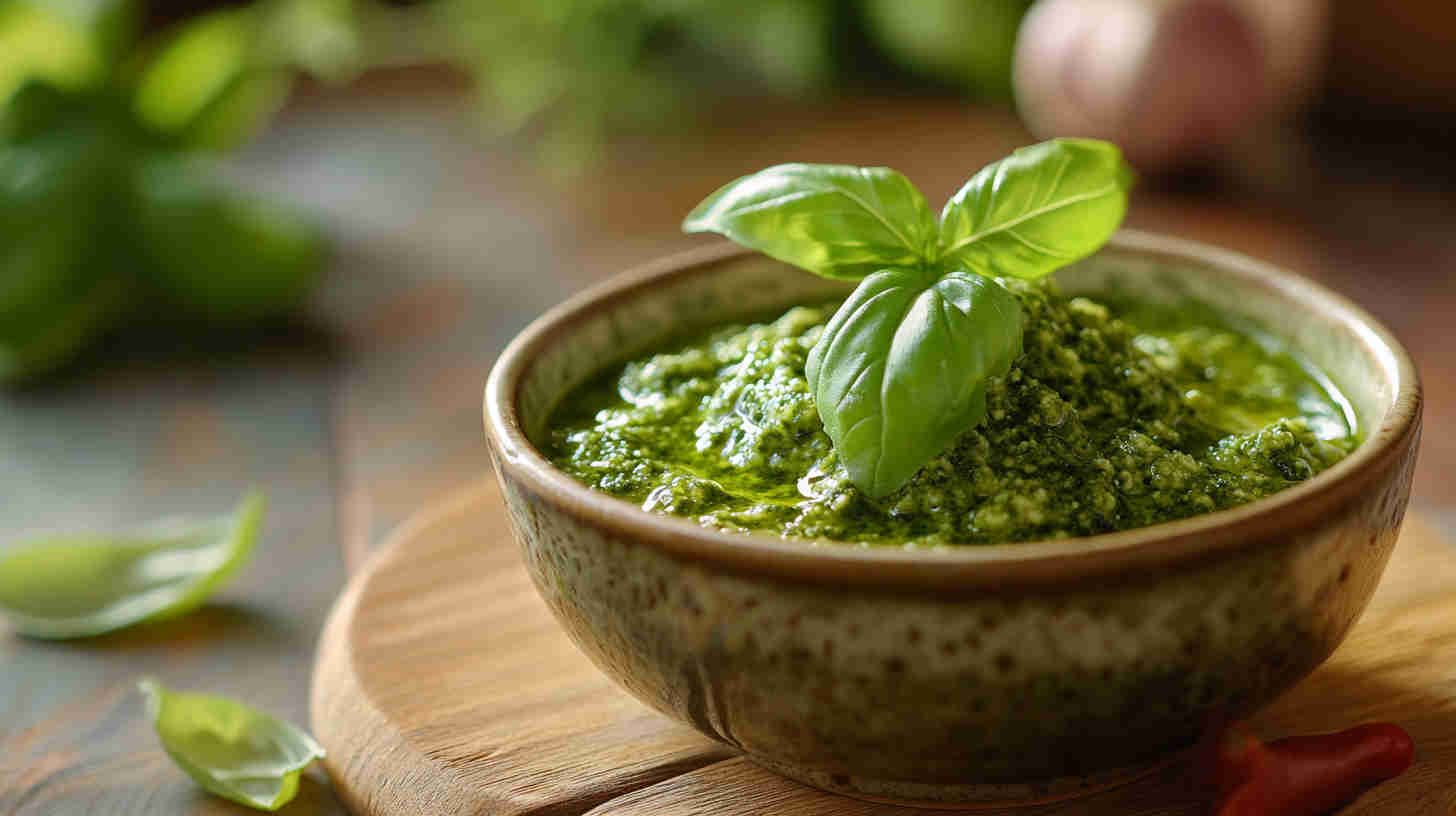
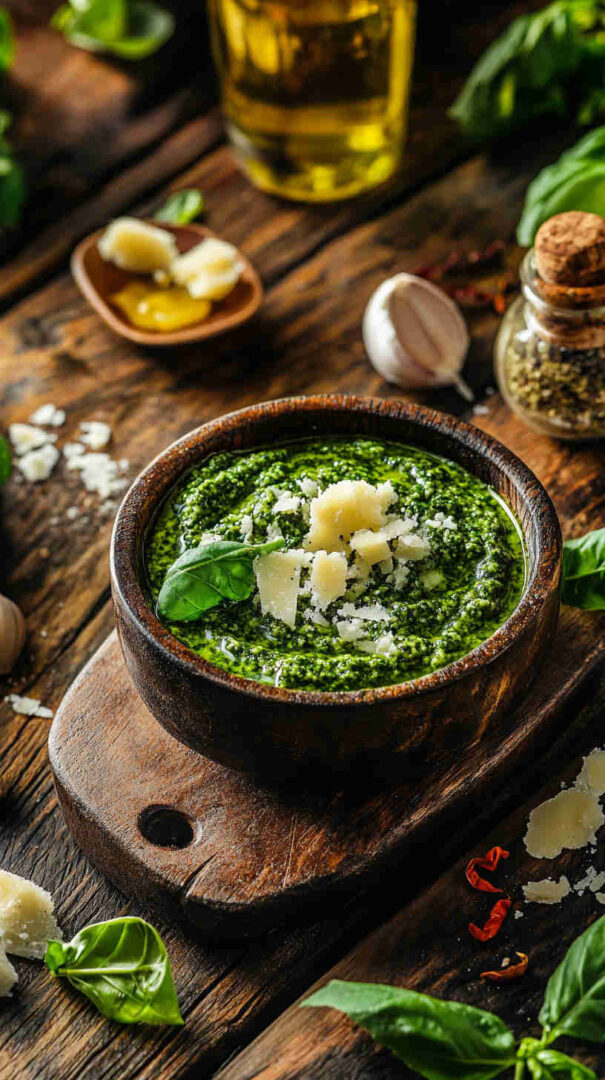
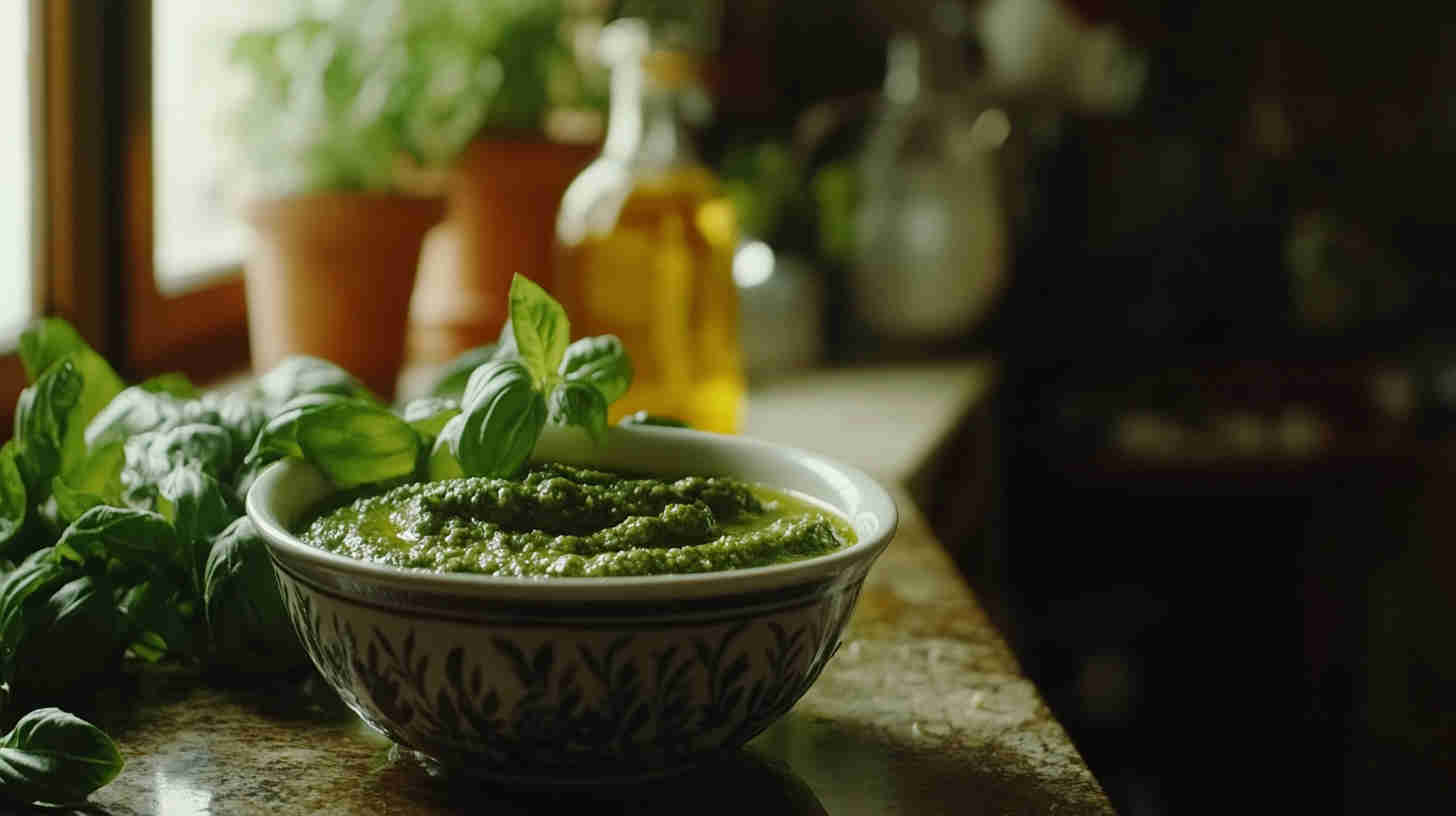
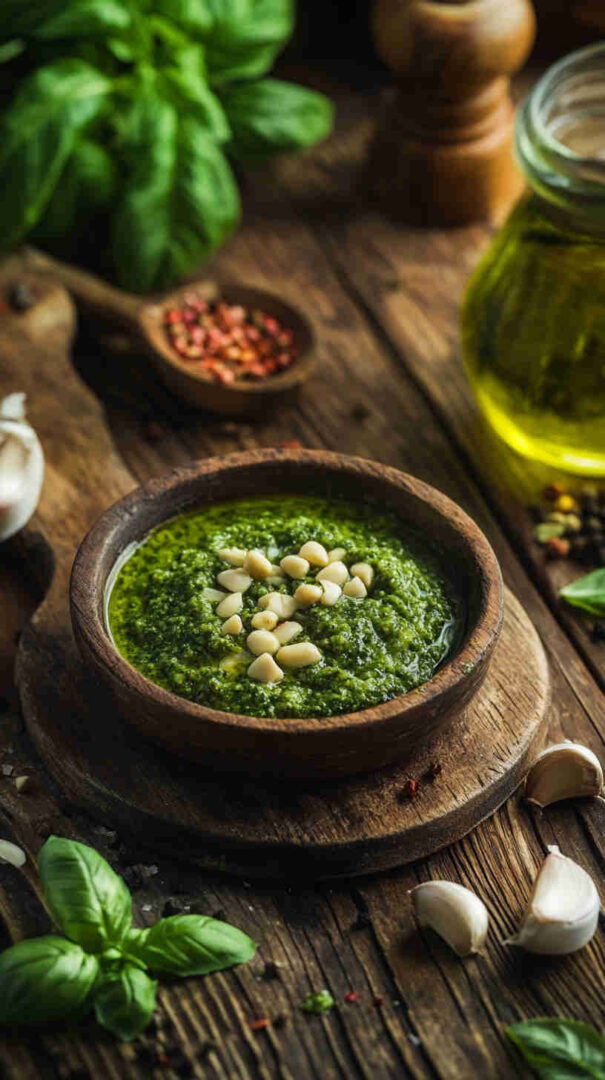
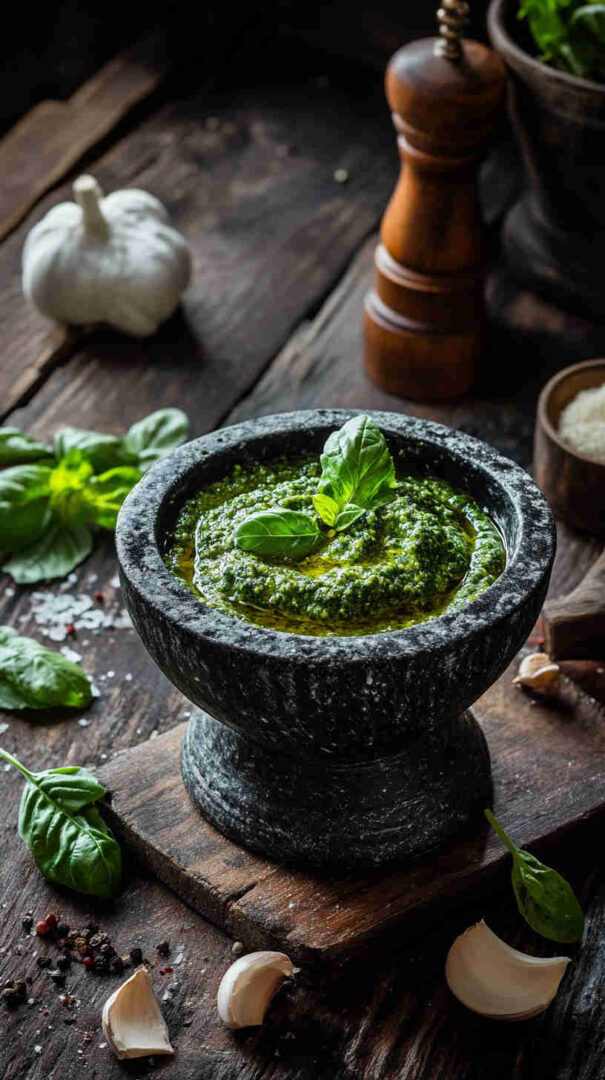
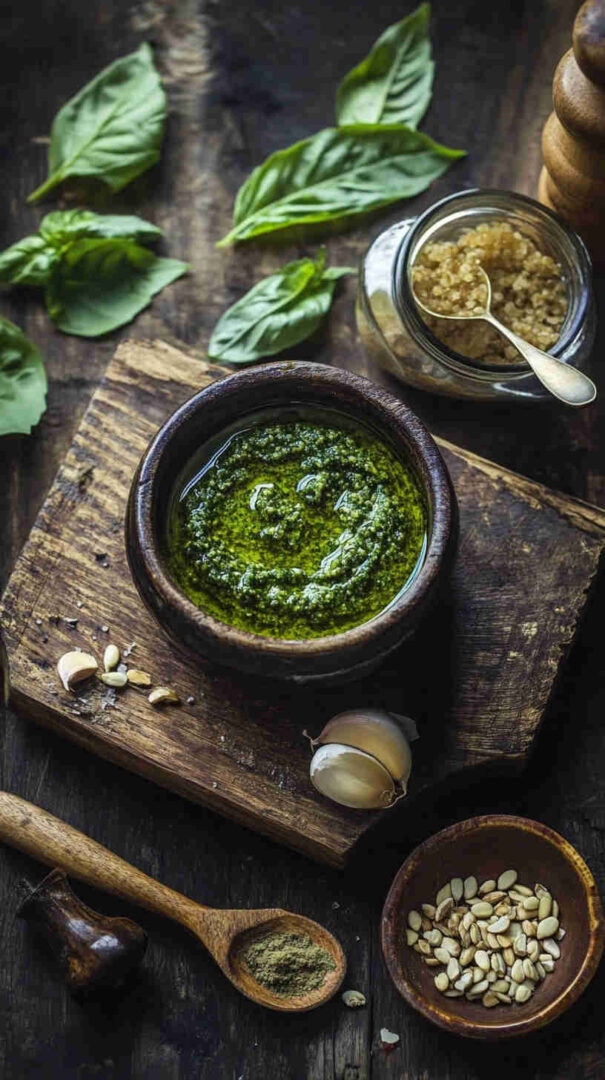
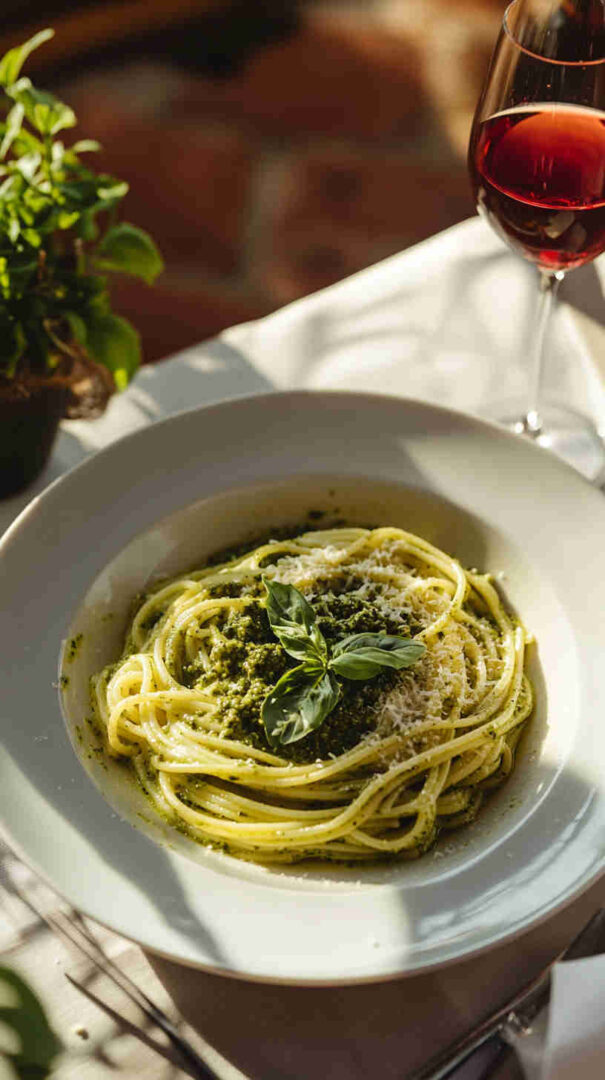
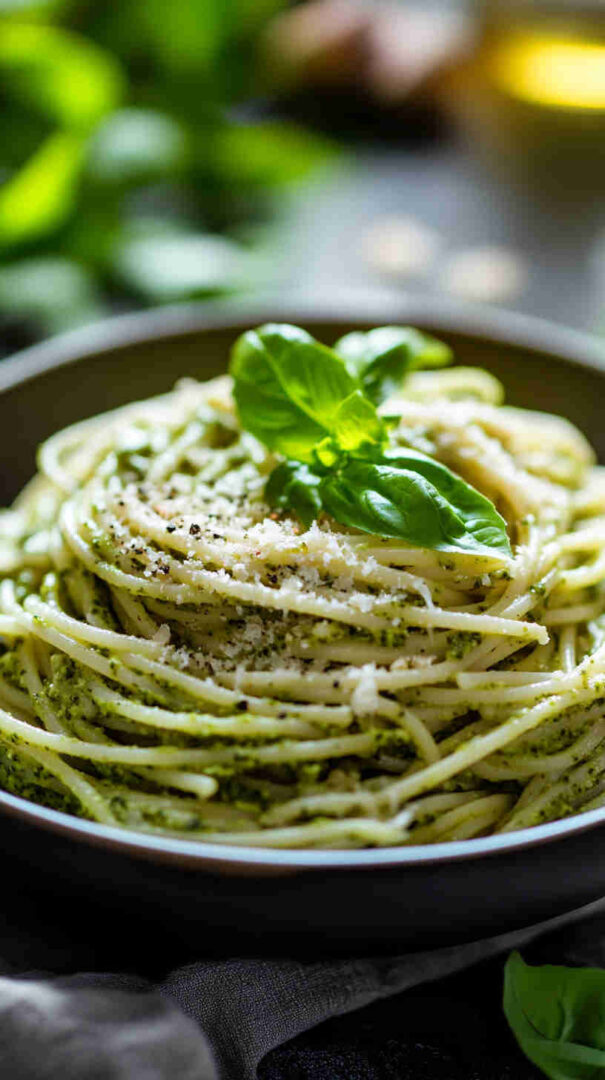
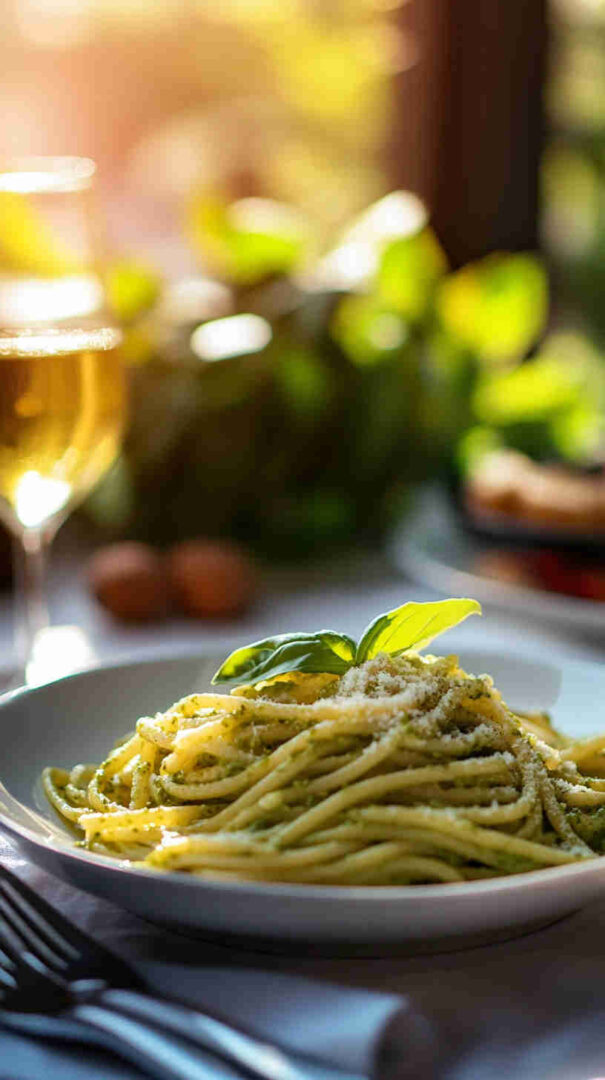
Please share this Liguria Pesto alla Genovese Recipe with your friends and do a comment below about your feedback.
We will meet you on next article.
Until you can read, Emilia-Romagna Tortellini in Brodo Recipe