Set One Year Food Photography Goals
Food photography is an art form that transforms everyday meals into visual masterpieces. At its core, it aims to make dishes appear appetizing, appealing, and irresistible, forging an emotional connection with viewers. Successful food photographers focus on showcasing textures, employing natural or indirect lighting, and crafting clean compositions.
These elements evoke sensations of taste, comfort, and narrative, often enhanced by strategic styling with props or garnishes. Whether you’re a beginner capturing home-cooked meals or a professional shooting for cookbooks, setting clear one-year goals can propel your journey forward. This article explores the essentials of food photography objectives, the power of goal setting, and practical steps to create actionable plans that lead to tangible results.
Understanding Core Food Photography Goals
Food photography goals revolve around creating images that not only look good but also stir emotions and desires. The primary objective is to produce “mouth-watering” visuals that make viewers crave the dish. This involves more than just snapping a picture; it’s about evoking sensations through careful technique.
One key goal is to highlight texture and detail. Lighting plays a pivotal role here—using soft, diffused light to emphasize crispiness in fried foods or creaminess in desserts. For instance, side lighting can cast subtle shadows that reveal the flaky layers of a pastry or the glossy sheen on a sauce. Without proper attention to texture, images fall flat, failing to convey the tactile appeal that draws people in.
Another objective is to tell a story. Every photo should narrate a context, such as a cozy family breakfast with steam rising from coffee or a rustic dinner evoking homemade warmth. This storytelling elevates the image from a mere product shot to an immersive experience. Incorporating elements like scattered ingredients or ambient settings helps build this narrative, making the photo relatable and engaging.
Creating visual interest is equally vital. Garnishes like fresh herbs, edible flowers, or drizzles add pops of color and vibrancy, preventing the composition from feeling monotonous. These details guide the viewer’s eye and enhance the overall appeal, turning a simple plate into a dynamic scene.
Finally, perfect composition is non-negotiable. Center the “hero” ingredient—the star of the dish—while eliminating clutter. A shallow depth of field blurs distractions, keeping focus sharp on key elements. Rules like the rule of thirds or leading lines ensure balance, making the image professional and polished.
These core goals form the foundation for any food photographer. By prioritizing them, you create work that resonates on social media, menus, or editorial spreads, driving engagement and opportunities.
Technical and Artistic Objectives in Food Photography
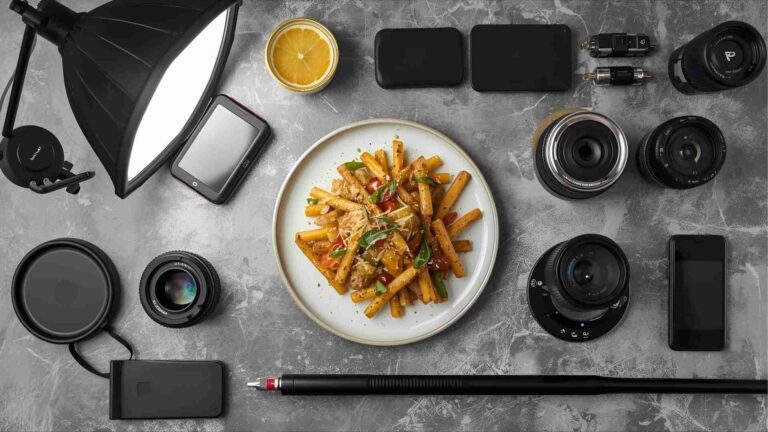
Beyond basics, technical mastery and artistic flair distinguish exceptional food photography. Mastering lighting is paramount. Natural, indirect light from a window provides a bright, even glow that flatters food without harsh shadows. Diffusers or reflectors can soften sunlight, mimicking studio conditions. For controlled environments, artificial lights like softboxes or LED panels offer consistency, especially for evening shoots or indoor setups.
Experimenting with angles adds variety and impact. Top-down flat lays suit symmetrical dishes like pizzas or salads, offering an overhead view that showcases arrangement. Low-angle shots, such as 45 degrees for burgers, build height and drama, making layers pop. Side views work well for stacked items like cakes, revealing cross-sections. Choosing the right angle depends on the dish’s shape and story—test multiple perspectives to find the most compelling.
Styling for emotion involves props that add context and warmth. Linens, cutlery, or vintage plates create a lived-in feel, evoking nostalgia or luxury. Props should complement, not overwhelm, the food—select neutral tones for versatility. Emotional styling turns a plain soup into a comforting winter meal by adding steam effects or scattered spices.
Integrating these objectives requires practice. Start with simple setups: a single light source, basic props, and one dish. Over time, refine techniques to produce images that are technically sound and artistically evocative.
Professional Goals for Food Photographers
For those aiming to turn passion into profession, goals extend to business and efficiency. Building a portfolio is essential—curate a collection showcasing consistent style and brand. Focus on themes like vegan cuisine or beverages to niche down, attracting specific clients. High-quality, cohesive images demonstrate reliability and creativity.
Driving commercial success means creating content that boosts engagement. Tailor photos for social media with vibrant colors and compositions optimized for mobile viewing. For menus or cookbooks, ensure prints translate well, using high-resolution files. Track metrics like likes, shares, or inquiries to measure impact.
Improving efficiency streamlines workflows. Adopt tethered shooting—connecting your camera to a computer for real-time previews—allowing instant adjustments. Organize shoots with checklists for props, lighting, and post-processing. Tools like Adobe Lightroom for editing or Capture One for tethering enhance precision, reducing time wasted on reshoots.
Professional goals bridge creativity and commerce. By setting them, you position yourself for commissions, collaborations, and growth.
Why Set One-Year Food Photography Goals?
Goal setting provides direction in a creative field often filled with uncertainty. Without goals, pursuing photography is like navigating without a map—you might wander but rarely arrive at your destination. Goals transform vague dreams into actionable steps, turning aspirations like hosting workshops or shooting cookbooks into reality.
One-year goals strike a balance: ambitious yet achievable. They break down larger visions—such as a five- or ten-year plan—into manageable milestones. For example, if your ultimate dream is international freelance work, a one-year goal might focus on skill-building to attract local clients first.
Goals foster motivation and accountability. Writing them down and reviewing regularly keeps you focused, preventing distractions from ad-hoc projects. They also measure progress: achieving smaller tasks builds confidence, propelling you toward bigger wins.
In food photography, goals ensure consistent improvement. Without them, you risk stagnation—repeating the same styles or techniques. Setting targets encourages experimentation, leading to a stronger portfolio and more opportunities.
How to Set Powerful Food Photography Goals Using SMART Criteria
Effective goals are SMART: Specific, Measurable, Attainable, Realistic, and Time-bound. This framework turns ideas into powerful motivators.
- Specific: Avoid vagueness. Instead of “improve photos,” specify “master artificial lighting for emotive images.”
- Measurable: Define success. Use descriptors like “create 50 drool-worthy savory shots” to track progress.
- Attainable: Set high but reachable targets. Aiming to be the first food photographer on Mars isn’t feasible; focus on personal firsts, like your first paid gig.
- Realistic: Align with your interests and resources. If film photography doesn’t appeal, skip it—choose goals that excite you.
- Time-bound: Attach a timeframe, like “within one year,” and write in present tense for immediacy, e.g., “I am an expert in beverage storytelling.”
Use descriptive language to inspire action. Reading your goals should evoke excitement, prompting immediate steps.
Here’s a table summarizing SMART criteria with food photography examples:
| Criterion | Description | Example Goal |
|---|---|---|
| Specific | Clear and detailed | Master artificial lighting for beverages |
| Measurable | Quantifiable progress | Produce 20 portfolio-worthy images per month |
| Attainable | Challenging but possible | Secure one commercial shoot quarterly |
| Realistic | Aligned with skills and interests | Focus on savory styling if it matches your style |
| Time-bound | Set deadline | Achieve expert status in one year |
Applying SMART ensures goals are not just wishes but blueprints for success.
To visualize the goal-setting process, here’s a flowchart:
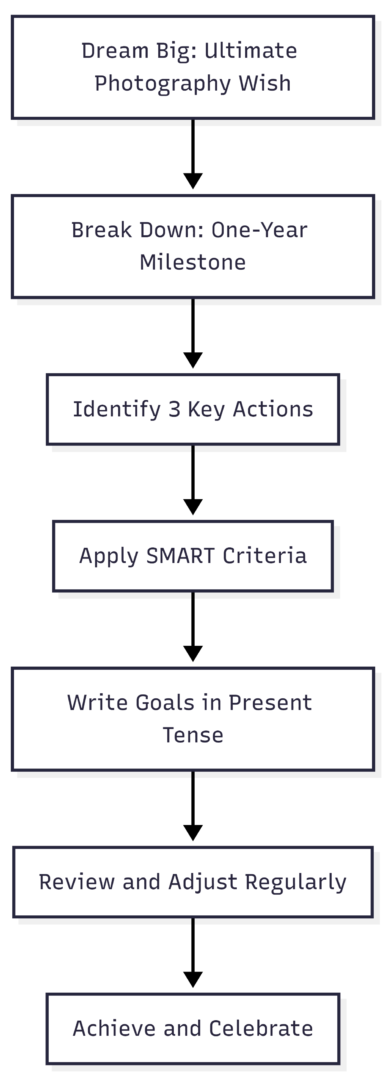
This flowchart outlines the sequential steps, making the process clear and repeatable.
Personal Examples of One-Year Food Photography Goals
Drawing from real experiences, consider these one-year goals aimed at professional growth:
- Become an expert in capturing visual stories of beverages. This involves experimenting with glassware, bubbles, and condensation to evoke refreshment.
- Create beautiful and emotive images using artificial lighting. Practice with strobes and modifiers to replicate natural light indoors.
- Produce drool-worthy images through savory food styling. Focus on plating techniques, like layering proteins and vegetables for texture contrast.
These goals stem from a broader objective: securing weekly commissions for innovative projects. By breaking it down, they become achievable.
Another set from a food photography educator includes:
- Overhaul a tech resource vault for better navigation and content addition.
- Translate portfolio site to reach new markets.
- Optimize social media strategy for consistent, engaging content.
- Implement Facebook ad campaigns for business growth.
- Complete an intentional themed photography project.
These illustrate blending creative and business goals, adapting to challenges like limited in-person work.
Steps to Set Your Own One-Year Food Photography Goals
Follow these steps to craft your goals:
- Envision Your Ultimate Wish: If a magic wand could grant one photography dream, what would it be? Shooting for top magazines? Authoring a cookbook?
- Determine One-Year Milestones: What achievements in the next year start you toward that dream? Skill upgrades? Portfolio expansion?
- List 3 Actions: Jot down specific tasks, like improving lighting or styling.
- Transform into SMART Goals: Refine using the criteria. Turn “better lighting” into “I create emotive images with artificial lights.”
Use templates or planners to organize. Limit to 5 goals to avoid overwhelm, ensuring focus.
For equipment to support goals, consider essentials with specs and prices (approximate USD based on common market values):
- Camera: Canon EOS R6 – 20MP sensor, 4K video, $2,000. Ideal for high-res food shots.
- Lens: Canon RF 50mm f/1.2L – Shallow depth for focus, $2,200.
- Lighting: Godox SL-60W LED – 5600K color temp, dimmable, $100.
- Tripod: Manfrotto MT055XPRO3 – Aluminum, 9kg load, $250.
- Props Kit: Basic set including plates, linens – $50-100.
These tools enhance technical goals without breaking the bank.
Adapting Goals for Uncertainty
Life’s unpredictability requires flexible goals. Avoid those reliant on external factors like in-person events. Instead, emphasize personal development, like online skill-building.
Carry over unmet goals if relevant, but reassess priorities. Skip financial targets if markets fluctuate; focus on stability through diverse skills.
In uncertain times, goals remain motivators. They provide structure, allowing pivots without losing direction. Review quarterly, adjusting as needed.
Tips for Successful Goal Achievement
- Limit Goals: Cap at 5 to maintain focus.
- Schedule Them: Use calendars for milestones, freeing mental space.
- Track Progress: Journals or apps monitor advancements.
- Stay Inspired: Share goals with peers for accountability.
- Celebrate Wins: Reward completions to sustain motivation.
Incorporate regular practice sessions. For example, weekly shoots targeting one goal build habits.
By following these tips, your one-year goals become stepping stones to long-term success.
Conclusion: Embark on Your Food Photography Journey
Setting one-year food photography goals empowers you to turn passion into profession. From core objectives like evoking sensations to professional aims like portfolio building, goals provide the roadmap. Use SMART criteria, adapt to changes, and leverage tools for efficiency. With consistent effort, you’ll create compelling images that captivate and convert. Start today—define your goals, take that first step, and watch your photography evolve.
Please share this Set One Year Food Photography Goals with your friends and do a comment below about your feedback.
We will meet you on next article.
Until you can read, Veggie Hummus Wrap