Best and cheap backgrounds for food photography
A food photograph lives or dies by its background. Before the light, before the props, before the plating—the surface you choose sets the entire mood of a shot. It provides context, texture, warmth, or drama. It either makes your food pop or swallows it whole. And yet, you absolutely do not need to spend a fortune to get it right.
Whether you are just starting out or looking to expand your collection without spending hundreds of dollars, this guide covers the best budget-friendly food photography backgrounds available today—what they are, why they work, and how to use them effectively.
What Makes a Great Food Photography Background?
Before buying or building anything, understand what separates a useful background from a frustrating one. There are five qualities that matter most.
Matte finish. Shiny or glossy surfaces reflect your light source back into the lens, creating bright hotspots that distract from the food. Always prioritize matte over gloss, regardless of material.
Neutral color. The food is the subject. Your background’s job is to support it, not compete with it. Whites, grays, warm beiges, muted blues, and dark charcoals are the most versatile tones you can own. Avoid bold saturated colors unless you have a very specific style in mind.
Cool tones over warm. Most food is naturally warm in color—think golden browns, reds, oranges, creamy whites. A cool-toned background (grays, slate blues, soft greens) creates complementary contrast that makes food visually pop.
Adequate size. A background that is too small kills your composition. Aim for a minimum of 2 feet by 3 feet. A 2-by-4-foot surface gives you far more flexibility for tablescapes, overhead flat lays, and wider 45-degree shots.
Texture over smoothness. Perfectly smooth surfaces tend to look sterile and flat in photographs. A little texture—grain in wood, roughness in concrete, weave in linen—adds depth and realism that photographs beautifully.
Budget Background Options: Comparison at a Glance
| Background | Avg. Cost | Matte | Texture | Easy to Clean | Portability |
|---|---|---|---|---|---|
| Vinyl backdrop sheets | $15–$40 | ✅ | ✅ | ✅ | ✅ |
| Ceramic/porcelain tiles | $2–$6/tile | ✅ | ✅ | ✅ | ⚠️ Heavy |
| Thin plywood | $5–$15 | ✅ | ✅ | ⚠️ Stains | ✅ |
| Foam boards | $1–$5 | ✅ | ❌ | ⚠️ Stains | ✅ |
| Paper/parchment | $0–$5 | ✅ | ✅ | ❌ | ✅ |
| Kitchen linens | $5–$25 | ✅ | ✅ | ✅ | ✅ |
| Wooden cutting boards | $10–$25 | ✅ | ✅ | ⚠️ Stains | ✅ |
| Marble pastry slab | $30–$60 | ✅ | ⚠️ Minimal | ⚠️ Stains | ❌ Heavy |
| Distressed baking sheets | $0–$10 | ✅ | ✅ | ✅ | ✅ |
| DIY MDF painted boards | $10–$20 | ✅ | ✅ | ⚠️ Depends | ⚠️ |
The 10 Best Cheap Food Photography Backgrounds
1. Vinyl Backdrop Sheets
Vinyl backgrounds are arguably the single best investment for food photographers on a budget. Quality vinyl sheets are printed at high resolution from real-world photographs—actual concrete walls, wooden floors, stone surfaces—scaled up to shooting size. What makes them exceptional is that while they may look printed up close in real life, they read as completely authentic in photographs.
The practical advantages are significant. Vinyl lays flat immediately out of the packaging, unlike rolled fabric backdrops that take time to uncurl. It is waterproof and wipeable, which matters enormously when you are working with soups, sauces, melting ice cream, and condensation-heavy drinks. It is lightweight, which means easy transport and simple storage. And it is durable—it won’t easily tear, crease permanently, or wear out quickly with normal use.
Stick to matte-finish vinyl. Cheap vinyl options often have a sheen that creates glare and hotspots. Look for suppliers who offer a variety of concrete, stone, wood, and plaster textures. Reputable sources include Capture by Lucy, Best Ever Backdrops, Ink and Elm, and Poppy Bee Surfaces.
Best for: All shooting angles, all food types. Especially strong for concrete and stone textures that are otherwise expensive or impractical to source.
2. Ceramic and Porcelain Floor Tiles
Hardware stores are an underrated destination for food photography backgrounds. Large-format ceramic and porcelain tiles—especially those printed to resemble marble, concrete, slate, or textured stone—are available for as little as $2 to $6 per tile and often come in matte finishes that are ideal for photography.
A single 20×20-inch tile works well for tight overhead shots of single dishes or ingredient flatlays. For wider compositions, two tiles placed side by side can create a seamless surface. They are easy to wipe down, which makes them one of the most practical options when food is involved.
The limitations are weight and fragility. Tiles are heavy to move and store, and they will crack or chip if dropped. They also have a fixed size that can feel restrictive for large tablescapes.
Best for: Overhead shots, ingredient close-ups, minimal single-dish compositions. Marble-look tiles are particularly striking for baked goods and desserts.
3. Thin Plywood and Wood Boards
Real wood remains one of the most photographically beautiful backgrounds available—the grain, the variation in tone, the sense of warmth and age. Thin plywood sheets from a hardware store can be sanded, stained, or simply left raw depending on the look you want.
For food photography, avoid plywood with a yellow or orange-heavy grain tone. These tones clash with most food and create color-correction headaches in post. Instead, look for boards with cooler grays and natural browns, or apply a light wood stain yourself to control the color.
Plywood is inexpensive, lightweight relative to tiles, and easy to cut to your preferred size. The main downside is that raw wood stains easily—use a clear matte sealant if you intend to place food directly on the surface.
Best for: Warm, rustic food subjects. Breads, charcuterie, roasted dishes, autumn-themed recipes.
4. Distressed Baking Sheets
An old, well-used baking sheet costs you nothing if you already own one, and almost nothing if you source from a yard sale or thrift store. The beauty of a distressed baking sheet is the character—the scratches, discoloration, and patina that develop with years of use create a genuinely rustic, industrial texture that is very difficult to replicate artificially.
These work especially well for overhead shots where the sheet fills the entire frame beneath ingredients, baked goods, or a single composed dish. They can also be propped vertically as a backdrop behind a subject.
Best for: Rustic ingredient shots, baked goods, top-down compositions. Particularly effective in moody, high-contrast lighting.
5. Craft Paper, Parchment Paper, and Paper Bags
Paper-based backgrounds are the most accessible and affordable option in this list. Natural parchment paper, brown kraft paper, and even opened-up paper grocery bags can all serve as surprisingly effective food photography backgrounds.
The natural tan of kraft paper and parchment complements baked goods, raw ingredients, pasta, and bread beautifully. Paper can be laid flat for a clean look or lightly crumpled for texture. You can layer multiple sheets, cut them to any size, and change them out instantly. Disposal is easy.
The trade-off is durability. Paper stains immediately and typically only survives a single shoot before being replaced. For color options, craft paper squares (12×12 inches) are available in any art supply store in hundreds of shades, which allows for creative flexibility.
Best for: Budget-friendly experimentation, light and bright setups, single-use shoots, playful and colorful food photography styles.
6. Kitchen Linens and Textiles
Linen cloths, tea towels, burlap, and napkins are not backgrounds in the traditional sense—they function best as surface layers over another background. Placing a linen cloth over a plain foam board or wooden surface instantly adds warmth, softness, and a handcrafted quality to a photograph.
For food photography, natural linen in neutral tones—off-white, oatmeal, soft gray, muted sage—is the most versatile choice. Avoid highly patterned or bold-colored textiles unless your shooting style specifically calls for them.
The texture of woven textiles does something no hard surface can: it adds warmth and domesticity to a photograph. A ceramic bowl placed on bare wood feels composed; the same bowl placed on linen over wood feels lived-in and inviting.
Best for: Layering with other surfaces, adding warmth to overhead shots, cozy or lifestyle-oriented food photography.
7. Wooden Cutting Boards
A well-chosen wooden cutting board is one of the most useful and versatile tools in a food photographer’s kit. Unlike large wooden backdrops, cutting boards are compact, easy to store, and genuinely functional in a kitchen context—which means they can appear naturally in a photograph as a prop and background simultaneously.
Look for boards with pronounced grain and natural variation in tone. End-grain boards have a particularly distinctive look. Avoid boards with overly yellow tones or very uniform grain patterns, as these tend to look artificial in photographs.
Price range is wide. Basic wooden boards from craft stores can be purchased for $10 to $15 and stained at home. Quality boards from retailers like Crate & Barrel or West Elm typically run $20 to $40 but offer superior grain and finish.
Best for: Cheese boards, charcuterie, bread, appetizers, and any food that benefits from a rustic kitchen aesthetic.
8. Foam Boards
Foam boards are a foundational tool in any food photography setup—not primarily as backgrounds, but as light modifiers and versatile working surfaces. White foam boards bounce and redirect light, filling in shadows and softening harsh contrast. Black foam boards block and absorb light, deepening shadows for moody setups.
In a pinch, foam boards also function as plain backgrounds for flat lay shots where you want a completely neutral surface. They are inexpensive, widely available, and come in both standard white and a range of colors.
Best for: Light control and reflection. Secondary use as simple neutral backgrounds for bright, clean compositions.
9. Marble Pastry Slabs
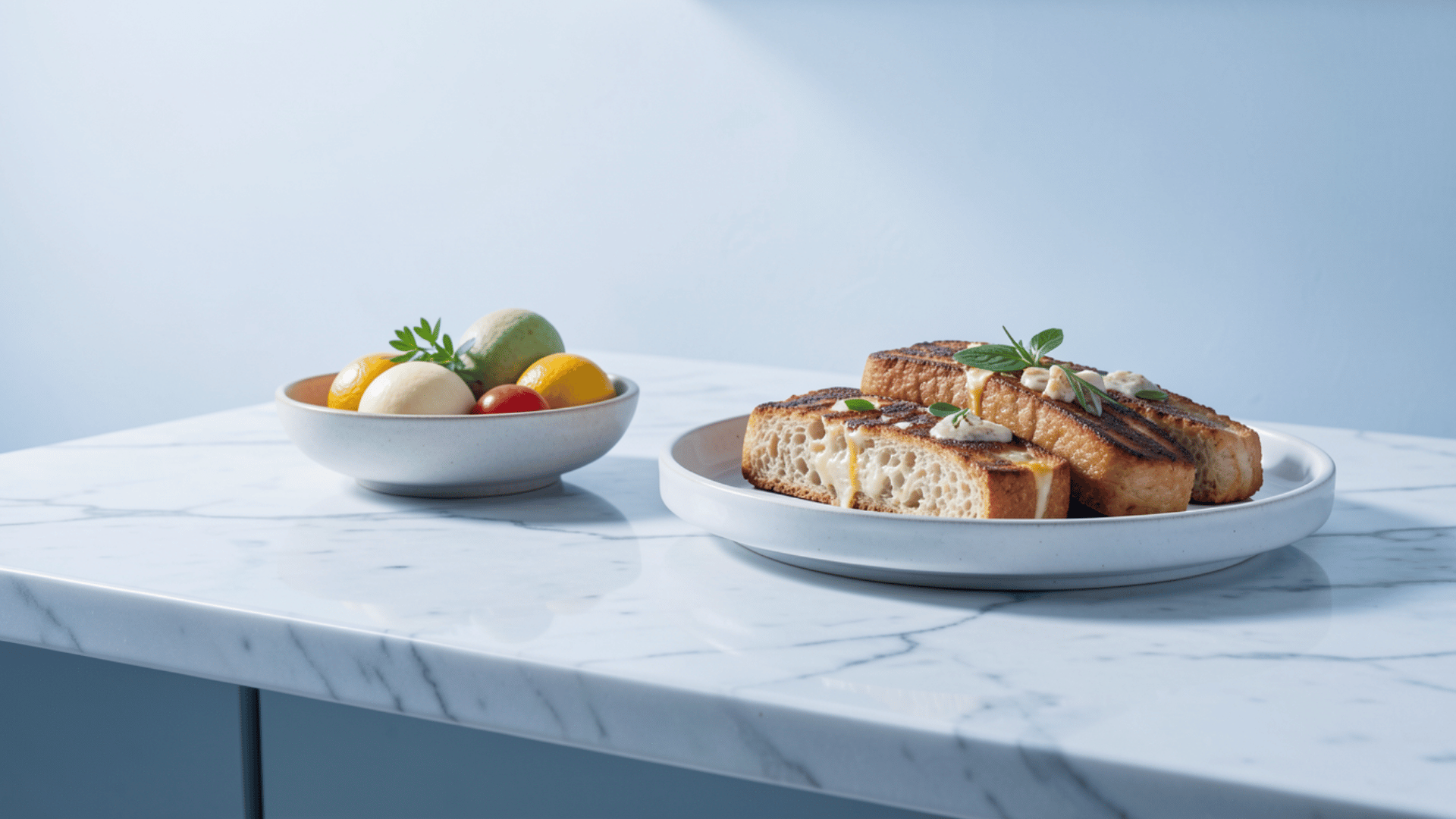
A marble pastry slab sits at the higher end of the budget options listed here, typically running $30 to $60, but it earns its place. Marble has an intrinsic elegance and a distinctive vein pattern that is immediately recognizable. Its cool gray-white tone complements sweet desserts, pastries, chocolate, and coffee particularly well.
Quality marble slabs have a naturally matte surface with minimal sheen. The main care consideration is that marble stains from acidic foods—lemon juice, red wine, beet juice. Keep food from sitting directly on unprotected marble for any length of time during a shoot.
Best for: Desserts, pastries, coffee setups, clean and elegant food photography with a high-end feel.
10. DIY MDF Painted Boards
Making your own backgrounds gives you total control over color, texture, and finish—and the cost is remarkably low. MDF (medium-density fiberboard) is inexpensive, stable, and easy to paint. Cut to your preferred size, apply a base layer of joint compound or plaster for texture, let it dry, then paint with matte interior paint in any color.
The beauty of this approach is the ability to create custom backgrounds that match your specific style—aged concrete in a particular gray tone, distressed plaster in a warm white, or layered paint effects that mimic real surfaces. Multiple thin layers of different paint colors, with sanding between coats, can produce remarkably realistic effects.
Material cost for a single 2×3-foot MDF board is typically $10 to $20. The investment is time, not money.
Best for: Photographers who want a fully customized background collection at minimal cost, and are willing to invest a few hours in the process.
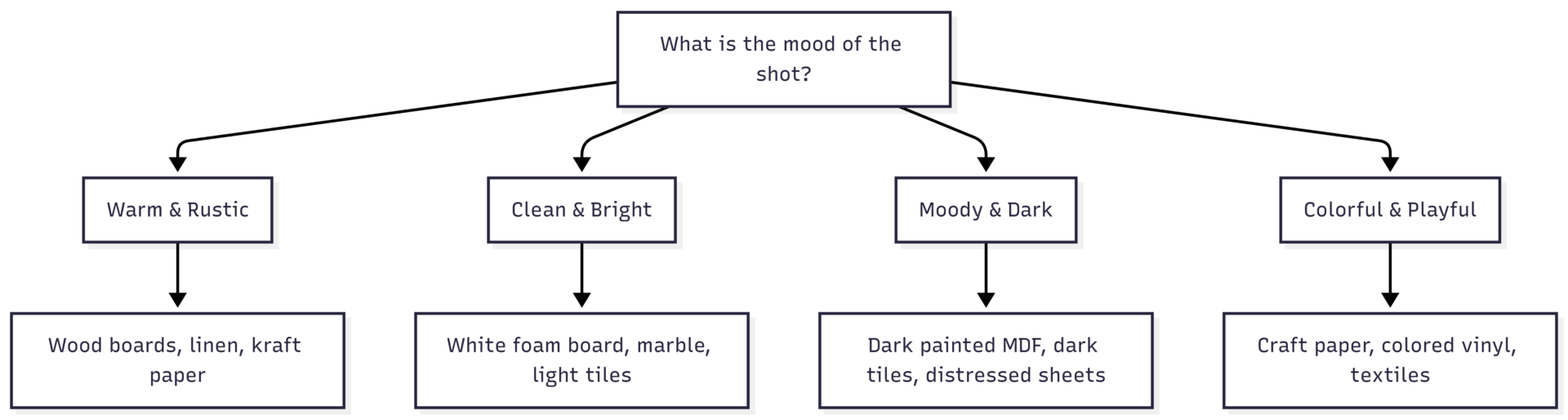
How to Choose the Right Background for the Shot
Storage and Care Tips
Vinyl backgrounds should be stored rolled, not folded, to prevent permanent creases. A cardboard tube works well for long-term storage. Wipe down after each use with a damp cloth and mild soap. Avoid harsh solvents.
Wood backgrounds should be sealed with a clear matte polyurethane or oil finish before use. This prevents staining while preserving the natural appearance. Re-apply as needed over time.
Paper backgrounds are disposable. Buy in bulk and treat each sheet as single-use. Store flat in a dry location.
Marble and tile are the easiest to maintain—wipe clean after every shoot and allow to dry completely before storage.
Final Recommendation
If you are building your background collection from scratch, start with three surfaces that cover the main tonal range: one light (white vinyl or foam board), one mid-tone (concrete or stone-look vinyl or tile), and one dark (dark painted MDF or dark wood). These three will cover the vast majority of shooting scenarios and can be acquired for under $60 total.
As your style develops, add texture and character with linens, cutting boards, and distressed baking sheets. If budget allows, a high-quality vinyl collection from a reputable supplier will serve you for years and give you access to textures—marble, concrete, stone, weathered wood—that would otherwise be impractical to source physically.
The most important thing is this: a background that is matte, appropriately sized, and the right tone for your subject will outperform an expensive background that doesn’t suit the food in front of it. Know your subject, choose accordingly, and let the food do the talking.
Please share this Best and cheap backgrounds for food photography with your friends and do a comment below about your feedback.
We will meet you on next article.
Until you can read, Zesty Avocado Pasta Salad