How to Market Yourself as a Food Photographer
Food photography is a dynamic and competitive field where creativity meets commerce. With restaurants, food brands, publishers, and influencers seeking captivating visuals to engage audiences, the demand for skilled food photographers is surging. However, capturing stunning images is only the starting point. To build a thriving career, you need a strategic marketing plan to attract the right clients, stand out in a saturated market, and establish a sustainable business.
This comprehensive guide, informed by years of industry experience, provides actionable strategies to market yourself as a food photographer. From defining your niche to crafting compelling pitches and leveraging digital platforms, this article equips you with the tools to succeed, whether you’re a beginner or a seasoned professional aiming to scale.
Defining Your Niche: Identifying Your Ideal Clients
Effective marketing begins with a clear understanding of your target audience. Food photography spans diverse niches, each with unique client needs and creative demands. By focusing on a specific niche, you can tailor your portfolio, pitches, and marketing efforts to attract the right opportunities.
Types of Food Photography Work
Food photography encompasses several categories, each requiring distinct skills and appealing to different clients. Here’s a breakdown of the main types:
1. Editorial Photography
Editorial work focuses on storytelling through atmospheric images that complement recipes or articles in magazines, websites, or blogs. These images prioritize mood, texture, and narrative over the product itself. Clients include food magazines, online publications, and recipe developers.
2. Commercial Photography
Commercial photography centers on product-focused images for business use, such as packaging, menus, or e-commerce websites. The goal is to present food in a clean, appealing way to drive sales. Clients range from restaurants to food brands and retailers.
3. Advertising Photography
Advertising is the most lucrative niche, involving large-scale campaigns with creative agencies. These projects require collaboration with art directors, stylists, and marketing teams to produce polished visuals for billboards, TV ads, or social media.
4. Social Media Photography
With the rise of platforms like Instagram and TikTok, businesses need platform-specific, eye-catching images. This work is fast-paced and often involves recurring shoots for restaurants, brands, or influencers.
5. Publishing Photography
Publishing work, particularly for cookbooks, involves long-term projects to create cohesive imagery for an entire book. Opportunities often arise through personal connections or targeted pitches to publishers.
Choosing a niche aligns your marketing with your creative strengths and goals. For example, if you excel at evoking emotion through imagery, editorial photography might be your focus. If you thrive in collaborative, high-pressure environments, advertising could be ideal.
Identifying Target Clients
Once you’ve selected a niche, research potential clients within that space. Create a list of both aspirational targets (e.g., major food brands or publishers) and achievable short-term clients (e.g., local restaurants or food bloggers). Consider these markets:
- Restaurants: Fine dining venues seek elegant visuals, while casual eateries prefer vibrant, approachable images.
- Food Brands: Artisanal producers, meal delivery services, or packaged food companies need product-focused photography.
- Publishers: Cookbook publishers and magazines seek photographers with a distinct storytelling style.
- Bloggers and Influencers: Food bloggers require consistent, styled recipe photos to maintain their brand aesthetic.
- Agencies: PR firms, design studios, and ad agencies hire photographers for large-scale campaigns or ongoing client work.
Understanding each client’s brand aesthetic, target audience, and marketing goals allows you to craft tailored pitches and portfolios that resonate.
Client Types and Their Needs
| Client Type | Photography Needs | Typical Budget Range |
|---|---|---|
| Fine Dining Restaurants | Elegant, high-end visuals | $1,000–$5,000/project |
| Casual Restaurants | Vibrant, approachable images | $500–$2,000/project |
| Food Brands | Product-focused for packaging/e-commerce | $1,000–$10,000/project |
| Publishers | Cohesive, storytelling images for books | $2,000–$15,000/project |
| Bloggers/Influencers | Consistent, styled recipe photos | $500–$3,000/month |
| Agencies | Polished visuals for campaigns | $5,000–$50,000/project |
Building a Professional Foundation
A solid business foundation legitimizes your operation, streamlines client interactions, and protects your assets. Before launching marketing efforts, ensure your legal and financial setup is in place.
Legal and Financial Setup
1. Business Structure
Choose a structure like a sole proprietorship or LLC. An LLC is popular for its personal liability protection. Consult a legal professional to select the best option for your needs.
2. Business Bank Account
A dedicated account simplifies expense tracking, tax preparation, and financial management. It also enhances professionalism when invoicing clients.
3. Business Insurance
Insurance protects against liabilities and equipment loss. A Business Owner’s Policy (BOP) combines key coverages at a lower cost.
- General Liability Insurance: Covers accidents or property damage during shoots.
- Business Property Insurance: Protects gear from theft or damage.
- Business Income Insurance: Compensates for lost income due to covered disruptions.
4. Bookkeeping
Use software like QuickBooks or Wave to track income, expenses, and taxes. Hiring an accountant ensures compliance and accuracy.
5. Client Contracts
Contracts clarify deliverables, timelines, payment terms, and usage rights. Specify who provides props or ingredients and outline revision policies.
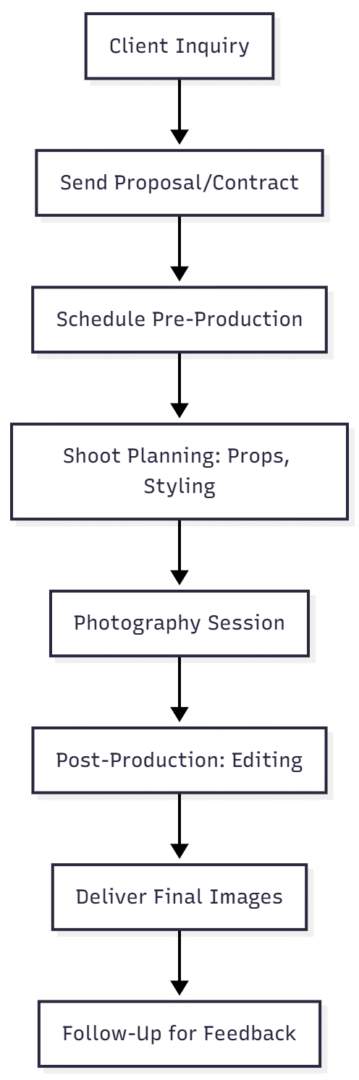
Workflow Management
Efficient workflows enhance client satisfaction and free up time for creative work. Implement processes for:
- Client Intake: Use tools like HoneyBook or Dubsado for inquiries, proposals, and contracts.
- Project Timelines: Plan pre-production (styling, props), shooting, and post-production (editing, delivery).
- Delivery: Use Dropbox or WeTransfer for secure image delivery.
Workflow Management Process
Crafting a Compelling Portfolio
Your portfolio is your primary marketing asset, showcasing your skills, style, and versatility to convince clients to hire you. A well-curated portfolio should align with your niche and appeal to your target audience.
Building a Versatile Portfolio
Create a portfolio that demonstrates a range of styles relevant to your niche:
- Editorial: Include moody cocktails, rustic baking scenes, or vibrant breakfast setups to highlight storytelling.
- Commercial: Showcase clean, product-focused images for packaging or menus.
- Social Media: Feature dynamic, platform-optimized shots with bold colors.
- Publishing: Display cohesive, book-ready images with a consistent aesthetic.
Incorporate collaborations, published work, or contest entries to boost credibility. If you’re new, create speculative work by photographing dishes for local restaurants or personal projects.
Choosing a Platform
Your portfolio should live on a professional, visually appealing website. Popular platforms include:
- WordPress: Highly customizable, ideal for SEO and image galleries.
- Squarespace/Wix: User-friendly with sleek templates for beginners.
- Zenfolio/Format: Photography-specific platforms with portfolio and e-commerce features.
Ensure mobile responsiveness, as mobile devices account for nearly two-thirds of web traffic. Optimize images with alt text and metadata for better search engine rankings.
Portfolio Structure
Organize your portfolio for easy navigation:
- Homepage Gallery: Feature 10–15 standout images.
- Niche-Specific Galleries: Separate sections for editorial, commercial, or social media work.
- About Page: Share your story and expertise.
- Services Page: Detail offerings and pricing.
- Testimonials: Display client feedback.
- Contact Page: Include a form, email, and phone number.
Enhancing E-E-A-T (Expertise, Authoritativeness, Trustworthiness)
Build credibility to attract high-quality clients:
- Case Studies: Detail successful projects and results.
- Behind-the-Scenes Content: Share videos or blogs showing your process.
- Testimonials: Feature client quotes to establish trust.
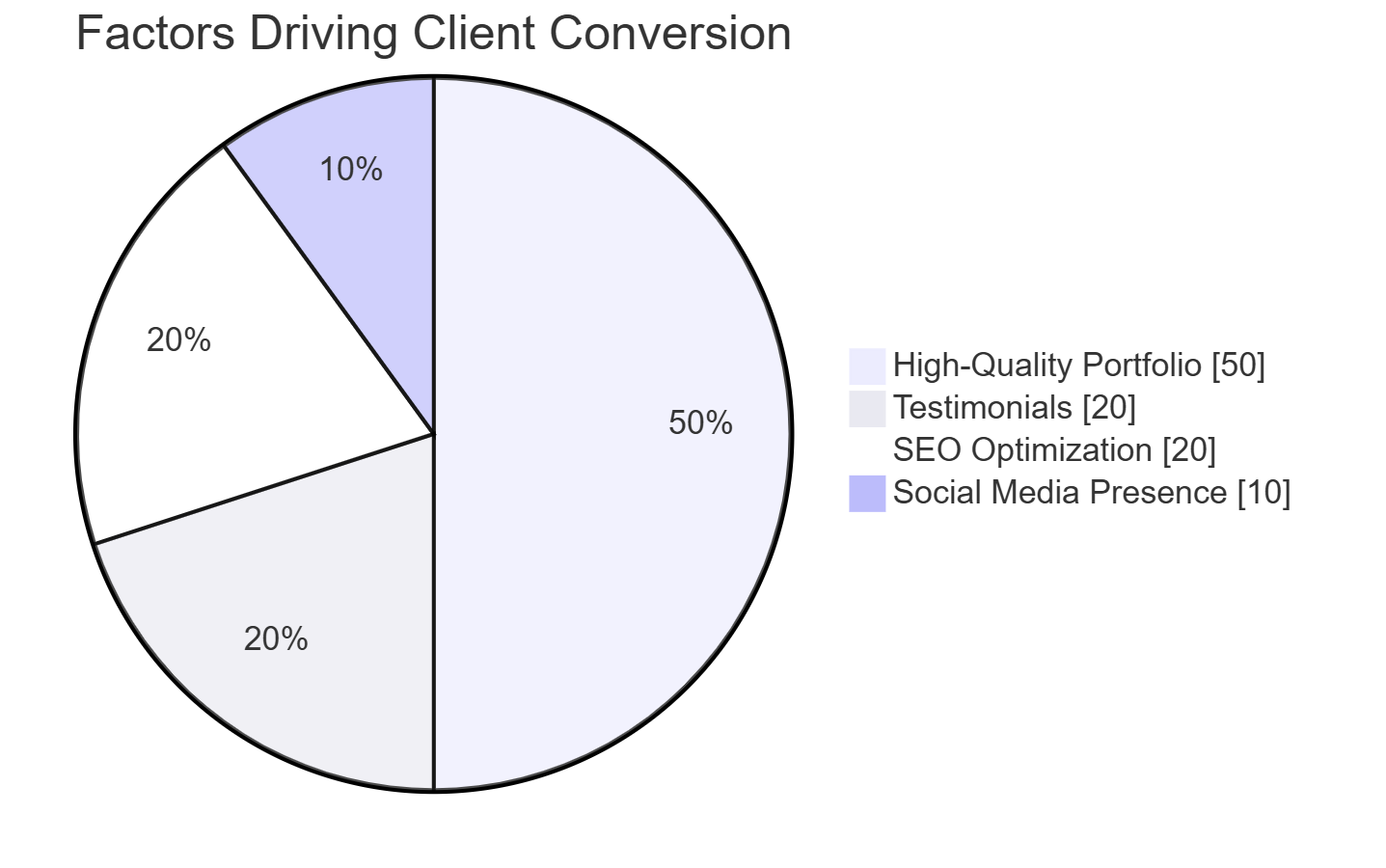
Portfolio Impact on Client Conversion
Pricing Your Services Strategically
Pricing is critical to building a profitable business. Rates should reflect your skills, experience, and value while remaining competitive. The average base salary for food photographers is approximately $62,000/year, but thoughtful pricing strategies can exceed this.
Factors to Consider
Account for:
- Project Scope: Dish complexity, number of setups, and styling needs.
- Usage Rights: Where images will be used (e.g., social media, print, packaging).
- Additional Costs: Props, ingredients, studio rentals, or assistants.
- Post-Production: Editing and delivery time.
- Equipment Depreciation: Wear on cameras, lenses, and lighting.
Pricing Models
Food Photography Pricing Models
| Model | Description | Best For | Example Pricing |
|---|---|---|---|
| Per-Dish Rate | Charge per dish, including styling/editing | Small restaurant/blog shoots | $50–$150 per dish |
| Menu Package | Bundle dishes, interiors, or portraits | Restaurants/cafes | $500–$2,000 for 10–20 images |
| Cookbook Project Rate | Flat rate for book images | Publishers/authors | $2,000–$15,000/project |
| Monthly Subscription | Recurring shoots for content | Brands/bloggers | $1,000–$3,000/month for 15–30 images |
| Tiered Pricing | Basic, premium, or full-day packages | Varied clients | Basic: $500, Premium: $1,500, Full-Day: $3,000 |
Note: Prices vary by location and experience. Research competitors to set competitive rates.
Avoiding Pricing Pitfalls
- Undervaluing Work: Avoid lowballing; it attracts low-budget clients.
- Forgetting Licensing: Charge for usage rights (e.g., exclusive vs. non-exclusive).
- Skipping Deposits: Require 50% upfront to secure bookings.
Pitching to Potential Clients
Pitching is essential for client acquisition. It takes an average of seven interactions to convert a lead, so combine multiple outreach methods for maximum impact.
Email Outreach
Craft compelling email pitches:
- Attractive Header: Include 2–3 standout images.
- Personalization: Reference the client’s brand or campaigns.
- Conciseness: Introduce yourself, highlight services, and link to your portfolio.
- Call to Action: Invite a call, site visit, or reply.
Snail-Mail Promotions
Physical mailers like postcards or leaflets stand out. Tips:
- Target Decision-Makers: Research contacts to avoid generic mailrooms.
- Personal Touch: Add a handwritten note.
- Timing: Send 2–3 times yearly, before seasonal campaigns.
Newsletters
Keep clients engaged with newsletters:
- Updates: Share new portfolio work or projects.
- Value: Offer tips or exclusive packages.
- Call to Action: Encourage bookings or site visits.
Use Mailchimp or ConvertKit for professional newsletters.
Leveraging Digital Marketing
A strong online presence amplifies your reach and attracts clients.
Social Media Strategies
- Instagram: Use hashtags (#foodphotography, #foodstyling) and engage with brands.
- Pinterest: Organize portfolio by food type.
- LinkedIn: Connect with industry professionals.
- TikTok/YouTube: Share behind-the-scenes content.
SEO Optimization
Optimize your website for search engines:
- Keywords: Use food photography-specific terms.
- Alt Text/Metadata: Describe images for better ranking.
- Structured Data: Add schema markups for visibility.
Tools like WP Recipe Maker enhance recipe metadata for better searchability.
Networking and Building Credibility
Networking and credibility are vital for growth:
- Networking: Engage with chefs, stylists, and influencers at food events.
- Testimonials/Case Studies: Showcase feedback and project successes.
- Contests: Enter competitions like the World Food Photography Awards for exposure.
Essential Equipment and Techniques
Investing in gear and mastering techniques elevates your work:
- Lenses: Macro for details, tilt-shift for dynamic focus.
- Lighting: Master natural and artificial lighting for consistency.
- Props: Build a versatile collection of dishware and backgrounds.
- Editing Software: Use Lightroom, Capture One, or Photoshop for refinement.
Essential Equipment Costs
| Equipment | Purpose | Estimated Cost |
|---|---|---|
| Camera Body | High-resolution imaging | $1,000–$2,500 |
| Macro Lens | Detailed food shots | $500–$1,200 |
| Lighting Kit | Consistent artificial lighting | $300–$800 |
| Props/Backgrounds | Styling versatility | $100–$500 |
Developing a Unique Style
A distinctive style sets you apart. Create a mood board to define your aesthetic, focusing on lighting, props, colors, and composition. Avoid overused trends and capture emotions or perspectives unique to you.
Style Development Process

Diversifying Income Streams
To ensure sustainability, diversify your income:
- Food Blogging: Monetize through sponsored posts, recipe development, or eBooks.
- Stock Photography: Sell images via agencies like Getty Images or Shutterstock.
- Art Prints: Offer fine art prints at fairs or online.
- Commissioned Work: Secure client-direct or agency projects.
Key Mindset and Business Strategies for Food Photography Success
To thrive as a food photographer, technical skills and a strong portfolio are essential, but success also hinges on mindset, time management, and community support. The following five tips provide actionable strategies to navigate challenges, prioritize growth, and maintain motivation in a competitive industry.
1. Invest in Yourself
Committing resources to high-quality gear (e.g., macro lenses, $500–$1,200), workshops, or coaching enhances your skills and professionalism. These investments improve image quality, refine techniques, and provide business insights, helping you deliver client-ready work and stand out in the market.
2. Say No – Decline Misaligned Projects
Turning down projects that don’t align with your niche or goals frees up time for opportunities that match your vision. Saying no to low-budget or irrelevant gigs allows you to focus on building a portfolio that attracts high-value clients.
3. Trust Yourself
Developing confidence in your unique photography style is crucial. Trusting your creative instincts helps you create distinctive work that resonates with clients, fostering a recognizable brand that sets you apart in a crowded field.
4. Find Community
Building relationships with other photographers, chefs, or stylists through events or online platforms provides emotional and professional support. These connections offer collaboration opportunities, referrals, and insights into industry trends, reducing isolation.
5. Enjoy the Journey
Embracing the creative and business challenges of food photography keeps you motivated. Finding joy in experimenting with new techniques or celebrating small wins sustains long-term passion, making the hard work of building a career more fulfilling.
Conclusion
Marketing yourself as a food photographer requires a strategic blend of creativity, business acumen, and persistence. By defining your niche—whether editorial, commercial, advertising, social media, or publishing—you can tailor your portfolio and pitches to attract ideal clients like restaurants, brands, or publishers. Building a professional foundation with proper legal setup, insurance, and workflows ensures smooth operations, while a compelling, SEO-optimized website showcases your unique style and credibility.
Strategic pricing, combining per-dish rates, packages, or subscriptions, maximizes profitability, while consistent outreach through emails, mailers, and newsletters fosters client relationships. Leveraging social media, networking, and contests amplifies your visibility, and diversifying income through blogging, stock photography, or prints ensures sustainability. Persistence, a positive mindset, and continuous investment in skills and gear are key to turning rejections into opportunities. By embracing the journey and staying true to your vision, you can build a thriving food photography career that stands out in a competitive market.
Please share this How to Market Yourself as a Food Photographer with your friends and do a comment below about your feedback.
We will meet you on next article.
Until you can read, Editing and Creating Epic Food Photography GIFs