yum
Cups to Grams Converter

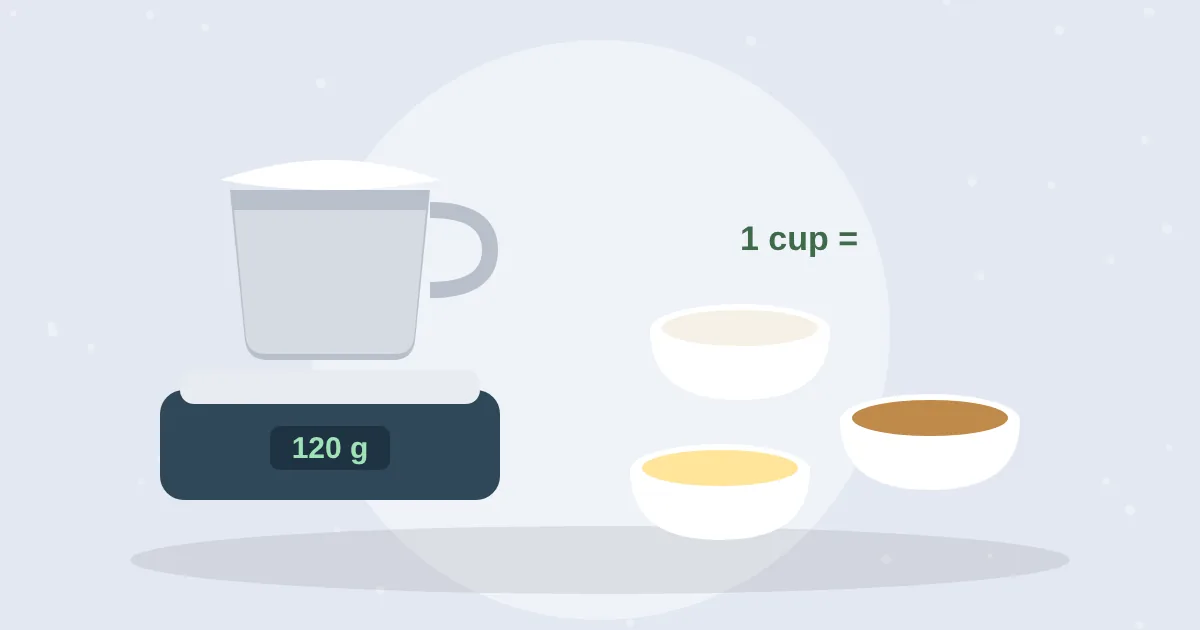
Found a recipe in grams but only have measuring cups – or the other way round? This cups to grams converter does the math for you. Choose an ingredient, type the amount, and you'll get the weight in grams instantly. It also works in reverse, from grams back to cups.
There's no single "cups to grams" number, because a cup of flour weighs much less than a cup of honey. That's why the converter and chart below list each ingredient separately.
Cups to Grams Converter
Cups to grams depends on the ingredient, because a cup measures volume and grams measure weight. 1 cup of all-purpose flour is about 120 grams, 1 cup of granulated sugar is about 198 grams, 1 cup of packed brown sugar is about 213 grams, and 1 cup of butter is 227 grams. Use the converter below for 24 common ingredients.
- 1 cup flour120 g
- 1 cup sugar198 g
- 1 cup butter227 g
- 1 cup milk227 g
In this guide
Cups to Grams Converter
Choose an ingredient, enter the amount (fractions like 1/2 or 1 1/3 work), and pick cups, tablespoons or teaspoons.
Fractions work too: type 1/2, 3/4 or 1 1/3.
Cups to Grams Chart for Common Ingredients
| Ingredient | 1 cup | ½ cup | ⅓ cup | ¼ cup | 1 Tbsp |
|---|---|---|---|---|---|
| All-purpose flour | 120 g | 60 g | 40 g | 30 g | 8 g |
| Bread flour | 120 g | 60 g | 40 g | 30 g | 8 g |
| Cake flour | 120 g | 60 g | 40 g | 30 g | 8 g |
| Whole wheat flour | 113 g | 56 g | 38 g | 28 g | 7 g |
| Almond flour | 96 g | 48 g | 32 g | 24 g | 6 g |
| Cornstarch | 112 g | 56 g | 37 g | 28 g | 7 g |
| Cocoa powder (unsweetened) | 84 g | 42 g | 28 g | 21 g | 5 g |
| Granulated sugar | 198 g | 99 g | 66 g | 50 g | 12 g |
| Brown sugar (packed) | 213 g | 106 g | 71 g | 53 g | 13 g |
| Powdered sugar (unsifted) | 113 g | 56 g | 38 g | 28 g | 7 g |
| Honey | 336 g | 168 g | 112 g | 84 g | 21 g |
| Maple syrup | 312 g | 156 g | 104 g | 78 g | 20 g |
| Butter | 227 g | 114 g | 76 g | 57 g | 14 g |
| Milk | 227 g | 114 g | 76 g | 57 g | 14 g |
| Heavy cream | 227 g | 114 g | 76 g | 57 g | 14 g |
| Plain yogurt | 227 g | 114 g | 76 g | 57 g | 14 g |
| Vegetable oil | 198 g | 99 g | 66 g | 50 g | 12 g |
| Peanut butter | 270 g | 135 g | 90 g | 68 g | 17 g |
| Shredded cheese | 113 g | 56 g | 38 g | 28 g | 7 g |
| Water | 227 g | 114 g | 76 g | 57 g | 14 g |
| Rolled oats | 89 g | 44 g | 30 g | 22 g | 6 g |
| White rice (uncooked) | 198 g | 99 g | 66 g | 50 g | 12 g |
| Chocolate chips | 170 g | 85 g | 57 g | 42 g | 11 g |
| Chopped walnuts | 113 g | 56 g | 38 g | 28 g | 7 g |
Grams per US cup (about 240 ml). Flour is measured by spooning into the cup and leveling. Values follow the King Arthur Baking weight chart; other sources may differ by a few grams.
Why Weighing Ingredients Is More Accurate
A cup of flour can weigh anywhere from about 110 to 150 grams, depending on how you fill it. Scooping straight from the bag packs it down, adding extra flour that can make cakes dry and bread dense. Weighing removes the guesswork – 120 grams is always 120 grams.
- More consistent results every time you bake
- Fewer dishes – weigh everything into one bowl
- Easy scaling – doubling or halving a recipe is simple math
- International recipes become easy to follow
How to Measure Flour With Cups (If You Don't Have a Scale)
- Fluff the flour in the bag or container with a spoon.
- Spoon it into the cup until it's heaped over the top. Don't shake or tap the cup.
- Level it off with the flat side of a knife.
This "spoon and level" method gives about 120 grams per cup of all-purpose flour – the value used in our chart.
US Cups vs Metric Cups
A US cup holds about 240 ml (236.6 ml exactly). A metric cup, used in Australia and some other countries, holds 250 ml. The difference is small – about 4% – and only matters in very precise baking. Our converter uses US cups.
Quick Volume Conversions
| Volume | Equals |
|---|---|
| 1 cup | 16 tablespoons = 48 teaspoons = about 240 ml |
| ½ cup | 8 tablespoons |
| ⅓ cup | 5 tablespoons + 1 teaspoon |
| ¼ cup | 4 tablespoons |
| 1 tablespoon | 3 teaspoons = about 15 ml |
Common Mistakes to Avoid
- Scooping flour straight from the bag. Fix: Spoon and level, or weigh.
- Using one conversion for every ingredient. Fix: Look up each ingredient separately.
- Measuring sticky ingredients in dry cups. Fix: Weigh honey, syrup and peanut butter, or grease the cup first.
- Not packing brown sugar. Fix: Press it firmly into the cup unless the recipe says otherwise.
- Mixing up ounces and fluid ounces. Fix: Ounces measure weight; fluid ounces measure volume.
The Bottom Line
Cups to grams depends on the ingredient: 1 cup of flour is about 120 g, sugar about 198 g, brown sugar about 213 g and butter 227 g. Use the converter above for quick answers, and consider a kitchen scale – it's the easiest way to bake more consistently. For butter sticks, see how many tablespoons are in a stick of butter.
Frequently Asked Questions
How many grams is 1 cup of flour?
1 cup of all-purpose flour weighs about 120 grams when spooned into the cup and leveled. Scooped flour can weigh 140 grams or more.
How many grams is 1 cup of sugar?
1 cup of granulated white sugar weighs about 198–200 grams. Packed brown sugar is about 213 grams, and powdered sugar is about 113 grams.
Why are cups to grams different for each ingredient?
Cups measure volume and grams measure weight. Ingredients have different densities, so the same cup of honey weighs almost three times as much as a cup of flour.
How many grams is 1 cup of butter?
1 cup of butter weighs 227 grams – the same as 2 US sticks or 16 tablespoons.
Is a cup of water 240 grams?
Roughly. A US cup holds about 237 ml, and water weighs about 1 gram per ml, so 1 cup is about 237 grams. Many baking charts round it to 227–240 grams.
Sources
Last reviewed October 27, 2026. Gram weights are approximate and based on US cups with flour spooned and leveled.