yum
Pork Internal Temperature Guide

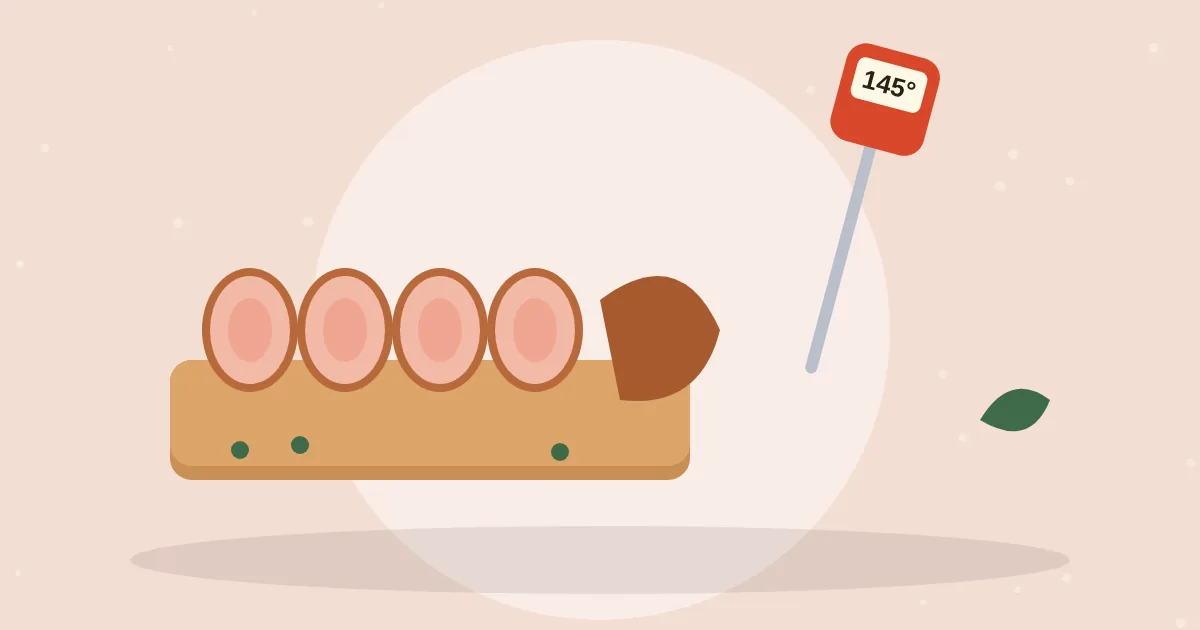
For years, the rule was to cook pork until it was gray all the way through – and dry. That advice is out of date. Today, the safe pork internal temperature for chops, roasts and tenderloin is just 145°F, and a little pink in the middle is perfectly fine.
But not every cut works the same way. Ground pork needs more heat for safety, and tough cuts like shoulder and ribs need much more heat to turn tender. This guide covers every common cut, with a chart you can keep next to the stove.
Pork Internal Temperature Guide
Whole cuts of pork – chops, tenderloin, loin roasts and raw ham – are safe at an internal temperature of 145°F (63°C) followed by a 3-minute rest. Ground pork and sausage need 160°F (71°C). For tender pulled pork and ribs, cook well past safe to 195–205°F (90–96°C) so the connective tissue breaks down.
- Chops, loin, tenderloin145°F + 3 min rest
- Ground pork, sausage160°F (71°C)
- Pulled pork195–205°F
- Precooked ham140°F to reheat
In this guide
Pork Internal Temperature Chart
| Pork cut | Pull from heat | Final temperature | Notes |
|---|---|---|---|
| Pork chops (bone-in or boneless) | 140–145°F | 145°F (63°C) | Rest 3 minutes |
| Pork tenderloin | 140–145°F | 145°F (63°C) | Slightly pink and juicy |
| Pork loin roast | 140°F | 145°F (63°C) | Rises 5°F while resting |
| Ground pork, burgers, meatballs | 160°F | 160°F (71°C) | No pink should remain |
| Fresh sausage | 160°F | 160°F (71°C) | Check the center of the link |
| Raw ham (fresh or smoked, uncooked) | 140–145°F | 145°F (63°C) | Rest 3 minutes |
| Precooked ham (USDA-inspected packaging) | 140°F | 140°F (60°C) | Reheat only |
| Precooked ham (repackaged / leftover) | 165°F | 165°F (74°C) | Reheat thoroughly |
| Pork shoulder / pulled pork | 195–205°F | 195–205°F (90–96°C) | For shredding |
| Baby back or spare ribs | 190–203°F | 190–203°F (88–95°C) | For tender, pull-off-the-bone ribs |
| Pork belly | 190–200°F | 190–200°F | Soft, rendered fat |
| Leftover pork | – | 165°F (74°C) | When reheating |
Safe minimum temperatures are from FoodSafety.gov. Higher temperatures for shoulder, ribs and belly are for texture, not safety.
Why 145°F Is Safe for Pork
In 2011, the USDA lowered the recommended temperature for whole cuts of pork from 160°F to 145°F with a 3-minute rest. Modern farming has made parasites like Trichinella extremely rare in commercial pork, and bacteria on whole cuts live mainly on the surface, which gets much hotter than the center.
The 3-minute rest matters. During that time the temperature stays high (and often rises a few degrees), which helps destroy any remaining bacteria.
Pork Doneness Levels
| Doneness | Temperature | What it looks like |
|---|---|---|
| Medium-rare | 145°F (63°C) | Pale pink center, very juicy – USDA safe minimum |
| Medium | 150–155°F (66–68°C) | Faint pink, firm but juicy |
| Well done | 160°F+ (71°C+) | No pink, firmer and drier |
Why Pulled Pork and Ribs Need Higher Temperatures
Pork shoulder and ribs are safe at 145°F, but they'd be tough and chewy. These cuts are full of collagen – connective tissue that only melts into soft gelatin when held at around 190–205°F for a long time. That's why pulled pork recipes cook "low and slow" for hours.
- Sliceable pork shoulder: 180–190°F
- Pulled pork: 195–205°F – it should shred easily with two forks
- Ribs: 190–203°F – the meat pulls back from the bone and bends when lifted
How to Check Pork Temperature Correctly
- Use an instant-read thermometer. It's the only reliable way to know pork is done.
- Insert it into the thickest part, from the side for thin chops.
- Avoid bone and fat, which read hotter or colder than the meat.
- Check a few spots on roasts and tenderloins.
- Pull it early. Remove pork from the heat about 5°F below target – it keeps cooking while it rests ("carryover cooking").
- Rest it for at least 3 minutes (10–15 for roasts) before slicing.
Common Mistakes to Avoid
- Cooking chops to 160°F. Dry and tough. Fix: Pull at about 140°F and rest to 145°F.
- Judging by color. Fix: Always use a thermometer.
- Treating ground pork like chops. Fix: Ground pork and sausage need 160°F.
- Pulling shoulder at 165°F. It won't shred. Fix: Keep cooking to 195–205°F.
- Skipping the rest. Juices run out. Fix: Rest 3 minutes for chops, longer for roasts.
- Touching the bone with the probe. Fix: Measure in the center of the meat.
The Bottom Line
Cook pork chops, tenderloin, loin roasts and raw ham to 145°F and rest for 3 minutes. Ground pork and sausage need 160°F, and leftovers should be reheated to 165°F. For pulled pork and ribs, go well beyond safe – 195–205°F – for tender, falling-apart results. A good thermometer is the best tool for juicy pork every time.
Frequently Asked Questions
What temperature is pork done?
Whole cuts like chops, tenderloin and roasts are done and safe at 145°F (63°C) with a 3-minute rest. Ground pork and sausage are done at 160°F (71°C).
Is it safe to eat pork that is a little pink?
Yes. If a whole cut of pork has reached 145°F and rested for 3 minutes, a light pink center is safe. Ground pork should not be pink and must reach 160°F.
What temperature should pork tenderloin be?
Cook pork tenderloin to 145°F (63°C). Take it off the heat at around 140°F and let it rest for 5 minutes – it will rise to 145°F and stay juicy.
What internal temperature should pulled pork be?
For pulled pork, cook the shoulder to 195–205°F (90–96°C). It's safe much earlier, but it needs this higher temperature to become tender enough to shred.
Do I need to rest pork after cooking?
Yes. A 3-minute rest is part of the USDA safety guidance for whole cuts, and it also keeps the juices inside the meat instead of on the cutting board.
Sources
Last reviewed October 15, 2026. Safe temperatures follow FoodSafety.gov. Times and textures can vary with the cut and cooking method – always use a thermometer.