SafetyWing vs Genki: SafetyWing is the better pick if you want simple, no-deductible travel medical cover with useful extras like trip interruption and lost-luggage cover. Genki is better if you want no upper limit on emergency medical bills, cheaper prices for under-30s and travellers in their 40s, and broader sports cover. Both cover you only for new illnesses and accidents. For long-term health cover, compare SafetyWing Complete with Genki Native instead.
In this guide
Genki retired its old Explorer plan in 2026. Its travel plan is now called Genki Traveler, so older comparisons are out of date.
SafetyWing vs Genki at a glance
| SafetyWing Essential | Genki Traveler | |
|---|---|---|
| Type | Travel medical insurance | Travel health insurance |
| Price, age 18–39 (excl. US) | ~$62.72 per 4 weeks | €52.50/month (0–29), €63.90 (30–39) |
| Deductible | $0 | €50 per claim |
| Medical limit | $250,000 | No limit for emergency treatment |
| Evacuation | $100,000 (lifetime) | No limit (medical transport & repatriation) |
| Home-country cover | 30 days per 90 (15 for US residents) | Limited — emergencies only; check the terms |
| Pre-existing conditions | Not covered | Excluded if treated or advised in the last 6 months |
| Sports | Adventure sports add-on | Hiking, surfing, skiing, kitesurfing included; diving excluded |
| Electronics | Add-on available | Not included |
| Trip extras | Trip interruption, travel delay, lost luggage | Health cover only |
| Max age to join | 69 | 69 |
| Contract | Monthly subscription | Up to 12 months, cancel monthly |
Last checked November 2, 2026, from independent reviews of each provider (Backpacking Is Life, Earth SIMs, Freaking Nomads) and Genki’s help centre. Prices depend on age, region and add-ons and change often, so get a live quote from each site before buying.
Which is cheaper: SafetyWing or Genki?
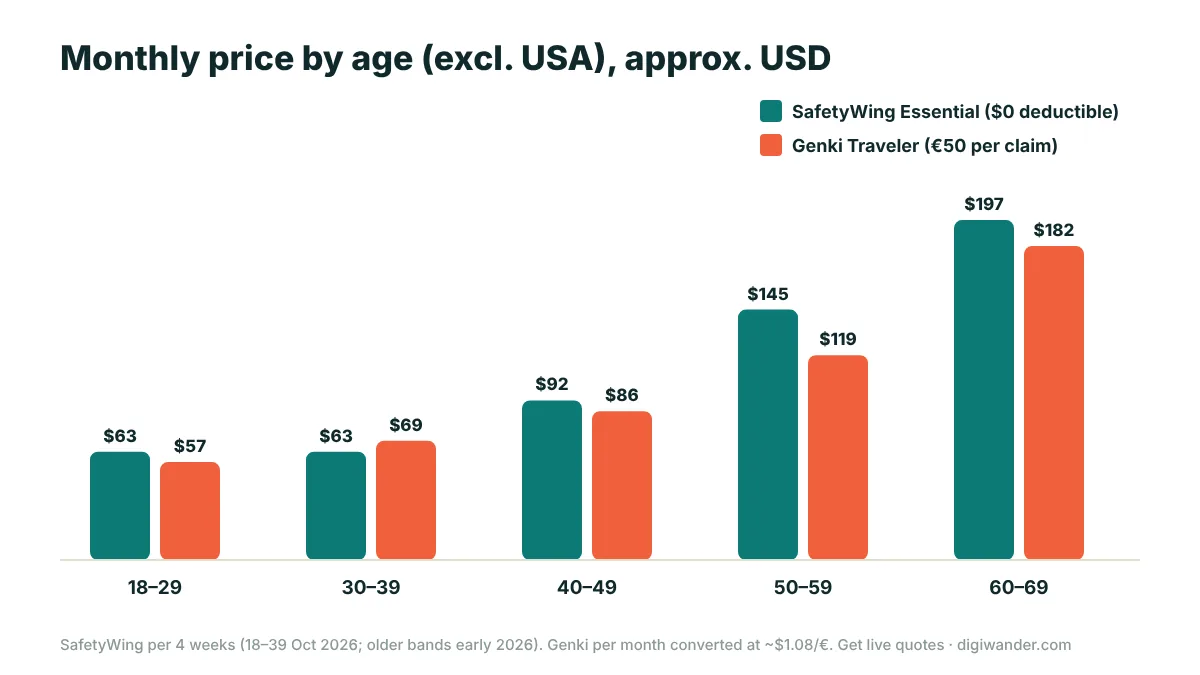
For most ages, Genki Traveler is slightly cheaper once you convert euros to dollars. Under-30s save a little, and the gap grows in your 40s and 50s. The exception is ages 30–39, where SafetyWing is slightly cheaper. Remember that SafetyWing bills every 4 weeks, which is 13 payments a year, and Genki bills monthly. In early 2026, SafetyWing charged roughly $92 per 4 weeks for ages 40–49 and $145 for ages 50–59. Genki charged €79.80 and €109.80 a month for the same ages. SafetyWing has no deductible, while Genki charges €50 per claim, so if you see doctors often for small problems, SafetyWing’s price advantage shrinks.
Both charge much more to include the USA. Genki roughly doubles its price, for example from €52.50 to €98.10 for under-30s. Only add US cover if you will actually spend time there.
Which has better coverage?
SafetyWing Essential: what you get
SafetyWing Essential covers emergency medical treatment up to $250,000 with no deductible, and medical evacuation up to $100,000. It adds travel-style benefits that Genki doesn’t include: trip interruption (up to $5,000 for a ticket home after a family death), travel delay payments, and lost checked luggage (up to $3,000). It works as a subscription that renews every 4 weeks. You can buy it after you’ve already left home.
Pros
- $0 deductible
- Trip interruption, delay and luggage cover
- Electronics and adventure-sport add-ons
- 30 days of home-country cover per 90 days
Cons
- $250,000 medical cap
- More expensive from your 40s
- No pre-existing conditions
Genki Traveler: what you get
Genki Traveler covers emergency treatment, medicines, and medical transport and repatriation with no upper limit. The insurer is Squarelife, Allianz carries the risk, and DR-WALTER handles claims. It includes many active sports, such as hiking, surfing, skiing, snowboarding and kitesurfing, but excludes diving, bungee jumping and other “dangerous activities”. Dental (pain relief and accidents) and mental-health care have their own caps.
Pros
- No limit on emergency medical costs
- Cheaper for most age groups
- Popular sports included
- Strong European insurers behind it
Cons
- €50 deductible per claim
- No trip-delay or luggage cover
- Limited cover in your home country
For long-term nomads: SafetyWing Complete vs Genki Native
Travel medical plans are built for emergencies. If you live abroad for years and want routine care, check-ups and home-country cover, compare the two providers’ full health plans:
| SafetyWing Complete | Genki Native | |
|---|---|---|
| Price | From ~$177.50/month (ages 18–39) | Quote-based (depends on age and options) |
| Medical limit | $1,500,000 | €1,000,000 (Basic) or €3,500,000 (Premium) |
| Deductible | $0 | €0, €500 or €1,000 per year |
| Home country | Covered | Covered in your country of citizenship |
| Pre-existing conditions | Not covered | Medical questionnaire: may be accepted, sometimes with exclusions or a higher premium |
| Join age | — | Up to 55 (no upper age once covered) |
If you have a pre-existing condition, Genki Native’s questionnaire is worth trying. Travel plans like SafetyWing Essential and Genki Traveler won’t cover it.
Which should you choose?
- Choose SafetyWing Essential if you want no deductible, trip-interruption and luggage cover, or electronics cover, and you travel mostly outside the USA.
- Choose Genki Traveler if you want unlimited emergency cover, are under 30 or in your 40s–50s (where it’s noticeably cheaper), or do sports like surfing and skiing.
- Choose a full health plan (SafetyWing Complete or Genki Native) if you’re abroad long term, want routine care, or need home-country cover.
- Applying for a visa? Many digital nomad visas require health insurance that covers the whole stay and the country you’re moving to. Check the visa rules in our digital nomad visa list and ask the provider for a confirmation letter.
Do you still need insurance if your credit card covers travel?
Yes, for most nomads. Credit card cover is built for individual trips and usually includes little or no medical cover, so it’s no substitute for health insurance when you live abroad. See exactly what credit cards with travel insurance cover, and budget the premium in your monthly nomad budget.
Tips before you buy
- Get live quotes for your exact age, region and start date. Prices change during the year.
- Read the exclusions, especially pre-existing conditions, home-country rules and sports.
- Keep receipts and medical reports, since claims need them.
- Pay with a card that has no foreign transaction fees. See the best banks and cards for nomads.
Not insurance advice. This comparison is for general information. Policy terms decide what is covered, so read each provider’s policy wording before you buy.
Frequently asked questions
Is SafetyWing or Genki better?
SafetyWing Essential suits nomads who want no deductible plus trip-interruption and luggage cover. Genki Traveler suits those who want unlimited emergency medical cover, lower prices for most ages and included sports like surfing and skiing.
Which is cheaper, SafetyWing or Genki?
For most age groups Genki Traveler is slightly cheaper, especially from your 40s, though SafetyWing is slightly cheaper for ages 30–39. Genki has a €50 deductible per claim while SafetyWing Essential has none, so frequent small claims narrow the gap.
What happened to Genki Explorer?
Genki retired its Explorer plan in 2026 and replaced it with Genki Traveler for travel health cover. Genki Native remains its long-term international health plan.
Do SafetyWing and Genki cover pre-existing conditions?
SafetyWing Essential doesn’t cover pre-existing conditions, and Genki Traveler excludes conditions treated or advised in the six months before cover starts. Genki Native may accept some pre-existing conditions after a medical questionnaire.
Is SafetyWing or Genki accepted for digital nomad visas?
Often, but it depends on the country. Many visas require health insurance covering the whole stay in that country — check the visa rules and ask the insurer for a confirmation letter.
Sources
- Backpacking Is Life — SafetyWing review 2026
- Freaking Nomads — Genki review (Traveler prices)
- Genki help centre — Genki Native pricing and application
Last updated . Fees, rules and prices change often — confirm current details with the official source before you act. This article is for information only and is not financial advice. See our disclaimer.