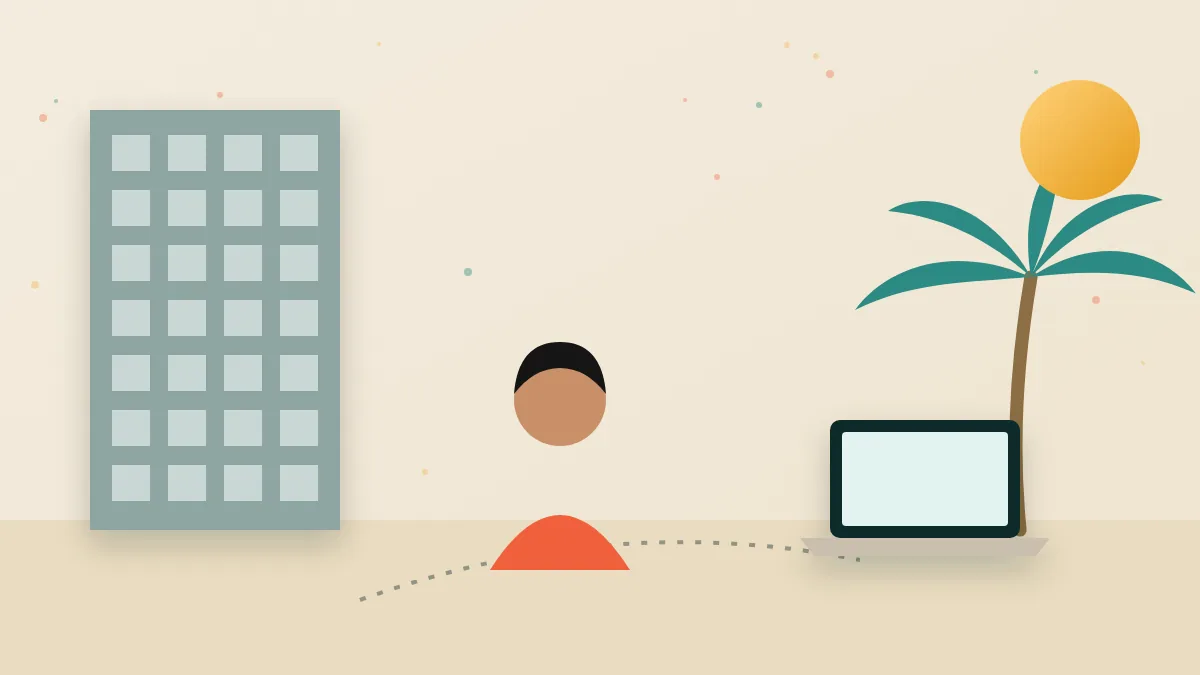
Why quit a corporate career for a simpler life? People do it because they want more control over their time, less stress, and work that fits the life they actually want — often working remotely or for themselves. The move can be life-changing, but it works best when it is planned: build six to twelve months of savings, test a new income stream while you are still employed, and cut your fixed costs before you hand in your notice.
In this guide
From the editor: I build websites and Android apps for a living, entirely online. This guide pulls together what it takes to leave a traditional career path for a simpler, location-independent life — the reasons, the risks and a practical plan.
Why people quit a corporate career for a simpler life
- Burnout and disengagement. Gallup reports that only about 20% of employees worldwide were engaged at work in 2025.
- No control over time or location. Long commutes, fixed hours and return-to-office mandates push people to look for remote or independent work.
- Misaligned values. Climbing the ladder stops feeling worth it compared with family, health or creative work.
- The rise of remote work. Millions of people now earn a living online — MBO Partners counted 18.1 million American digital nomads in 2025.
- Lifestyle inflation. A bigger salary often brings bigger costs; a simpler life can need far less income.
Signs it might be time to leave
- Sunday evenings fill you with dread, week after week.
- You have stopped learning, and promotions no longer motivate you.
- Your health, sleep or relationships are suffering because of work.
- You keep daydreaming about a specific alternative — not just “anything but this”.
- You have already started earning a little from a side project.
If the problem is your manager or company rather than corporate work itself, a different employer — or a remote role — might solve it without a complete career change. Browse the best websites to find remote work first.
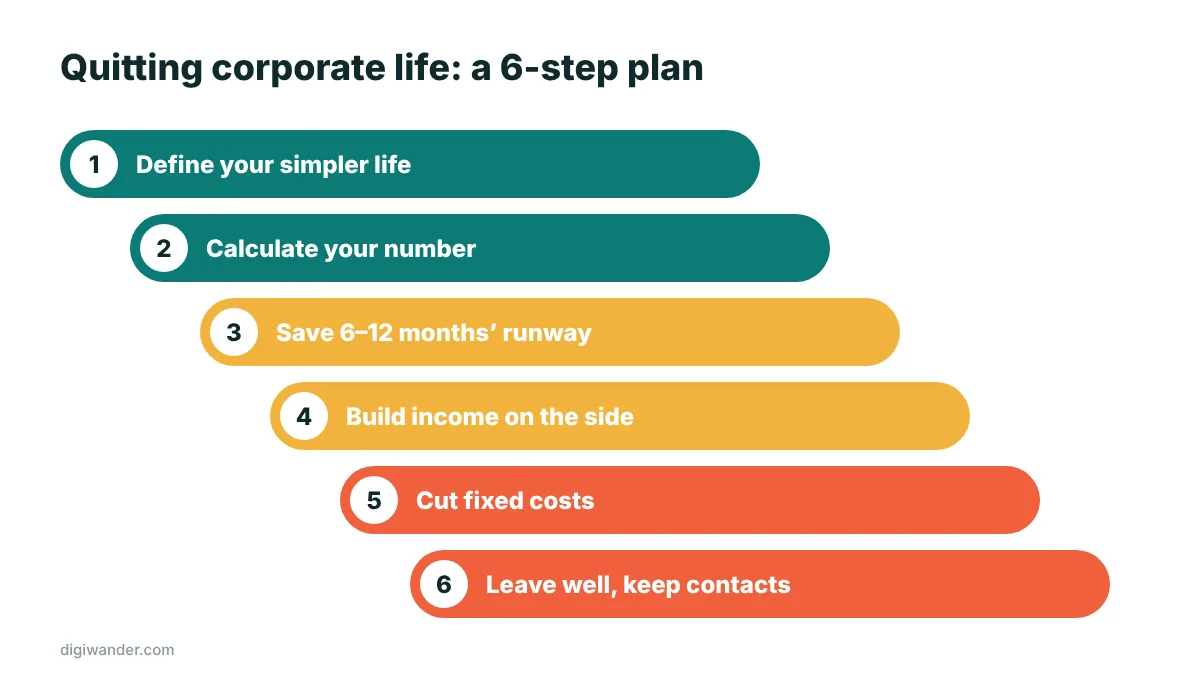
How to quit your corporate job: a 6-step plan
- Define your “simpler life”. Write down where you want to live, how many hours you want to work and how much you actually need each month.
- Calculate your number. Track spending for three months, then build a realistic budget. Our guide on how much money you need to become a digital nomad walks through it.
- Save a runway. Aim for six to twelve months of expenses, especially if you will freelance or start a business.
- Build income before you leave. Test freelancing, consulting or a side business on evenings and weekends. Check what your skills earn in our guide on digital nomad income.
- Cut fixed costs. Downsize housing, sell what you do not use, pay off high-interest debt and cancel subscriptions.
- Leave well. Give proper notice, keep relationships warm and collect references — former employers often become your first clients.
Practical things to sort out before you leave
- Health insurance — you lose employer cover when you leave.
- Retirement savings — keep contributing through individual accounts.
- Banking — set up fee-free accounts if you plan to travel; see the best banks for digital nomads.
- Taxes — self-employed people usually pay estimated taxes; speak to an accountant.
- Your network — tell people what you are doing next. Opportunities come from people.
The honest trade-offs
What you gain
- Control over your time and location
- Less commuting and office politics
- Work that matches your values
- Room for health, family and travel
What you give up
- A predictable salary and benefits
- Built-in structure and colleagues
- Clear career progression
- Some status and security
A simpler life is not always an easier one. The first year is often the hardest, financially and emotionally. Planning turns it from a leap into a series of small, safe steps.
Frequently asked questions
Is it worth quitting a corporate job for a simpler life?
It can be, if you have a plan. People who build savings, test a new income source first and cut fixed costs are far more likely to enjoy the change than those who quit on impulse.
How much money should I save before quitting my job?
Aim for six to twelve months of living expenses, and more if you plan to freelance or start a business with uncertain income.
What can I do after leaving corporate life?
Common paths include remote employment, freelancing or consulting in your field, starting an online business, or moving abroad as a digital nomad.
How do I know it is time to quit my job?
Warning signs include constant dread about work, declining health or relationships, no motivation to progress, and a clear alternative you keep coming back to.
Should I quit my job before finding a new income?
It is usually safer to build at least some income on the side first, then leave once it covers a meaningful part of your expenses.
Sources
Last updated . Fees, rules and prices change often — confirm current details with the official source before you act. This article is for information only and is not financial advice. See our disclaimer.