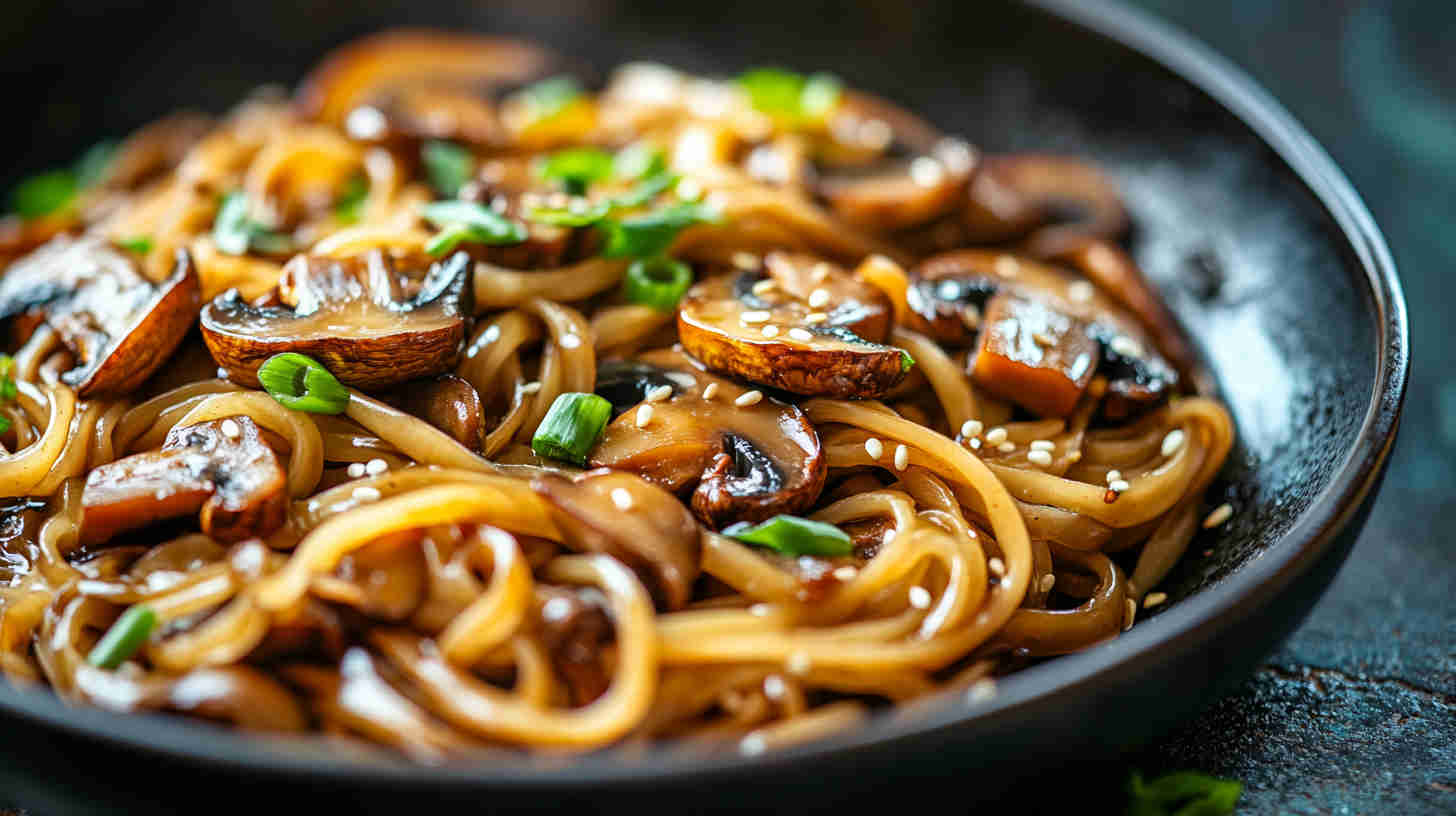
This vibrant Asian-inspired noodle dish features tender mushrooms stir-fried with fragrant fresh ginger and garlic, then tossed in a glossy soy-sesame sauce. Silky noodles soak up the umami-rich flavors, creating a quick, satisfying vegetarian meal that’s savory, slightly sweet, and perfectly balanced with a hint of heat — ready in under 30 minutes!
Why You’ll Love This recipe
You’ll fall head over heels for this Asian Soy Ginger Mushroom Noodles recipe because it delivers massive flavor with minimal effort — perfect for busy weeknights when you crave something comforting yet exciting. The caramelized mushrooms bring deep, meaty umami that makes you forget there’s no meat involved, while the fresh ginger adds a zesty warmth that cuts through the richness beautifully.
The glossy soy-based sauce clings to every strand of noodle, creating that irresistible slurpy texture we all adore in Asian noodle dishes. It’s naturally vegetarian (and easily vegan), packed with healthy mushrooms for extra nutrition, and endlessly customizable — add spice for heat lovers or keep it mild for the family.
Best of all, it comes together lightning-fast with pantry staples, fills your kitchen with the most mouthwatering aromas, and tastes like takeout… but fresher, lighter, and made with love at home. One bite and it’ll become your new go-to comfort food!
Asian Soy Ginger Mushroom Noodles Recipe

Savory soy-ginger mushrooms tossed with tender noodles in a glossy, umami-packed Asian sauce — quick & irresistible!
Ingredients
- 10–12 oz (about 280–340g) noodles (udon, ramen, egg noodles, or rice noodles)
- 1.5 lbs (680g) mixed mushrooms (shiitake, cremini, oyster — sliced)
- 3 tablespoons neutral oil (vegetable or avocado)
- 4 cloves garlic, minced
- 2 tablespoons fresh ginger, grated or minced
- ⅓ cup low-sodium soy sauce (or tamari)
- 2 tablespoons sesame oil
- 2 tablespoons honey or brown sugar
- 1 tablespoon rice vinegar
- 1–2 teaspoons chili garlic sauce or sriracha (adjust to taste)
- ¼ cup water or vegetable broth (to thin sauce)
- 3–4 green onions, sliced (white and green parts separated)
- Sesame seeds and extra green onions for garnish
- Optional: red pepper flakes or fresh chili for heat
Instructions
- Get everything ready first — this dish cooks fast, so slice your mushrooms, mince the garlic, grate the ginger, and slice the green onions. Mix the sauce in a small bowl: whisk together soy sauce, honey, rice vinegar, chili garlic sauce, sesame oil, and water until smooth and glossy. Set it aside — your secret weapon is ready!
- Boil those noodles — cook your noodles according to package instructions until just al dente (slightly firm). Drain and rinse briefly with cold water to stop cooking and prevent sticking. Toss with a tiny drizzle of oil if needed.
- Heat up your wok or pan — place a large wok or skillet over medium-high heat and add the neutral oil. Let it get nice and hot — you want that sizzle!
- Sauté the aromatics — toss in the minced garlic, grated ginger, and white parts of the green onions. Stir-fry for 30–60 seconds until super fragrant and lightly golden — your kitchen is about to smell amazing!
- Add the mushrooms — throw in all those beautiful sliced mushrooms. Spread them out and let them sit undisturbed for 2–3 minutes to get golden and caramelized on one side. Then stir and cook another 4–5 minutes until tender, browned, and reduced in size.
- Bring on the sauce — pour in your prepared soy-ginger sauce. Stir everything together so the mushrooms get fully coated. Let it bubble and thicken slightly for 1–2 minutes — the sauce will turn glossy and clingy.
- Toss in the noodles — add your cooked noodles to the pan. Using tongs or two spatulas, gently toss everything until the noodles are evenly coated in that irresistible sauce and heated through.
- Finish with flair — drizzle a little extra sesame oil if you love that nutty aroma, then toss in most of the green onion tops. Give it one final mix — taste and adjust with more soy, honey, or chili if needed.
- Plate it up beautifully — divide into bowls, making sure everyone gets plenty of those caramelized mushrooms on top.
- Garnish and serve — sprinkle with sesame seeds, extra green onions, and a pinch of red pepper flakes if you like it spicy. Grab your chopsticks and dive in while it’s hot — enjoy every savory, slurpy bite!
Notes
- Best enjoyed fresh, but reheats well with a splash of water.
- For gluten-free version, use tamari and gluten-free noodles.
- Adjust ginger and chili to your spice preference — it’s very forgiving!
Nutrition Information
Yield
4Serving Size
1Amount Per Serving Calories 248Total Fat 19gSaturated Fat 2gUnsaturated Fat 17gSodium 1182mgCarbohydrates 19gFiber 4gSugar 11gProtein 6g
The recipes and nutritional information on Yum Tonight are for informational purposes only. Always consult a healthcare provider for personalized dietary advice.
Recipe Tips and Tricks
- Use a large wok or skillet so the mushrooms can brown properly without steaming — overcrowding leads to soggy results.
- Slice mushrooms evenly for uniform cooking; mix varieties (shiitake, cremini, oyster) for deeper flavor layers.
- Fresh ginger and garlic make a huge difference — grate or mince them finely so they infuse the oil quickly.
- Don’t skip the sesame oil finish — it adds nutty aroma that elevates the whole dish.
- Toss noodles with tongs gently to avoid breaking them while coating in sauce.
- Taste the sauce before adding to noodles and adjust soy, honey, or chili for your perfect balance.
- For extra caramelization on mushrooms, let them sit untouched for 2–3 minutes per side.
- Prep all ingredients before starting — this dish moves fast once the pan is hot!
Ingredients Notes
This recipe relies on simple, bold Asian pantry ingredients that create layers of flavor. Low-sodium soy sauce (or tamari for gluten-free) forms the salty-umami backbone — use low-sodium so you can control the seasoning.
Fresh ginger brings bright, zingy warmth that’s essential for that authentic Asian taste; avoid powdered if possible. Garlic adds savory depth and aroma — fresh cloves are best. Sesame oil (toasted) is non-negotiable for its rich, nutty finish — a little goes far. Honey or brown sugar balances the saltiness with gentle sweetness, while rice vinegar adds a subtle tang to brighten everything.
Chili garlic sauce or sriracha is optional but recommended for a pleasant kick that rounds out the profile. Mixed mushrooms are the stars — shiitake for earthiness, cremini for meatiness, oyster for delicate texture. Noodles like udon, ramen, or egg noodles work best as they hold the thick sauce beautifully; rice noodles make a great gluten-free alternative.
Variations and Substitutions
This recipe is super flexible to suit your preferences or pantry. For a protein boost, add crispy tofu cubes, pan-seared chicken strips, shrimp, or scrambled egg swirled in at the end. Make it vegan by using maple syrup instead of honey and ensuring your noodles are egg-free. Switch up mushrooms — portobello for steak-like texture, button for mildness, or enoki for fun crunch.
No fresh ginger? Use 1–1½ teaspoons ground ginger, though fresh is far superior. Swap rice vinegar with apple cider vinegar or lime juice for a citrus twist. For gluten-free, use tamari and gluten-free noodles (rice or buckwheat soba). Add vegetables like bok choy, spinach, bell peppers, broccoli, or shredded carrots for more color and nutrition — stir them in after mushrooms soften.
Crank up spice with extra chili flakes, fresh chilies, or a drizzle of chili oil. For a saucier version, increase broth or water in the sauce. Turn it into a cold noodle salad by rinsing noodles in cold water and serving chilled.
Storage Options
Store leftovers in an airtight container in the refrigerator for up to 3 days. The noodles will absorb more sauce over time, so add a splash of water or broth when reheating to loosen them.
Reheat in a skillet over medium heat with a drizzle of oil, tossing frequently, or microwave in short bursts, stirring in between. This dish tastes surprisingly delicious cold too — perfect for next-day lunches straight from the fridge like a noodle salad. Freezing is not recommended as the mushrooms and noodles can become mushy after thawing.
Dish Gallery


Please share this Asian Soy Ginger Mushroom Noodles Recipe with your friends and do a comment below about your feedback.
We will meet you on next article.
Until you can read, Asian Sesame Mushroom Ramen Recipe