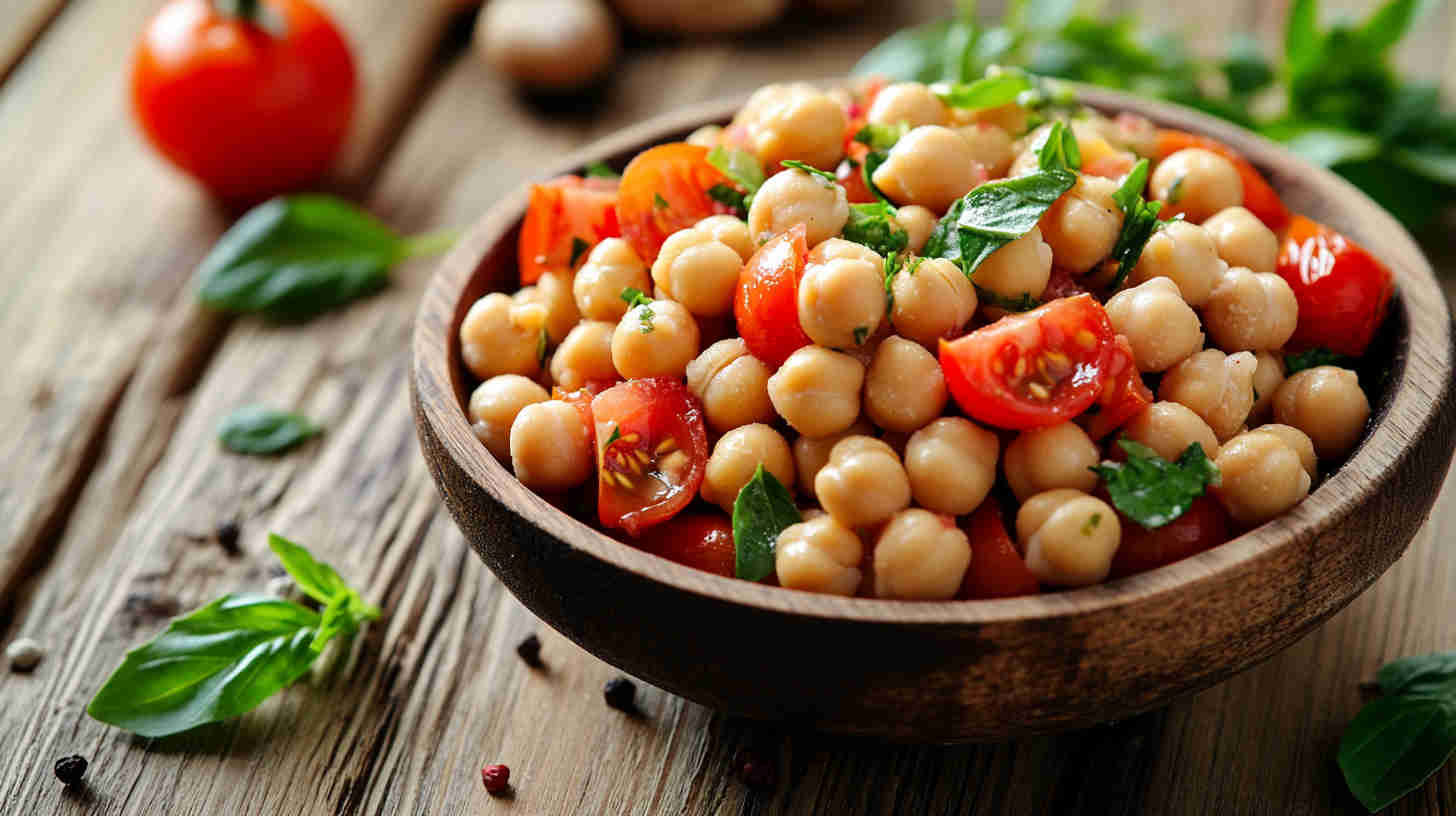
This Italian Chickpea and Tomato Salad is a bright, protein-packed dish combining creamy chickpeas, juicy ripe tomatoes, crisp cucumber, red onion, and fresh basil, all tossed in a tangy olive oil and red wine vinegar dressing. It’s a no-cook, refreshing salad perfect for busy weeknights, potlucks, or light summer lunches.
My Experience Cooking This Recipe
I first made this salad on a scorching July afternoon when the last thing I wanted to do was turn on the stove. I had a can of chickpeas in the pantry, a bowl of tomatoes ripening on the counter, and a handful of basil from my little balcony pot, so I threw them together almost on a whim. The result surprised me.
The chickpeas soaked up the garlicky, vinegary dressing and turned almost creamy, while the tomatoes released their juices and mingled with the olive oil to create a natural, silky sauce at the bottom of the bowl.
Now I make a batch every week during tomato season. I’ve learned that letting it sit for even fifteen minutes before serving makes a noticeable difference, and I never skip the good olive oil, since it really is the backbone of the flavor here.
Common Mistakes of Making This Recipe
- Using unripe or watery tomatoes: Pale, out-of-season tomatoes lack sweetness and make the salad taste flat, so always reach for the ripest ones you can find.
- Skipping the rinse on canned chickpeas: Leaving the canning liquid on the chickpeas adds a tinny, starchy taste that clashes with the fresh ingredients.
- Adding salt too early: Salting tomatoes and cucumber too far in advance draws out excess water and leaves you with a soupy, diluted salad.
- Using dried herbs instead of fresh basil: Dried basil has a muted, almost hay-like flavor that can’t compete with fresh leaves in a no-cook dish like this.
- Not tasting before serving: Chickpeas absorb dressing as they sit, so the seasoning that tasted perfect at first can mellow out and need a final adjustment.
- Overcrowding the bowl with too many mix-ins: Piling in extra vegetables can drown out the clean, classic combination that makes this salad shine.
Ingredient Science of This Recipe
Chickpeas are a legume rich in soluble fiber and resistant starch, which is why they hold their shape well while still absorbing surrounding flavors like a sponge; their slightly porous surface lets the acidic dressing penetrate without turning them mushy.
Tomatoes contain glutamate, a naturally occurring compound responsible for umami, which is why ripe tomatoes taste so deeply savory when combined with salt, which draws moisture out of their cell walls and concentrates their flavor. The acid in red wine vinegar performs double duty: it brightens the dish and also helps break down the pectin on the surface of the chickpeas and onions just slightly, softening their bite.
Extra virgin olive oil isn’t just for flavor either, since many of the beneficial compounds in tomatoes, like lycopene, are fat-soluble, meaning the oil actually helps your body absorb more of those nutrients. Finally, resting the salad allows osmosis to work in your favor, letting the dressing’s flavors migrate evenly into every ingredient rather than sitting only on the surface.
Serving Ideas of This Recipe
This salad is wonderfully versatile and can move from a side dish to a main course with just a few tweaks. Serve it alongside grilled chicken, fish, or lamb chops for a complete Mediterranean-inspired dinner, or pair it with warm, crusty bread to mop up the flavorful dressing pooling at the bottom of the bowl.
For a heartier lunch, spoon it over a bed of arugula or mixed greens and top with crumbled feta cheese. It also makes a fantastic filling for pita pockets or a topping for bruschetta. If you’re hosting, this salad shines on a summer buffet table next to grilled vegetables, olives, and a simple pasta salad, and it travels well to potlucks since it tastes even better after a few hours in the fridge.
FAQ
Yes, you can use dried chickpeas as long as you soak them overnight and simmer them until tender before adding them to the salad, since raw or undercooked chickpeas will be too firm and starchy.
Stored in an airtight container, this salad stays fresh for about three to four days, and many people find the flavor actually improves after the first day as the ingredients marinate together.
Absolutely, and it’s actually recommended, since letting it rest for at least thirty minutes to an hour before serving allows the dressing to fully soak into the chickpeas and vegetables.
White wine vinegar, sherry vinegar, or fresh lemon juice all work well as substitutes and will give the salad a similarly bright, tangy edge.
Yes, this salad is naturally both vegan and gluten-free as written, since every ingredient comes from plant-based, gluten-free sources.
Please share this Italian Chickpea and Tomato Salad Recipe with your friends and do a comment below about your feedback.
We will meet you on next article.
Until you can read, Italian Chicken and Vegetable Stir-Fry Recipe