To overcome travel fatigue, slow down: stay longer in each place, build a simple daily routine, protect your sleep, plan rest days, limit decisions, stay connected with people you care about, and take a proper break from moving when you need one. Travel fatigue is the physical and mental exhaustion that builds up from constant movement, new environments and endless decisions — and it is one of the main reasons digital nomads burn out or go home early.
In this guide
What is travel fatigue?
Travel fatigue is different from jet lag. Jet lag comes from crossing time zones and fades in days. Travel fatigue builds slowly over weeks or months of moving, planning and adapting, and does not go away with one good night’s sleep.
Signs of travel fatigue
- Places that should excite you feel “just another city”.
- Planning the next move feels like a chore.
- Poor sleep, low energy or getting sick more often.
- Irritability, homesickness or loneliness.
- Your work quality or motivation is slipping.
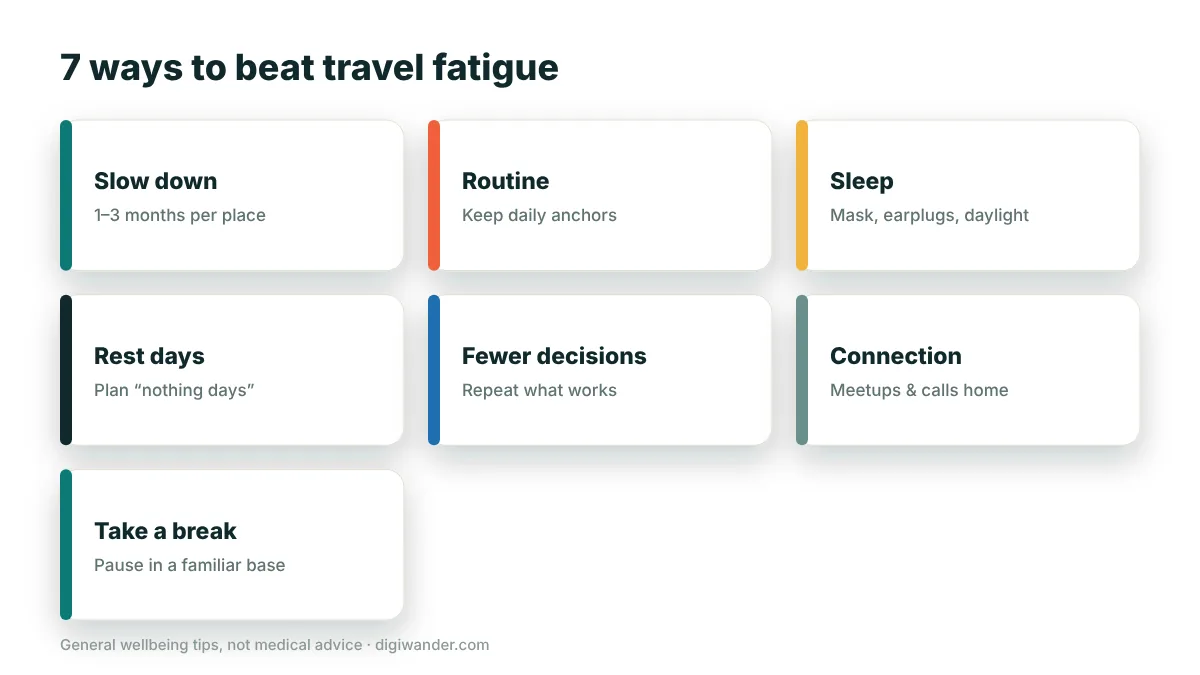
How to overcome travel fatigue: 7 strategies
1. Slow down
The single biggest fix. Staying one to three months in each place cuts the number of moves, gives you time to settle and usually lowers costs through monthly rental discounts. Many long-term nomads describe slow travel as the change that made the lifestyle sustainable.
2. Build a portable routine
Keep a few anchors that travel with you: the same wake-up time, a morning walk or workout, a regular work block, a weekly call home. Routines reduce the mental load of constant newness.
3. Protect your sleep
Carry an eye mask and earplugs, choose accommodation with good reviews for quiet, and avoid booking very early flights back-to-back. After long flights, get outside in daylight to reset your body clock.
4. Schedule rest days
Not every day needs sightseeing. Plan “nothing days” after travel days — do laundry, cook, read, work quietly, or sort and back up your travel photos. Rest is part of travelling, not a waste of it.
5. Reduce decision fatigue
Repeat what works: the same type of accommodation, the same booking sites, a simple packing system, a standard budget. Choose your next few bases in one planning session instead of deciding every week. Tools like Nomad List help shortlist places quickly.
6. Stay connected
Loneliness makes travel fatigue worse. Use coworking spaces, join nomad meetups or local classes, and keep regular video calls with friends and family. Staying longer in one place also makes friendships possible.
7. Take a real break from moving
Sometimes the best fix is to stop. Spend a month or two somewhere familiar — at home or in a favourite base — without planning the next trip. Many nomads alternate travel seasons with “home base” seasons.
Balancing travel and remote work
- Never travel on deadline days or before important client calls.
- Check the Wi-Fi before you book — unreliable internet is a major stress. See how much internet speed you need.
- Use public transport confidently to cut daily friction — read our tips for public transport abroad.
- Keep money simple with fee-free cards from our best banks for nomads guide.
Look after your health. If exhaustion, low mood or anxiety last for weeks, or you feel unable to cope, speak to a doctor or mental health professional — many offer online appointments you can join from anywhere.
Frequently asked questions
What is travel fatigue?
Travel fatigue is physical and mental exhaustion that builds up over weeks or months of constant movement, planning and adapting to new places.
What is the difference between jet lag and travel fatigue?
Jet lag comes from crossing time zones and usually fades in a few days. Travel fatigue builds slowly from ongoing travel and needs lifestyle changes to fix.
How do digital nomads avoid travel fatigue?
Most slow down, staying one to three months per place, keep a routine, schedule rest days and take regular breaks from moving.
How long does travel fatigue last?
It depends on how long you have been moving. A few weeks of slower travel or a break in a familiar place usually helps a lot.
When should I see a doctor about travel fatigue?
If exhaustion, low mood or anxiety last for weeks or you feel unable to cope, speak to a doctor or mental health professional.
Sources
Last updated . Fees, rules and prices change often — confirm current details with the official source before you act. This article is for information only and is not financial advice. See our disclaimer.