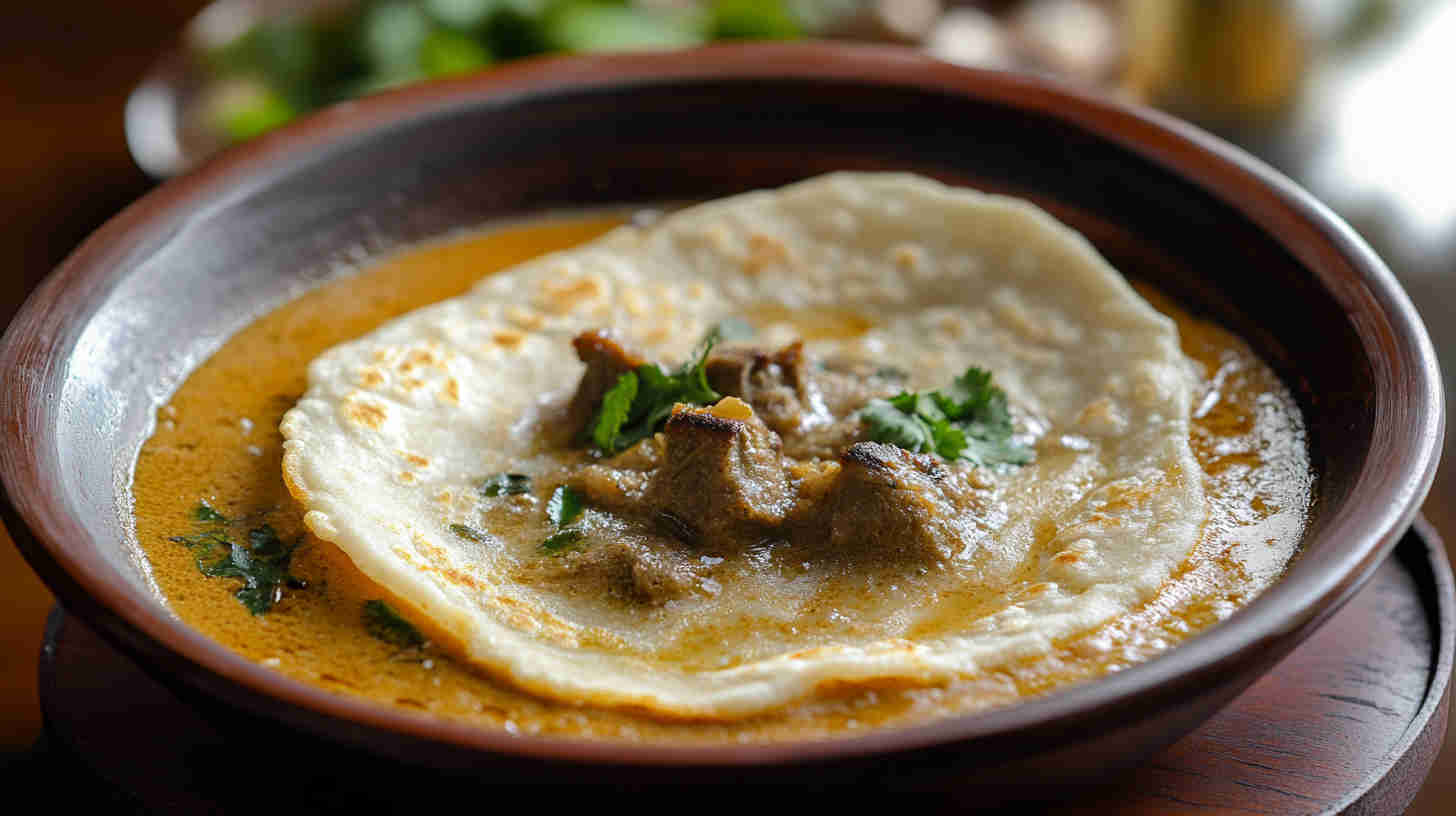
Appam with Mutton Stew

Appam with Mutton Stew is a classic Kerala breakfast delight. Soft, lacy-edged fermented rice-coconut appams pair perfectly with tender mutton simmered in a fragrant, mildly spiced coconut milk gravy with potatoes, ginger, and whole spices. This comforting combo offers a perfect balance of textures and subtle flavors, evoking traditional South Indian home cooking.

My Experience Cooking This recipe:

I first tried making Appam with Mutton Stew during a family weekend brunch. The appams came out beautifully crisp at the edges with fluffy centers after proper fermentation. The mutton stew was aromatic and creamy—everyone loved dipping the appams into the rich gravy. It took some practice with the appam pan tilt, but the results were restaurant-worthy and deeply satisfying.

Yield: 6 servings

Appam with Mutton Stew

Appam with Mutton Stew
No Ratings

Crispy-laced Kerala appams served with creamy, spiced mutton coconut stew—a comforting South Indian classic.

Prep Time 30 minutes
Cook Time 45 minutes
Additional Time 2 hours
Total Time 3 hours 15 minutes

Ingredients

For Appam Batter (makes 12-15):

  • 1.5 cups raw rice (soaked)
  • ½ cup grated fresh coconut
  • ¼ cup poha (flattened rice) or cooked rice
  • ½ tsp instant yeast (or ¾ tsp dry active)
  • 2 tbsp sugar
  • ½ tsp salt
  • Water as needed

For Mutton Stew:

  • 500g mutton (bone-in preferred, cut small)
  • 2 potatoes, diced
  • 2 onions, sliced
  • 1-2 tbsp ginger-garlic (crushed/minced)
  • 3-4 green chilies, slit
  • Whole spices: 2-3 cardamom, 2 cloves, small cinnamon
  • 1-2 tsp black pepper powder
  • 2-3 sprigs curry leaves
  • 2 cups thin coconut milk + 1 cup thick coconut milk
  • Coconut oil/ghee for cooking
  • Salt to taste
  • Optional: cornstarch slurry for thickening, shallots for tempering.

Instructions

  1. Prep the magic batter: Soak 1.5 cups rice for 4-5 hours. Drain and grind with coconut, poha, sugar, salt, and water into a smooth, flowing batter. This creates the base for those gorgeous lacy edges!
  2. Wake up the yeast: Stir in instant yeast (or activated dry yeast). Mix well, cover, and let ferment in a warm spot for 1-2 hours (or overnight for dry yeast) until bubbly and doubled. Your kitchen will smell promising!
  3. Tenderize the mutton: Pressure cook mutton with salt, pepper, ginger-garlic, and water for 8-10 whistles until soft. Set aside with its flavorful broth—don’t discard it!
  4. Build aromatic base: Heat coconut oil in a pan. Add whole spices, curry leaves, ginger, and sliced onions. Sauté gently until onions soften and release their sweetness—keep it light for that signature pale stew color.
  5. Layer the flavors: Toss in green chilies and black pepper. Add cooked potatoes (and tomatoes if using). Stir in thin coconut milk and the mutton with broth. Simmer gently to let spices mingle beautifully.
  6. Thicken lovingly: Mix a cornstarch slurry and stir in for silky texture. Then pour in thick coconut milk. Simmer just a minute more—avoid vigorous boiling to keep it creamy and prevent splitting.
  7. Finish with tempering: In ghee, fry sliced shallots till golden, add pepper powder, and pour over the stew. This final touch elevates aroma and taste—pure bliss! Let stew rest 30 minutes.
  8. Heat the appam pan: Season your appachatti or wok. Pour a ladle of fermented batter, swirl to form thin edges and thicker center. Cover and cook on medium-low until edges crisp and center sets softly.
  9. Repeat the delight: Gently loosen each golden appam. Stack them warmly under a cloth. The contrast of crispy lace and pillowy middle is irresistible.
  10. Serve with joy: Plate 2-3 hot appams per person with steaming mutton stew poured generously. Watch faces light up as they tear and dip—pure comfort on a plate!

Notes

Use fresh coconut milk for best taste. Adjust spice level mildly for authentic flavor. Batter consistency should be pourable like thick buttermilk. Bone-in mutton adds richness. Resting the stew is key for flavor melding. Suitable for special occasions or weekend treats.

Nutrition Information

Yield

6

Serving Size

1

Amount Per Serving Calories 809Total Fat 43gSaturated Fat 29gUnsaturated Fat 14gCholesterol 82mgSodium 265mgCarbohydrates 77gFiber 4gSugar 8gProtein 29g

The recipes and nutritional information on Yum Tonight are for informational purposes only. Always consult a healthcare provider for personalized dietary advice.

Common Mistakes of making this recipe:

  • Not fermenting the appam batter long enough (or too long), leading to flat or overly sour appams.
  • Using too much heat while cooking appams, preventing proper spreading and lacy edges.
  • Overcooking or boiling the stew vigorously after adding thick coconut milk, causing curdling or separation.
  • Skipping proper resting time for the stew, which mellows and deepens flavors.
  • Using low-quality mutton or insufficient ginger/pepper, resulting in bland taste.

Ingredient Science of this recipe:

Rice and coconut in appam batter undergo fermentation via yeast, producing CO2 for airy texture and mild tang. Coconut milk provides creaminess and fats that emulsify in the stew. Ginger and black pepper aid digestion and add warmth.

Potatoes release starches for natural thickening, while whole spices (cardamom, cloves) release essential oils slowly for layered aroma without overpowering heat. Cornstarch slurry (optional) stabilizes the gravy.

Serving Ideas of this recipe:

Serve hot appams with generous ladles of mutton stew for classic pairing. Accompany with sweetened coconut milk, coconut chutney, or a side of boiled eggs. Great for breakfast, brunch, or dinner. For a spread, add vegetable stew, kadala curry, or puttu. Garnish stew with fried shallots and curry leaves for extra appeal.

FAQ (5 questions) of this recipe:

Can I make appam without yeast?

Yes, traditionally with toddy; otherwise, allow longer natural fermentation or use baking soda sparingly.

How do I store leftover stew?

Refrigerate up to 2 days; reheat gently with a splash of thin coconut milk as it thickens.

Is this recipe gluten-free?

Yes, both appam and stew are naturally gluten-free.

Can I use chicken instead of mutton?

Absolutely—reduce pressure cooking time for chicken.

Why are my appams sticking?

Ensure the pan is properly seasoned/hot enough and use minimal oil; nonstick helps beginners.

Please share this Appam with Mutton Stew with your friends and do a comment below about your feedback.

We will meet you on next article.

Until you can read, Appam with Fish Curry

Similar Posts

Leave a Reply

Your email address will not be published. Required fields are marked *