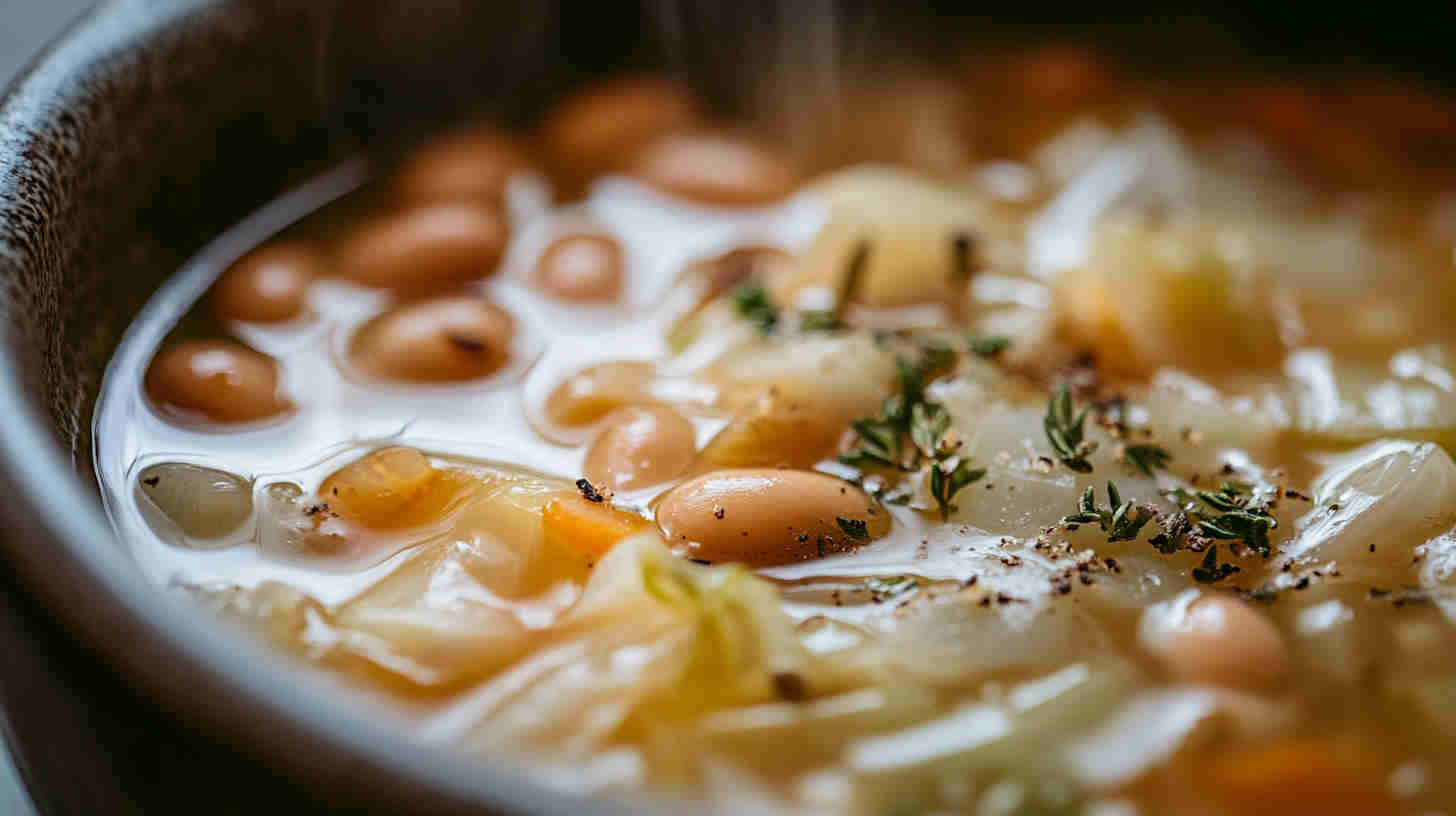
This Italian Cabbage and Bean Soup is a rustic, comforting bowl built on tender cabbage, creamy cannellini beans, and a garlicky tomato broth. Simmered low and slow with herbs and olive oil, it’s hearty, nourishing, budget-friendly, and naturally vegetarian — perfect for chilly evenings when you crave something warm and soul-satisfying.
My Experience Cooking This Recipe
I first made this soup on a rainy Sunday when my fridge held little more than half a cabbage, a can of beans, and some sad-looking carrots. I wasn’t expecting much, but the moment the garlic hit the hot olive oil, the kitchen smelled like my grandmother’s house. What started as a “clean out the fridge” experiment turned into a weekly staple.
I’ve tweaked it dozens of times since — sometimes adding a rind of Parmesan while it simmers, sometimes a splash of red wine vinegar at the end to brighten things up. What I love most is how forgiving it is.
Overcook the cabbage a little? It just gets silkier. Add extra beans? Even heartier. It’s the kind of recipe that rewards improvisation, and every time I make it, it tastes a little different depending on what herbs I have on hand — which is exactly why I keep coming back to it.
Common Mistakes of Making This Recipe
- Skipping the sauté step. Rushing past softening the onion, carrot, and celery (the soffritto) leaves the broth tasting flat instead of deeply savory.
- Adding cabbage too early. Dumping cabbage in at the start makes it mushy and dull; adding it partway through preserves texture and sweetness.
- Under-seasoning. Beans and cabbage are mild on their own, so under-salting is the most common reason this soup tastes “boring.” Season in layers, not just at the end.
- Boiling instead of simmering. A hard boil breaks down the beans and toughens the cabbage; a gentle simmer keeps everything tender and the broth clear.
- Forgetting acid. A splash of vinegar or lemon at the finish is what makes the soup taste “alive” instead of heavy — skipping it is an easy miss.
- Using canned beans without rinsing. Canning liquid can make the broth cloudy and overly salty if it isn’t rinsed off first.
Ingredient Science of This Recipe
- Cabbage is mostly water and cellulose fiber; slow simmering breaks down its cell walls, converting it from crunchy and sharp to soft and naturally sweet, since heat mellows the sulfur compounds responsible for cabbage’s pungency.
- Cannellini beans are rich in starch, which leaches into the broth as they cook, naturally thickening the soup without any flour or cream needed.
- Garlic and onion, when sautéed slowly in olive oil, undergo the Maillard-adjacent caramelization process that builds the deep, savory backbone (umami) of the broth.
- Tomatoes add glutamate, an amino acid responsible for umami, which is why even a small amount of tomato paste or crushed tomatoes makes the whole pot taste “meatier” despite being vegetarian.
- Parmesan rind, if used, slowly releases glutamates and salt as it simmers, reinforcing the soup’s savory depth — a classic Italian nonna trick.
- Olive oil isn’t just for flavor; it helps carry fat-soluble flavor compounds from the garlic and herbs throughout the broth, making each spoonful taste more rounded.
Serving Ideas of This Recipe
Serve this soup piping hot in wide, shallow bowls with a generous drizzle of good extra-virgin olive oil and a crack of black pepper on top. Pair it with crusty rustic bread or garlic crostini for dipping, and a light shaving of Parmesan or Pecorino Romano for extra savoriness.
It also makes a lovely starter before a simple roasted chicken or grilled fish dinner, or a full meal on its own alongside a crisp green salad. For a heartier version, ladle it over a slice of toasted bread in the bowl (Tuscan-style) or stir in cooked small pasta like ditalini just before serving.
FAQ
Yes — soak 1 cup of dried cannellini beans overnight, then simmer them separately until tender before adding to the soup, since dried beans take much longer to cook than the vegetables.
Simply skip the Parmesan rind and any cheese garnish, or use a plant-based Parmesan alternative; the soup is otherwise naturally vegan.
Stored in an airtight container, it keeps well for 4–5 days and actually tastes even better the next day as the flavors continue to meld.
Yes, it freezes beautifully for up to 3 months. Cool completely before freezing, and thaw overnight in the fridge before reheating gently on the stove.
Savoy cabbage, kale, or Swiss chard all work well if you want a slightly different texture or flavor while keeping the same comforting profile.
Please share this Italian Cabbage and Bean Soup Recipe with your friends and do a comment below about your feedback.
We will meet you on next article.
Until you can read, Italian Broccoli and Garlic Sauté Recipe