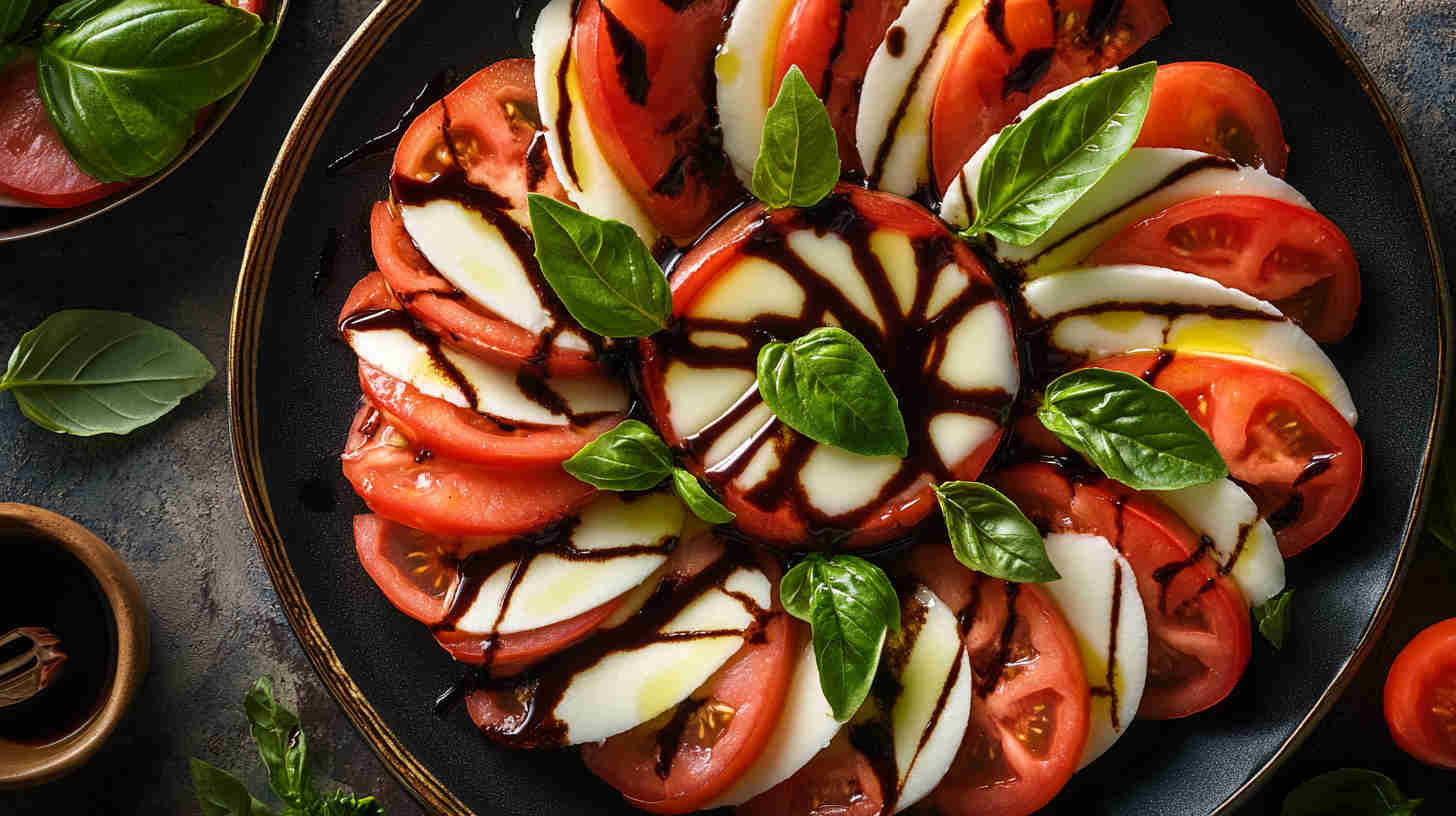
This classic Italian Caprese salad layers juicy heirloom tomatoes, creamy fresh mozzarella, and fragrant basil leaves, all drizzled with a rich, tangy balsamic glaze and golden olive oil. Simple, colorful, and bursting with fresh flavor, it’s the perfect appetizer or light side dish for any warm-weather gathering.
My Experience Cooking This Recipe
The first time I made a proper Caprese salad, I learned that the secret isn’t in complicated technique — it’s in ingredient quality. I once tried it with out-of-season, pale supermarket tomatoes and the whole dish fell flat.
The next time, I waited until peak summer, grabbed sun-warmed heirloom tomatoes from a farmer’s market, and paired them with fresh buffalo mozzarella. The difference was night and day.
Now I make this salad every summer as my go-to quick appetizer, and I’ve learned little tricks along the way, like salting the tomatoes early to draw out their juices and letting the mozzarella come to room temperature before assembling. It’s become one of those recipes I can throw together in ten minutes but that always impresses guests.
Common Mistakes of Making This Recipe
- Using cold mozzarella straight from the fridge — it mutes the flavor and makes the texture rubbery instead of creamy.
- Skipping the salting step — under-salted tomatoes taste watery and one-dimensional.
- Slicing tomatoes too thin — they lose structure and become mushy, causing the salad to fall apart.
- Using a store-bought glaze that’s overly sweet or artificial — it overpowers the delicate flavors of the tomato and cheese.
- Adding basil too early — the leaves bruise and turn black if left sitting on acidic tomato juice for too long.
- Using low-quality olive oil — since the dish has so few ingredients, a bland oil flattens the entire flavor profile.
- Overcrowding the plate — stacking too many layers hides the ingredients rather than letting each bite balance tomato, cheese, and basil.
Ingredient Science of This Recipe
Fresh mozzarella is packed with moisture and delicate milk proteins, which is why it’s creamy rather than firm like aged cheeses — heat or excessive handling breaks down that texture, so it’s best served cool but not fridge-cold.
Ripe tomatoes contain glutamates and natural sugars that intensify with ripeness, which is why vine-ripened, in-season tomatoes taste dramatically better than early-picked ones. Salting the tomatoes triggers osmosis, drawing out excess water and concentrating their flavor while softening their texture slightly for better bite integration.
Basil’s aromatic compounds, primarily volatile oils like linalool and eugenol, are heat- and bruise-sensitive, which is why tearing (rather than cutting) the leaves at the last moment preserves their brightness.
Balsamic glaze is essentially reduced balsamic vinegar; the reduction process evaporates water and concentrates natural sugars, creating a syrupy consistency and deeper, sweeter flavor through gentle caramelization. Extra virgin olive oil contains monounsaturated fats and polyphenols that not only add richness but also help carry and enhance the fat-soluble flavor compounds in the tomatoes and basil.
Serving Ideas of This Recipe
- Serve as a light appetizer alongside crusty Italian bread or garlic crostini for scooping up the juices.
- Layer it over grilled chicken or fish for a fresh, Mediterranean-style main course.
- Skewer cherry tomatoes, mini mozzarella balls, and basil leaves for an easy party-friendly Caprese skewer version.
- Pair with a chilled glass of Pinot Grigio or Prosecco for a classic Italian-inspired meal.
- Spoon it over toasted baguette slices as a quick Caprese bruschetta.
- Add avocado slices for a creamy twist that complements the tomato and basil.
FAQ
It’s best assembled just before serving since tomatoes release liquid over time, but you can slice the ingredients a few hours ahead and store them separately in the fridge.
Fresh mozzarella, ideally buffalo mozzarella (mozzarella di bufala) or a high-quality fior di latte, gives the creamiest texture and mildest, milky flavor.
Yes, though regular balsamic vinegar is thinner and more tart. You can simmer it on the stove for a few minutes to reduce it into a syrupy glaze at home.
Salt the tomato slices and let them rest for a few minutes on a paper towel to draw out excess moisture before assembling the salad.
Traditionally, it’s served at room temperature, since chilling mutes the flavor of the tomatoes and firms up the mozzarella too much.
Please share this Italian Caprese Salad with Balsamic Glaze Recipe with your friends and do a comment below about your feedback.
We will meet you on next article.
Until you can read, Italian Cabbage and Bean Soup Recipe